
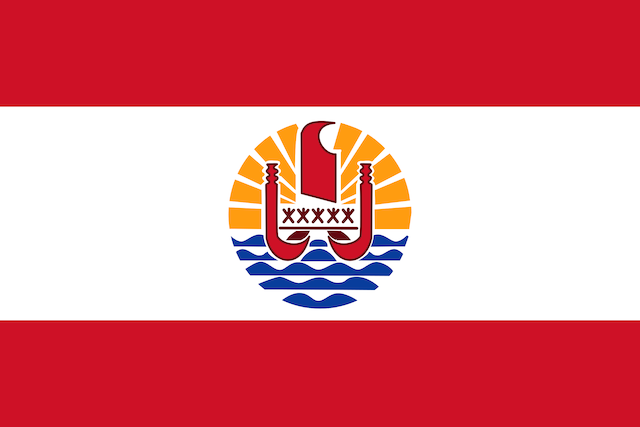
YachtFlags.com provides high quality courtesy flags that are manufactured in durable Knitted Polyester fabric. Knitted so that the fabric itself does not deteriorate in the constant movement that marine flags are usually exposed to, and polyester so that the flag does not weaken in the strong UV-light usually found in the main sailing areas of the world.
YachtFlags.com offers a discount to Noonsite members.
Use the coupon code NOONSITE-5A2B when checking out to get 10% off today.
YachtFlags.com provides high quality courtesy flags that are manufactured in durable Knitted Polyester fabric. Knitted so that the fabric itself does not deteriorate in the constant movement that marine flags are usually exposed to, and polyester so that the flag does not weaken in the strong UV-light usually found in the main sailing areas of the world.
YachtFlags.com offers a discount to Noonsite members.
Use the coupon code NOONSITE-5A2B when checking out to get 10% off today.
YachtFlags.com provides high quality courtesy flags that are manufactured in durable Knitted Polyester fabric. Knitted so that the fabric itself does not deteriorate in the constant movement that marine flags are usually exposed to, and polyester so that the flag does not weaken in the strong UV-light usually found in the main sailing areas of the world.
YachtFlags.com offers a discount to Noonsite members.
Use the coupon code NOONSITE-5A2B when checking out to get 10% off today.
Pre-Arrival - Boat: All recreational vessels entering French Polynesia have to submit their details through an online form which is then used during their time in French Polynesia. See Clearance for more details.
Pre-Arrival - Crew: French Polynesia is part of the European Union (as an overseas collective of France), but not of the Schengen Area Agreement so has its own visa rules. There are different rules for EU Citizens, Non-EU citizens and if you want to stay in French Polynesia longer than three months. See Immigration for details.
Where can I enter? There are a number of Ports of Entry through the archipelagos of French Polynesia. Click on Main Ports in the Explore Country dropdown to find a Port of Entry.
Are fees high to enter by yacht? There are agents fees, visa fees, port fees and recycling/garbage disposal fees charged in some ports and harbours. See Fees for more information.
What security concerns should I know about? Generally cruisers report safe and comfortable cruising grounds. However, in some of the more popular anchorages where anchoring restrictions have been put in place, cruisers have reported threatening behaviour. See Security for more information.
If you have information for this section, or feedback on businesses used, please let us know at editor@noonsite.com. We also welcome new information about businesses you have used (see Related Businesses).
As a free user of Noonsite you are restricted to viewing 3 country formalities per month. You have viewed 0 formalities this month – but can view the countries you have accessed to date as many times as you want.
Become a Noonsite Member and you can view unlimited formalities each month and enjoy additional member benefits. Membership fees help our team keep country formalities information up-to-date in support of cruisers worldwide.
Find out more about membership levels and Become a Noonsite Member.
Leave a comment
You must Login or Register to submit comments.
French Polynesia Clearance Update:
Peter & Inge (Fossil Free Around the World) report that clearing out of Raiatea and other islands has changed since the digitalized system:
Previously: 1½ hours at the Gendarmerie.
Now: Gendarmerie checks your online form, sends it to Papeete, approval can take 1–3 days.
Key advice: if your stay is short, clear out immediately upon arrival to avoid delays.
“The following ports are restricted and require an anchorage or marina booking to be made 48 hours prior to arrival:
Nuku Hiva (Marquesas)”
NOT TRUE!
I, with a British passport, cleared into Nuku Hiva in May 2025. I’d already filled in the mon dossier form online and the gendearme took the number and my passport. A couple of questions and my passport was stamped, no other forms at all. On Nuku Hiva the gendermerie is open for clearance Monday and Thursday morning. If you arrive outside those hours, just go along to the next opening. There are no restrictions in the meantime.
Our April 2024 arrival into Nuku Hiva was quick and easy with the new online system. The gendearme there knew exactly what to do. Stamped a print out of our form and our passports and we were good to go. We checked our departing crew off the crewlist ouselves with the online system. What a contrast to the endless port captain paper chase of Mexico.
Umoya arrived in Rikitea, Gambier on Monday 6 May. We filled out the online form before departure. All crew are US passport holders without long stay visas. First thing Tuesday morning we visited the gendarmerie. The friendly gendarme asked for our online reference number which I gave him. He checked a few things on the computer, stamped our passports and gave us a hearty welcome smile and we were on our way. Easiest checkin ever.
No customs form to mail to Papeete. We were told to visit the Mairie to pay for garbage disposal, which we happily did.
Kevin Ellis from Nuku Hiva Yacht Services has provided this update on the new online system for checking into French Polynesia.
When using the online system, you must have on the same device, usable scans of the following documents, all passports, Ship’s Papers, Zarpe, & Flight Tickets. The tickets would be for anyone leaving the boat at the time of check-in, which is common.
We have done a couple of entries with the new system and if you are from a non-EU country, the system is useless. Useless because, 1) you still need to go to the Gendarmerie to get your passport stamped, 2) the officers at the Gendarmerie have no documentation on this system and are not aware of how it works, 3) so you have to complete the paperwork manually again if you did it online already, and, 4) it takes at least 3 business days to get your entry reviewed and accepted. This leaves you in a state of limbo not knowing if you have completed your formalities or not for three days.
If you complete your formalities on paper and present them to the Gendarme, once stamped and returned, the process is complete as they will require any other supporting documentation you need. Like departing airline tickets or Bond Exemption letter or Repatriation Bond, or a valid visa for those from countries where a visa is required to enter French Polynesia.
However, other than the 3 days of limbo part, if you and all your crew are EU citizens, this could be a viable alternative.
Now this has been in place for only a few weeks, I would like to believe with time some of the issues will be addressed and corrected.
I hope this is helpful and informative.
Cheers, Kevin Ellis
Bruce and Alene, of SV Migration and creators of the Chart Locker (a free resource for cruisers), have this reminder:
For those of you planning to head to the South Pacific this coming season, don’t forget to download satellite charts for the areas you’re going to visit BEFORE you leave North America. A complete set of charts for only French Polynesia (ArcGIS, BingSat, GoogleSat and Navionics) is over 10GB so you’ll want to have a fast and cheap connection.
You’ll find the charts at https://thechartlocker.com/
To avoid having to download, if you’re in Mexico in Banderas Bay, Mike and Kat have a copy at Cruiser Comfort, and Andy Barrow kindly donated a portable drive with the charts that can be borrowed from the Vallarta Yacht Club. There’s probably a copy or two floating around La Paz as well.
As of 08/Aug/2021 A compelling reason is no longer required – if the adults on board are vaccinated (detail below)
Here is the law written by the High Commissioner in FP on 20-Aug-2021: http://www.polynesie-francaise.pref.gouv.fr/…/Arr%C3…
The relevant part for us is Article 26, section IV:
“Les deplacements des navires de plaisance a destination de la Polynesie Francais depuis tout autre pays sont regis par les dispositions du ii de l’article 23-3 et par l’article 23-6 du decret du 1er juin 2021 susvise.
Conformement a l’article 23-4 du decret du 1er juin 2021 susvise et au regard des circonstances locales les deplacements sont interdits s’ils ne sont pas fondes sur un motif imperious d’ordre personnel ou familial, un motif de sante relevant de l’urgence ou un motif professionnel ne pouveant etre differe, ou s’ils ne sont pas lies a une situation de ncessite, une obligation de reparation, d’approvisionnement ou de ravitaillement du navire.
Pour application des precedents alineas du present article, toute personne de douze ans et plus addresse, le cas echeant par l’intermediare du captaine du navire, au moins 6 jours avant le depart, au chef de service des affaires maritimes et a l’autorite maritime locale, le document permettant de justifier du motif du deplacement, ainsi que les declarations sur l’honneur mentionnees au 2nd du ii de l’article 23-3 du decret du 1er juin susvise.
Par derogation a ce qui precede, les deplacements des personnes qui disposent d’un justificatif de leur statut vaccinal delivere dans les conditions du 2nd de l’article 2-2 du decret susvise, ainse que des mineurs qui les accompagnent, sont autorises.”
This is the translation (the first and last paragraphs are the most interesting): The movements of pleasure craft to French Polynesia from any other country are governed by the provisions of ii of article 23-3 and by article 23-6 of the aforementioned decree of June 1, 2021.
In accordance with article 23-4 of the aforementioned decree of June 1, 2021 and in view of local circumstances, travel is prohibited if it is not based on an imperious reason of a personal or family nature, a health reason falling under the emergency or a professional reason cannot be deferred, or if they are not related to a situation of necessity, an obligation to repair, supply or supply the vessel.
For the application of the preceding paragraphs of this article, any person of twelve years of age and over addressed, if necessary through the intermediary of the captain of the ship, at least 6 days before the departure, to the head of the maritime affairs department and to the authority local maritime, the document to justify the reason for the trip, as well as the declarations on honor mentioned in the 2nd of ii of article 23-3 of the decree of June 1 aforesaid.
By way of derogation from the foregoing, the movements of people who have proof of their vaccination status issued under the conditions of the 2nd of article 2-2 of the aforementioned decree, as well as minors who accompany them, *are authorized*.
Hi, could anyone recommend what are ideal gifts to give to chiefs or elders on some of the smaller islands that we visit. Ideally something useful for the islanders rather than trinkets. We plan to be amongst the islands this time next year. TIA regards Keith SV Itiki
Hi Keith,
These 2 reports should give you a good idea of the kind of gifts welcomed in the islands:
https://www.noonsite.com/report/trading-goods-in-the-south-pacific/
https://www.noonsite.com/report/insights-cruising-kindly-part-2/
This report is also helpful for planning purposes: https://www.noonsite.com/report/pacific-planning-advice/
Also the Pacific Islands all have related reports – well worth a read as most are contributed by fellow cruisers – and many comment on gifts they have taken etc. For example: https://www.noonsite.com/place/french-polynesia/related-reports
From Kevin Ellis – Yacht Services Nuku Hiva
The maritime borders to French Polynesia remanie closed. Next week they are opening up the airways for tourism from Europe for vaccinated travelers. Some restrictions are being eased on Tahiti and Moorea, but still no movement on the lifting of restrictions on Yachts. The authorities are gradually lifting restrictions with a wait and see what come from those changes. If the number of cases in FP remains stable there is hope for the future.
There is another facture to consider here, where will you go from here. Even if they let boats in, Fiji appears to be the only option for continuing West. So, I imagine the authorities here are concerned about allowing too many boats in with nowhere to go after. I certainly would be.
On another note, we’ve had some boats come without permission, in the hope of things changing while they were on route. DON’T DO THIS. Boats arriving here with out permission are being fined and told to be on their way. While the fines are not super painful, the fact you have to keep going may be. Here on Nuku Hiva things have been fairly loose do to a lack of enforcement personnel. But, when you get to Tahiti, there is no such lack of personnel and they do regular patrols looking for boats in violation.
An article from a local journal is reporting an noticeable issue with the local population. Indeed, some skippers were assaulted physically and verbally on Huahine island. A dinghy has been vandalised with a cutter. Police dosen’t seem to take the issue very seriously.
Source in French : https://actu.fr/polynesie-francaise/huahine_98724/huahine-les-agressions-sur-les-voiliers-s-accentuent_41280619.html
start a boycott, when the police don’t care when a 60 year old sailer is beaten to a pulp, losing one eye, violence ignored….and they know who it is with video…stop all travel…air included…let them go back to selling copra and coconut art… please pass this on to all sites you can think of…warning of the crime awaiting them
The decline of paradise,
Since the beginning of the covid pandemic last march, French Polynesia has seen a dramatic increase of hate and crime against foreign vessels.
Lates are two violent aggressions against the crew of two sailing vessels.
This happens on Huahine (one of the most beautiful and peaceful islands) these past weeks, On November 20, two crew members where aggressed on their monohull by four Polynesians who attacked the vessel in their canoes.
This week a 60-year-old man on a monohull was violently beaten, broken nose and will lose an eye.
He had received verbal treats 10 days before the aggression due to his presence on the island waters; “We don’t want you here any longer”
One month ago, a young boy, member of British sailing family visiting the islands was killed by a speeding local motorboat, the event was applauded by many local “independentists” …
What started with insults 8 months ago has escalated to physical aggression…
Lucky there are more peaceful islands in the south Pacific …
I am planning a Pacific Crossing, ideally, Panama, Galapagos, Easter Is, Tuomotus and Marquesas.
Can anyone provide advice on sailing from Tuomotus to Marquesas? What would be a preferred point of departure given the prevailing weather? Any suggestions?
Many thanks.
https://voiliers.asso.pf/?mailpoet_router&endpoint=view_in_browser&action=view&data=WzY3LCI2ZDljMzM1NTIyMjAiLDAsMCwwLDFd
The second half is in English. A worrying situation.
Hello,, We live in New Zealand and our plan once/if the world gets back to normal is to purchase a yacht in French Polynesia cruising for 6 mounths and returning to NZ to work the other 6 months. Has anyone done this or simular that maybe able to offer some advise. We would both be very greatful. Thanks Pete and Louise. 🙂
Hello Peter and Louise I bought the Pacific Seacraft 34 Swan from Sail Tahtiti and had excellent help from Nikki. A couple of things, firstly I’d be open to selling Swan now I’m back Canada aside from that (if you’d prefer a catamaran) I have some tips on staying in Tahtiti such as staying at an AirBnB close to the Marina Taina as Papeete is too far to commute easily — buses only run between 7ish and 5ish. Taxis are too expensive to consider. Here’s the link to Swan and my direct email is griffinchristopher@icloud.com (most folks call me Kit)
https://www.sailtahiti.com/en/portfolio-items/pacific-seacraft-34-1996/
Hiva Oa (French Polynesia)
Any one there able to provide update advise for a yacht due to arrive in the next two days. They have pratique approval from the authorities. They are looking for practical information regarding anchorage, contacts and support network.
Hi Paul, all the information we know is in the covid-19 section under biosecurity – see https://www.noonsite.com/place/french-polynesia/formalities#biosecurity-section.
Thanks Sue, greatly appreciated.
Vera, Tahiti crew (https://www.noonsite.com/business/tahiti-crew/) offer boat caretaking. I suggest you also try the French Polynesia cruisers facebook page for recommendations. From what I understand, many owners are leaving their boats in Papeete and repatriating. It is definitely worth organizing boat care-taking as incidents of thefts and looting have increased during this difficult time. The cruisers association (Association de Voiliers en Polynesie) is also a good contact – https://www.noonsite.com/business/association-de-voiliers-en-polynesie/. I hope that helps. Do let us know how you get on.
not safe for you or your boat, avoid at all costs
Hello, does anybody please stay in Papeete with your boat in this emergency time? We have to leave her there and go back home to Europe. We are looking for someone who wouldnt mind to check her sometimes. Thanks
Hi.. We are looking to spend some time Documenting the marine life throughout F. P.
Source in Bora Bora has agreed there are restrictions on anchoring in some areas of Tahiti, however we would be very interested in substantiating claims the French authorities are applying this restriction to any other island.
Correspondence greatly appreciated.
Mike.
Reported by Chuck Houlihan of SY Jacaranda:
Thanks to Bruce and Alene on SV Migration who worked the issue with the French consulate in Mexico City. The French consulate is allowing non-residents in Mexico to apply for FP long stay visas. According to Bruce, the consulate is now allowing yachties and others to submit the paperwork from the French consulate in Mexico City.
Awaiting reports of the first cruisers applying.
This is a big hurdle as it allows cruisers to not have to travel back to the US, submit the paperwork along with their passports, obtain a temporary US passport and then travel back to the boat.
Chuck
Jacaranda
That is the 4-5th boat we have heard that was robbed in Avea Bay Huahine in the past 2 seasons. A warning to boats coming behind you – Lock the boat everywhere in FP –
After several lovely months in French Polynesia encountering nothing but friendly people we finally got robbed.
At anchor in Avea Bay in Huahine, someone swam to our boat while we were at dinner ashore, went through the boat and got away with all our cash (around $2000.- total). Thank God passports, credit cards and electronics were ok. Our bad for leaving the companionway unlocked.
Reported by Bob Carlisle:
Tahouna Bay/Atouna, Hiva Oa, Marquesa Islands, July 2018
WARNING OF TEMPORARY ANCHORING RESTRICTIONS:
Probably not too many are heading that way right now, but when the next Pacific crossing season gets up and running, this is one of the main arrival/check-in ports for the Marquesa Islands and space is going to be restricted.
W
hen we visited in July 2018 there were notices posted stating that due to dredging works programmed for mid-July to late-December, the anchorage would be restricted to an area north of the dinghy dock and presumably you’ll need to get your anchor & chain behind that line too?
That area’s predominantly very shallow and I’d estimate that no more than half a dozen yachts will be able to squeeze in there, of which there seems to be four or five semi-permanent yachts already.
Works hadn’t begun when we left in August, so it’s reasonable to assume that the works will overrun and these restrictions will continue at least into the early months of 2019 when the Puddle Jumpers begin to arrive in numbers. You can anchor off outside the harbour wall, but in all but very light weather with little south in the winds/seas that’s an uncomfortable option at best.
Even with ‘normal’ restrictions in place you’ll be twin anchored if you’re inside the harbour wall and be wary of the Aranui cruise/supply ship’s arrival if anchored close to the dock on the east side (the red Taporo supply ship invariably seems to be a lot more careful and courteous?).
Whilst we were sat comfortably ‘behind the line’ our anchor wasn’t and the Aranui first tripped that when dropping their own anchor, before ‘blasting’ us sideways a few seconds later with their powerful bow thruster as they docked; no gel-coat was lost, so just an interesting experience.
We are currently at Marina Taina in Tahiti and can highly recommend Yacht Services Tahiti. Responsive, nice, English speaking and efficient. Worth every penny!
Highly recommend making landfall in Nuku Hiva instead of Hiva Oa. Much better anchorage and dinghy dock in Nuku Hiva, shops, fruit and veggie market, and small restaurant right near the dock.
kevin and his lovely wife at YACHT SERVICES in Nuku Hiva are absolutely fabulous !! Their services are worth every penny and more. They help with check-in, paperwork and pretty much anything you need.
I first sailed French Polynesia in 1984. Two days after arriving in Papeete, our dingy was stolen. When I went to the gendarmes, the first thing he said was, laisse-moi deviner, ton zodiac a ete vole.
Let me guess, your dingy was stolen. Things haven’t changed, secure and lock up your valuables. I am headed again there this coming spring and will keep my past experiences in mind. Enjoy this beautiful land and remember to take nothing for granted. Patrick, S/V Voila
Headed towards French Polynesia? Be sure to download the free cruisers guide that lists parts and services available in Papeete. Having the pdf onboard will allow to order parts and check on services.
Hopefully, this may help you if you are in the remote islands and something breaks or save you time while sourcing parts in Tahiti. Updated often so be sure to check when internet is available Chuck/ Jacaranda
http://www.tahiticruisersguide.com/
If you ever run into mechanical problems or need something done on your boat while you are in Tahiti I can highly recommend a Hungarian guy named: Adrian: 00 689 87286083 email: attilaatsea@gmail.com. He is a magician when it comes to boats and engines.
He changed our head gasket, rebuild our diesel injector pump, mounted our new bow spread and even made a complete overhaul of our dive compressor. He is honest and he defiantly knows what he is doing.
He lives on his boat just outside marina Taina.
Before sailing to French Polynesia it is really recommended to join for free the “Pacific Puddle Jump”. They will give you tips, handbooks and other stuff that really helps.
Noonsite has written to the Immigration authority in French Polynesia asking for clarification/confirmation about the ‘new’ rule. We will update the site as soon as we receive the information.
Posted 20th December 2017 on behalf of Ian and Erika
We left our boat in Papeete, Tahiti for a 6 week trip to New Zealand. Upon our return, at the Auckland airport check-in (Air Tahiti Nui on Dec 14th, 2017), I was asked to provide evidence of having a boat in Tahiti. When I queried this, I was told that a ‘New’ regulation had just come in and applied to British EU travelers (but not to my wife, who is German).
Fortunately, we had copies of Ships Papers (SSR) on us, but I was told I would not have been allowed to fly without proof or evidence of an onward plane ticket, despite the fact that Britain is still in the EU. Apparently, this new regulation is in preparation for Brexit!
Hi Sue – I recommend your post your offer on the Women Who Sail Facebook page – https://www.facebook.com/groups/WomenWhoSail/. There seem to be quite a lot of followers in the Pacific right now actively cruising and I am sure they can guide you accordingly.
I’ll be flying from San Francisco, California into Papeete for a short week visit in mid-May and I’m wondering what I could bring to cruisers in the way of useful supplies. I hear things are expensive there, and I know from personal cruising experience that specialty repair items can be hard to source abroad. Any ideas for finding requests?
Marine Surveyor in Tahiti.
If anyone is looking for a marine surveyor in Tahiti I am happy to relay our experience with Patrice BEUSCHER. We found Mr Beuscher to be very professional, prompt, reliable and honest. He surveyed out boat for purchase and was meticulous with a keen eye for detail and always replied to any query we had promptly and efficiently.
Fact or Myth: Food in French Polynesia is exorbitantly expensive
While in Panama several permanent sailing residents repeated the often heard tale of woe about Polynesia. “Why would you go to Polynesia, it so dreadfully expensive?” I would usually say “well when I was in French Polynesia 20 years ago many items were price controlled and very reasonable. If you’re on a tight budget you can eat cheaply if you’re careful.”
Currently, we found many of the Marquesas and Tuomotus were supplied regularly. Staples are rarely an issue, fresh is often available the day the freighter arrives. Locally sourced foods, like mangoes and grapefruit, are not sold in stores but can be found by a bit of asking around.
But are the prices exorbitantly expensive? In a word – No.
We’re from the UK where food prices are similar to the rest of Europe. There are several comparison websites which use the “shopping basket” comparison to measure the cost of living and between city comparisons.
Using February 2017 here are average UK prices converted to French Polynesian Francs, compared to the Champion Supermarket in Papeete (which by the way is certainly not the cheapest.) I have converted the British pounds to French Polynesian francs at the current rate of 140.
UK vs Tahiti Prices – Feb 2017 UK in XPF Papeete
Milk, (1 liter); Papeete presidente whole milk HDT XPF 123 XPF 139
Loaf of Fresh White Bread (500g) Papeete for 2 bagettes XPF 132 XPF 124
Rice (white), (1kg) XPF 168 XPF 97
Eggs (12) XPF 269 XPF 451
Cheese (1kg); Papeete Emmental XPF 783 XPF 995
Chicken Breasts (Boneless, Skinless), (1kg): Papeete frozen XPF 843 XPF 292
Beef Round (1kg) XPF 1,092 XPF 1,395
Apples (1kg) XPF 252 XPF 372
Banana (1kg) XPF 134 XPF 140
Oranges (1kg) XPF 239 XPF 345
Tomato (1kg) XPF 255 XPF 720
Potato (1kg) XPF 167 XPF 167
Onion (1kg) XPF 132 XPF 165
Lettuce (1 head); only cleaned bagged Papeete XPF 99 XPF 368
Total basket XPF 4,687 XPF 5,769
Papeete is 23% more expensive than the UK.
French Polynesia is arguably one of the most isolated nations on the planet and it would be a surprise if the food was cheap. Papeete is an expensive city by third world standards where 2 bedroom flats start at 200,000 euros. Shipping food by freighter in refrigerated containers also raises the prices in the outlying archipelagos.
Nevertheless, with some staples price controlled by France, many staples are quite reasonable. Try to get a baguette in London for 44 pence, 54 cents US.
Is food more expensive than Europe or USA? Yes. Is it exorbitantly expensive? I’d answer that question with a resounding – NO.
John Freeland – SY Mary Ann II
Nuku Hiva Yacht Services recommendation
I spent a couple of hours with Kevin of NHYS last June 2016 and can recommend him to other cruisers as a friendly, capable, generous and serious person. I recommend them to fellow cruisers, Stefan (Svsanuk.com).
In 2015, Customs patrols of Fatu Hiva were not tolerating vessels that had not prior checked in to the country at either Nuka Hiva or Hiva Oa. Additionally, for those who had applied for a long stay Visa prior to leaving the USA, the paperwork now takes 7 weeks, after submission to Papeete, upon arrival in French Polynesia.
Anne-Marie Guiguen(some English), is a delightful official on Nuka Hiva who assisted us with submission to Papeete. Given the now prolonged time to process, I think she may not be as helpful to future cruisers, and may suggest heading to Papeete early enough to submit the paperwork yourself. We were not allowed to leave the Marquesas until our papers were returned from Papeete to her office.
Because there are only 2 individuals processing visas in Papeete (all paperwork goes to Papeete) there can be delays. We have heard as long as 5 months and short as 2 weeks.
An option would be to submit the paperwork in Nuka Hiva at the ahute commisionaires office for your carte de sejour and pick it up when you arrive in Tahiti. As long as you have the email from the hc office in Papeete that they have received your paperwork and its in process that will suffice for any query by the Gendarmes. Even when its ready for Pick up Linda has arrived months later with no issues. Having to wait in Marquesas for who know how long can be an issue for many cruisers.
BTW they are other options which we have documented in our FP Long Stay Visa document found on our website https://www.jacarandajourney.com/other-good-stuff Under French Polynesia
Warning on alcohol reporting to Customs. Customs is back in business utilizing the Navy vessel after losing theirs on a reef. When reporting alcohol to the Gendarmes on arrival in the Marquesas, be accurate.
Do not under-report stores or Customs will assume your intention is to sell the excess alcohol to the local population. You will be fined, and have alcohol confiscated. Note that there is no maximum that one can bring into the country.
We know of a vessel that had over 1000 cans of beer on board, yet had no problems because they declared all upon arrival with the Gendarmes. Note that they want the quantity in Liters, not cases or bottles.
They told us a case to them is 6 bottles of wine. Hence we had inadvertently under-reported as the rest of the world counts 12 bottles in a case. They also check all medication and controlled substances when searching a vessel for patient names on labels.
Posted on behalf of Bill, Lara and Isobel Calfee of SV Sunrise:
I thought it would be worth writing about our experience with Tahiti Crew. We picked them up as an agent via the Pacific Puddle Jump.
Tehani is a local woman who owns the company and is the primary contact in Tahiti. She has remote island contacts and I suggest that you deal directly with her by phone, text (689 87 21 59 80 ) or email (tahiticrew@mail.com).
She has been wonderfully responsive and has helped us with many things beyond customs and immigration: car rental, tax fee fuel, making medical appointments, importing parts, hiring local contractors, finding places to stay, guided tours of the island (her “auntie” has a Ph.D. in Tahitian Culture and leads tours of the island).
We are traveling with our 6-year-old daughter and Tehani helped us work our way through the system to put her in the local school!! She also knows the local customs and culture. Tahiti crew does charge fees for many things that can be done on your own… and we feel strongly that Tahiti Crew is a great value.
As a sidebar: all Tahitians expect to be treated as friends would treat each other, with kindness and respect. We found people in Tahiti and Moorea to be very kind and generous if you treat them as friends.
Of course, the more densely touristed the area, the more you will have to work to become friends. Attempting to speak French will go a long way. And attempting to use a few Tahitian words makes a huge difference as these people are Polynesians, not French!
For anyone needing assistance with formalities or customs clearance I would highly recommend using Tehani at Tahiti Crew. She helped me clear into Polynesia, dealt with arriving packages being held at Customs, and assisted in acquiring two visa extensions.
Her service was beyond was expected and she is extremely professional and pleasant to deal with. She can be contact at yachts@tahiticrew.com
Couple of recommended services in French Polynesia.
1. PSA (listed under Tahiti marine services) for batteries. Great service, batteries delivered to boat, and good after-sales support.
2. Voilerie Aveia (Regine Faux, 68987725112) in Raiatea for sail repairs. We got next day turnaround on 2 separate repairs. Collected and returned sails, nice repairs completed.
The cruiser who sent us this security report prefers to remain anonymous:
We are currently cruising French Polynesia and have thoroughly enjoyed every minute. We are passing through Raiatea for the second time.
I want to report three cases of boats being boarded in the last two weeks in Uturoa on the town public dock. We are still cruising here and want to make sure fellow cruisers are aware of petty crime here.
The first incident happened two weeks ago to a friend’s boat tied up close to the Shell Gas Station. His boat along with three others were boarded at night and various items were stolen. All three boats were unlocked. The perpetrator was maced and fled leaving various items behind.
We pulled back into the public dock today to re-provision and met two Australian boats that were boarded last night with a Laptop stolen with forceful entry and the perpetrator being chased off a second boat when the owner was awoken.
Local recommendations are NOT to tie up here overnight but anchor off the town or pick up a mooring ball overnight. Our suggestion is to go to Taha’a and pick up a moring ball by the old yacht club and spend the night there.
Posted on Women Who Sail Facebook Group – April 25th, 2015
DINGHY THEFT ALERT… another dinghy was stolen last night in Bora Bora. The boat was at a mooring in front of the gas station, not far from the Mai Kai Marina… there’s been a rash of thefts in Huahine, Raiatea, and Bora Bora… as always, LOCK IT OR LOSE IT!
It has been reported that the customs boat hit a reef in the Tuamotos – and it may be a while before a new one arrives.