
Four Weeks in BIOT Chagos
Île Boddam was supposed to be our home for the month, but with the trade winds firmly set in their ways, anchoring there would have put us on a dangerous lee shore. Not only would we have had the tension of that, we would have exited Chagos looking like we had contracted the plague. The island was thick with mosquitoes and would have had just two humans to feed on – us.
Because it’s a bit of a schlep from Ile Fouquet, we went in company with the Allorians, who arrived ready to tackle the vegetation with some menace.
The trail into the island is well-worn and well-marked, thanks to some past traveller with a roll of orange plastic tape. Consequently, we were able to amble around the island without having to call into use the machete-wielding Dianna to hack through the jungle.
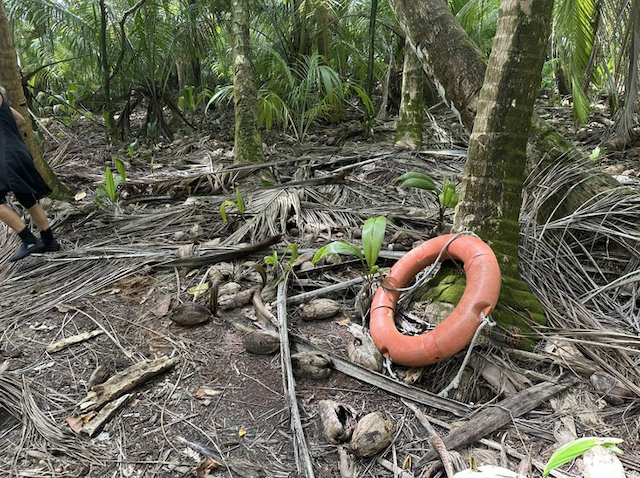
There are signs of the old life here everywhere, from the old equipment left behind – the machinery to haul boats and cargo, the old well pipelines and the buildings, to the people left behind in the cemetery. It is both fascinating and a little sad.
Île Boddam Cemetery
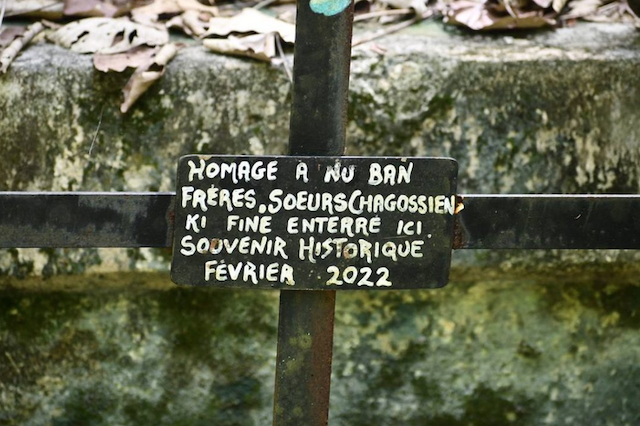
In February 2022, the first (as far as I can see) independent Chagossian heritage visit, organised by Olivier Bancoult, brought a delegation of Chagossian elders to the Iles Salomon aboard the Mauritian government-chartered boat Bleu de Nîmes. Ostensibly, the boat set off on a mission to explore the Blenheim Reef.
The cross in the photos below was likely placed during that visit, both as a mark of respect to the people buried in the old plantation cemetery and as a metaphorical planting of a flag. In 2019, the UN recognised the islands as rightfully part of Mauritius.
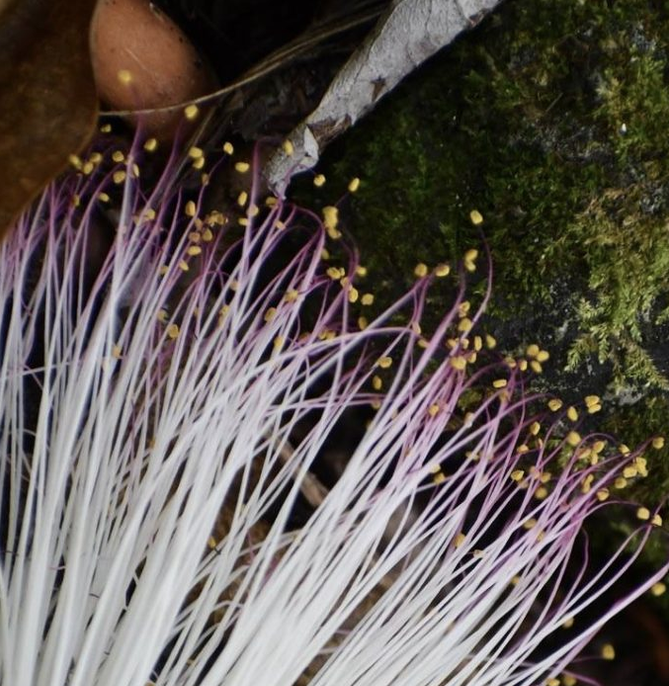
Traditionally, the seeds from the fish poison tree were ground into a powder and used to stun fish in tidal pools without making the meat toxic to humans. Whoever found that out was a braver person than I.
Crabs of Île Boddam
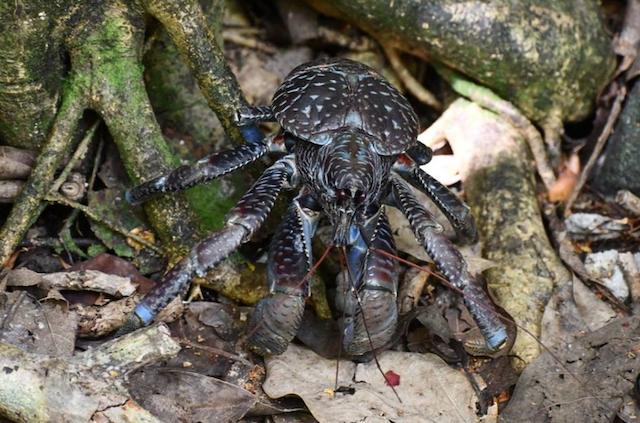
Boddam is known for its coconut crabs. They live here in abundance, probably because they aren’t short of food. These things are tremendously strong. They can lift about 28 kg, and their grip is stronger than a lion’s. In other words, not to be messed with.
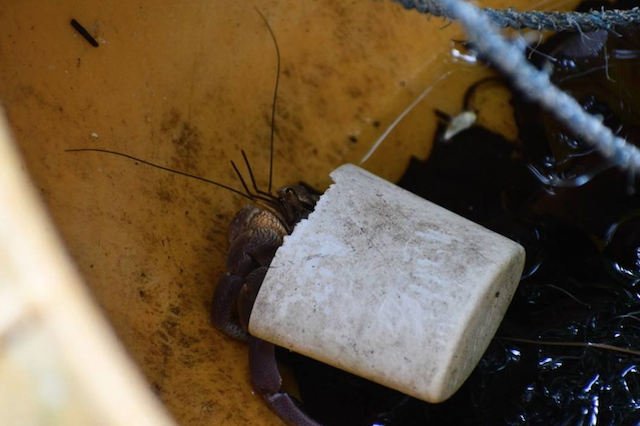
Scientists haven’t fully nailed down the colour difference.
Île Boddam Yacht Club
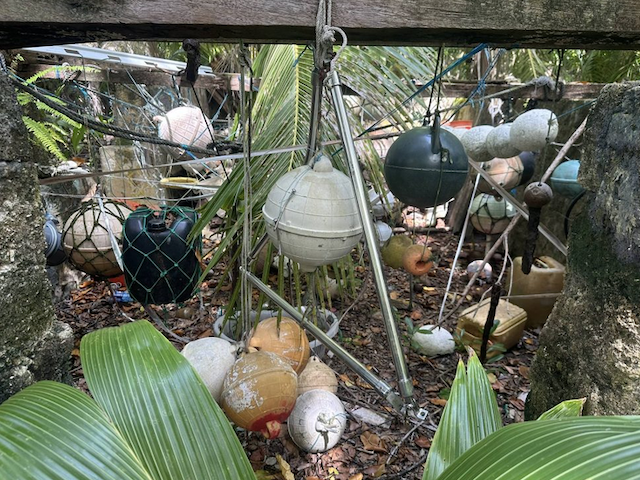
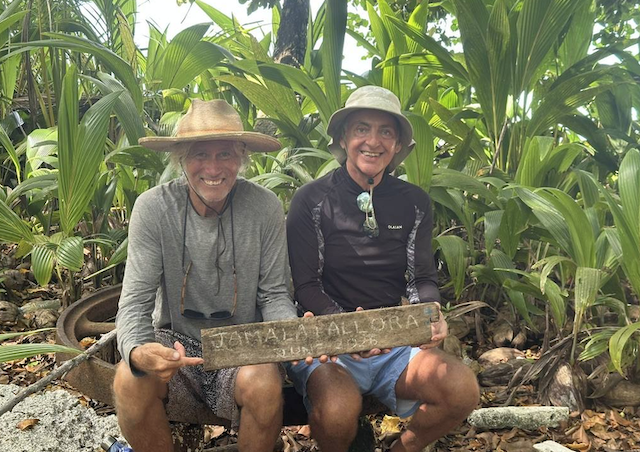
There isn’t really a yacht club here, of course – it consists of an eclectic collection of random stuff that has washed up on the shore. In other words, it is Boddam’s equivalent of a scrap yard. And that is where our mini-tour of Ile Boddam came to a close.
Allen and Maria Wadsworth
SV Jamala
Read SV Jamala’s other BIOT Reports:
Indian Ocean, BIOT Chagos: The Permit Application Process
BIOT Chagos: Four Weeks of Birdlife, Sealife and Slowlife
………………………………
Related Information:
………………………………
About the Authors
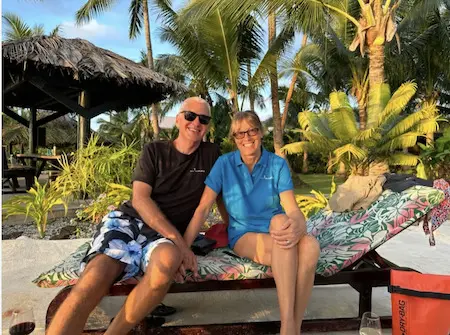
When we set off from England, we genuinely thought we would be back home after five years with our feet up and the telly on – adventure done and some salty yarns in our repertoire to share with anyone with open ears. So sure were we of our timings, that we drew up our expected dates in each country on a world map for everyone to see at a party at our home six months before we left. According to that map, we should now be on our sofa glaring at a widescreen tv.
Now, we are more than halfway around the world, crossing the Indian Ocean. We have been idling along at less than half speed. If we carry on at this rate, we won’t be back until 2029. But who knows? We certainly don’t. There could be another pandemic; it might be challenging to transit some areas because of political instability, or the weather could become even more unpredictable. Or it might be that we like somewhere so much that we want to stay longer, as with French Polynesia. Or we might get a move on.
We have met people who have taken 20 years to complete their circumnavigation and some who have whizzed around in three. We stand a fair chance of being somewhere between the two. But as long as we enjoy it and can do it, we will continue blundering our way around the world.
………………………………
Read their other reports on BIOT Chagos:
- Indian Ocean, BIOT Chagos: The Permit Application Process
- BIOT Chagos: Four Weeks of Birdlife, Sealife and Slowlife
Follow their circumnavigation voyage at:
Read Allen and Maria’s Portrait of a Cruiser:
………………………………
Other Noonsite Reports from SV Jamala:
- Malaysia: Six Months in Friendly, Convenient and Well-Equipped Pangkor
- Singapore: Efficient and Easy Arrival and Departure
- Indonesia: The Positive and Negatives of Joining a Rally
- Kei Islands to Riau Islands and Stops Along the Way
- Australia, Torres Strait: Entering Australia at Thursday Island
- Fiji: Anchorages Update from SV Jamala
- Fiji, Savusavu: A Relaxed and Friendly Bula Welcome
- Tonga, Vava’u: Local Customs, Laws and Cruising Options
- Niue: Visiting the Biggest little Yacht Club in the World
- Pacific Crossing: Farewell to French Polynesia and Bora Bora
- French Polynesia: Tuamotus, Tahiti and Gambier Islands
………………………………
© 2026 Noonsite. This content was edited by Noonsite. Do not reproduce without permission. All rights reserved.
The opinions expressed in this article are the author’s own and do not reflect the view of Noonsite.com or World Cruising Club.
If you have found this information useful, become a paid member to enjoy unlimited use of Noonsite plus many other perks. Your membership fees really help our small, dedicated team keep country information up-to-date in support of cruisers worldwide. Find out more about Noonsite Membership levels and benefits here.
Subscribe to our FREE monthly newsletter: https://www.noonsite.com/newsletter/
Leave a comment
You must Login or Register to submit comments.