
Reprinted with permission from Fabian Eder. In this report, Fabian has compiled some important information for skippers planning to sail or cross this region.
Orcas, Gibraltar and the Atlantic Coast of Morocco
Morocco is a modern country and we generally found very good infrastructure. We arranged an eSIM (Holafly) in advance, which wasn’t exactly cheap, but worked well.
Furthermore, it is important to know that every yacht must clear out of a port when leaving and clear back in when entering a port—even if it doesn’t leave Moroccan territorial waters. This needs to be factored in. All the officials we encountered were extremely helpful and very polite. Anyone carrying a drone on board must declare it. These are sealed and, in some cases, held by customs until departure. Drones are not permitted in Morocco.
1.) The Moroccan Atlantic Coast
Approximately 10–15 miles south of Cape Spartel, a coastal area begins where numerous fishing nets and fish farms float for up to 15–20 miles offshore. This area extends only to the 150-meter depth contour in the west; in the south, it reaches as far as Kenitra. Trying to avoid the nets by sailing towards the shore is pointless. They are well-lit at night, but we entered this zone in dense fog, where we could barely see our own bow. This is not uncommon when a low-pressure system passes through. On our return journey, we stayed outside the 200-meter depth contour, where the winds were also better, and had no problems. The currents can shift and reach up to 1.5 knots. Consulting a current forecast (RTOFS or CMEMS-SW) is certainly advisable.
2.) Cape Spartel
Cape Spartel can be navigated close to shore. The currents are determined by the Strait of Gibraltar and change with the Gibraltar tides.
3.) Orcas
The first Orca attacks on yachts were reported in 2020. Since then, the situation has escalated in the area, which, depending on the season, stretches from Finisterre to Tarifa. Cape Spartel lies on the southern edge of this “orca zone.” Most incidents are reported on the Spanish side, between Tarifa and Huelva or Lisbon.
The “red zone” is the Gulf of Cádiz. This may also be due to the fact that there are incomparably more yachts in this area than off the Moroccan coast. More yachts = more Orca reports. On our trip in July, we were the only yacht off the Moroccan coast; in Mohammedia we only encountered one French yacht on its way to Madeira. I myself had two Orca encounters in 2024 (off Lisbon) and 2025 (off Huelva). We kept a sharp lookout and didn’t see any off the Moroccan coast.
If a yacht wants to enter the Mediterranean from the west (e.g., from Madeira) or vice versa, I definitely recommend taking the route via the Moroccan coast over the one via Portugal and Spain. It’s safer. More on that below.
4.) Rabat
The Bouregreg Marina in Rabat is usually full. Getting a berth is a matter of luck. The instructions from SV Seefalke are still valid. The harbor cannot be entered when the wave height exceeds two meters. Entry is then impossible! Otherwise, you can only enter the Bouregreg River at high tide. It’s worth contacting the marina well in advance to inquire about berth availability. WhatsApp +212661358149. The staff are extremely friendly and helpful. If there’s no space available, yachts are redirected to Mohammedia, which lies 30 nautical miles further south. But that doesn’t mean you’ll find a berth there!
5.) Mohammedia
Mohammedia is a commercial port with terminals for flying gas and is not primarily geared towards yacht tourism. Nevertheless, everyone—from the harbor master to the police and customs—is extremely helpful and friendly. The “marina” consists of a pier that can accommodate approximately 25 yachts and a smaller pier where only small boats can moor. With two visiting yachts, the marina is full.
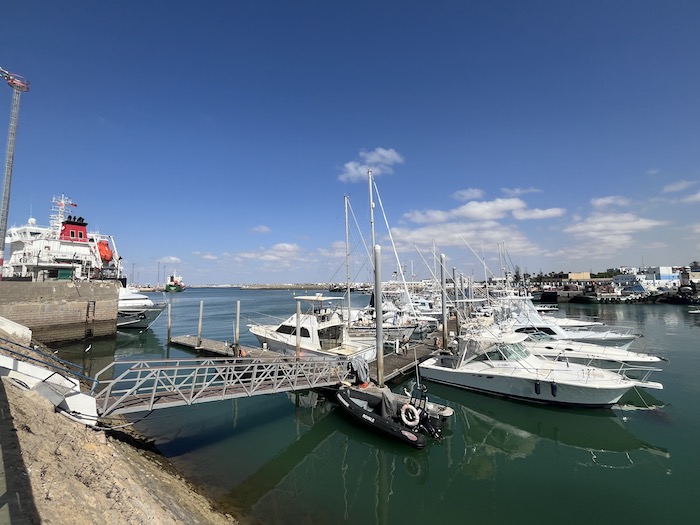
Some skippers complain that the marina’s price is relatively high. That’s true; for a 13-meter yacht, we paid around €50 per day in 2026. On the other hand, supply and demand determine the prices. Berths are scarce here. We hear that yachts aren’t welcome at all in Casablanca! The next marina is in Agadir.
With permission from Port Control, you can anchor in the outer part of the harbor, directly in front of the control tower. The anchorage is calm and well-protected. Contact Port Control via VHF channel 11. They will then put you in touch with the marina, which does not monitor radio communications. Port control was always very helpful and communication was straightforward.
Marina Mohammedia is part of the duty-free port. Passports and boat documents will remain with the police until departure. If you want to leave the port to to go shopping or explore the city, you must go to the police station. The same applies if you want to return to your boat. Sometimes you receive a permit, sometimes your passport, when you leave and this allows you back into the port and to your boat.
Mohammedia is a modern, middle-class city where you can find everything you need. Diesel is available and provisioning is easy. Casablanca and Rabat are very well connected. Rabat Airport is a 45-minute taxi ride away.
6.) Tangier
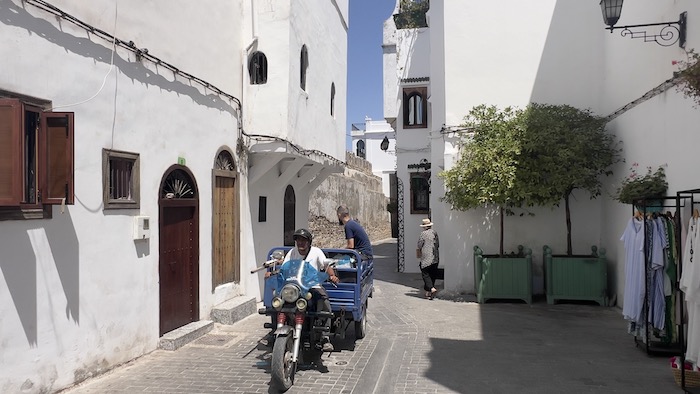
Tangier is a vibrant city. Here, cultures don’t clash; rather, they blend seamlessly. Experiencing this was worthwhile for me. The medina and kasbah are more than worth a stroll; the colors, the plants, the scents are breathtaking. There are numerous restaurants, cafes, and hotels—for every taste and budget. The modern part of the city offers everything. Even in the height of summer, the temperatures are moderate. While Europe is gripped by a heatwave, the steady breeze here provides a pleasant cool-down in the evenings.
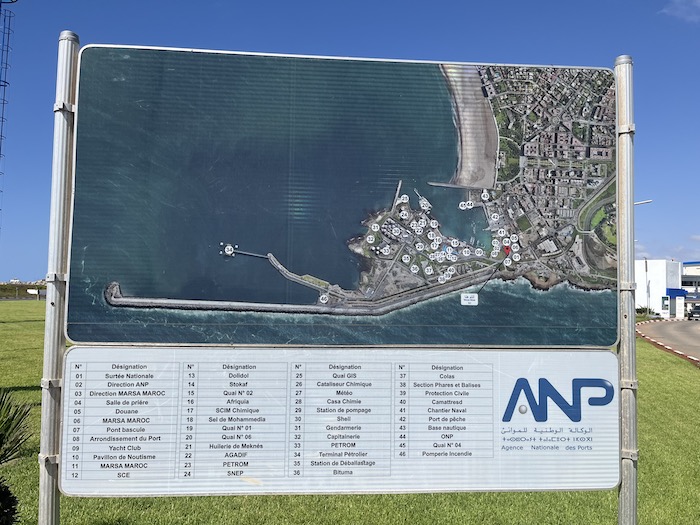
The entire harbor area is spacious, extremely well-organized, clean, and exceptionally well-stocked. It meets the highest standards. This also applies to Marina Tanja. It’s located in its own harbor basin at the eastern end; a beach stretches right next to the marina. Built in 2018, the marina is currently being expanded. Entry is straightforward, and a marina attendant will guide you through the entire process. The floating docks have finger moorings of the ideal length for yachts. Electricity, water, washing machines, showers, and toilets are all of the highest standard. The marina is well-protected and secure. A large supermarket is located near the marina, as are many smaller shops.
- Tangier Marina Tanja VHF 11
- Tangier Traffic Control VHF 10
7.) The Strait of Gibraltar
Traffic in the strait can be very heavy; be aware of the commercial ports on both sides. Radar and AIS are essential, even in good visibility. Even for small yachts, the situation can become very tight very quickly; evasive manoeuvers are often necessary. The winds in the strait can reach up to 40 knots, while elsewhere the sailing weather is pleasant!
Due to the orca situation described above, I highly recommend that yachts coming from the west and heading into the Mediterranean, as well as those coming from the Mediterranean and heading towards the Azores, Madeira, or the Canary Islands, take the route along the Moroccan coast.
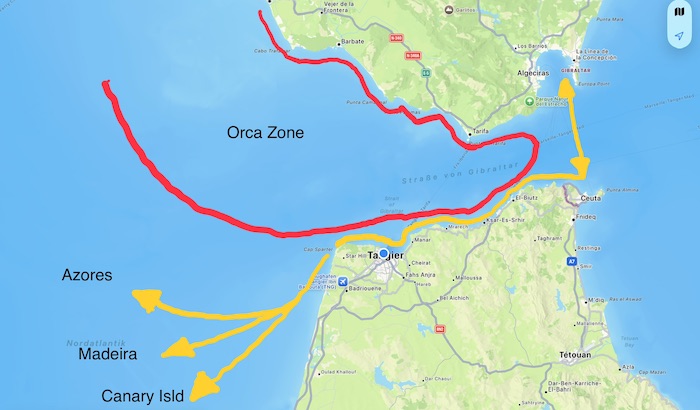
Coming from the east: Cross the Strait of Gibraltar from Gibraltar (Algeciras, La Línea de La Concepción) towards Ceuta. Stay close to the coast until Cape Spartel. Both Ceuta and Tangier offer excellent stopover opportunities.
Coming from the west: Head for the Moroccan coast approximately 10 miles south of Cape Spartel, and only turn north towards the cape late in the journey. Stay close to shore until Ceuta. Cross the Strait of Gibraltar northbound only after reaching Ceuta.
Consult the relevant sections in the IMRAY books “Atlantic Spain and Portugal” (Henry Buchanan; ISBN 978–1846239649) or “Mediterranean Spain” (Steve Pickard; ISBN 978–1846236501), both published by the RCC Pilotage Foundation. These books provide detailed descriptions of how the strong currents in the Strait change between high and low tide, when they reverse direction and when and how best to cross the Strait in your desired direction. The strength of the current can significantly affect yachts. Crossing the Strait against strong easterly or westerly winds is not possible. Note that these books were written before the Orca outbreak, which is why they suggest the Gibraltar-Tarifa passage and then southwards, a route I strongly advise against due to the changed conditions!
Fabian Eder
SY Europa
………………………………
Fabian Eder provided Noonsite with permission to use this text and images under the Creative Commons BY-NC-SA 4.0 license (Attribution, Non-Commercial, ShareAlike). All text and images remain the property of the author, Fabian Eder.
………………………………
About the Author
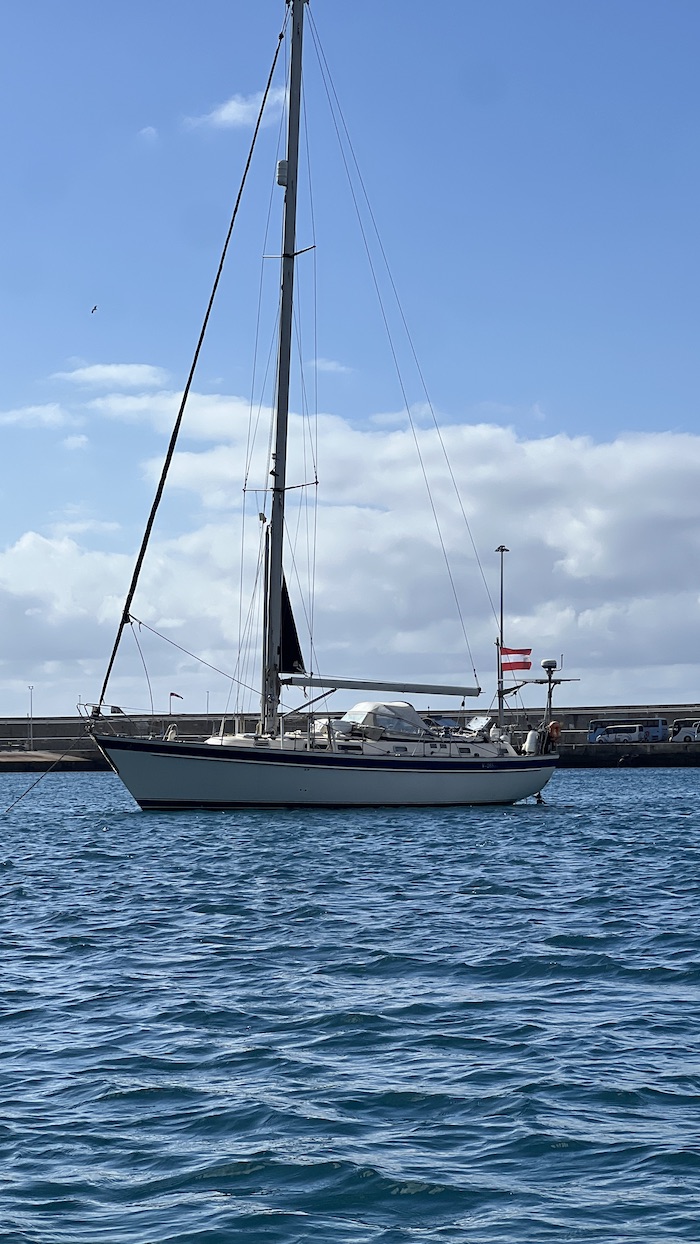
Author and filmaker Fabian Eder has been sailing the “SY EUROPA”, a 1993 Hallberg-Rassy 42F MkI, for 18 years. The Adriatic, Greece, Italy, France, the Balearic Islands, Spain, Gibraltar, the Canary Islands, Cape Verde, Brazil, St. Lucia, the Dominican Republic, Cuba, Florida, Bermuda, the Azores, Madeira, Lisbon, Vigo, Brest, Cádiz, Málaga, Ceuta, and currently Morocco. He often sails as a pair with his daughter, sometimes single-handed and occasionally with a crew of four.
………………………………
© 2026 Noonsite. This content was edited by Noonsite. Do not reproduce without permission. All rights reserved.
The opinions expressed in this article are the author’s own and do not reflect the view of Noonsite.com or World Cruising Club.
If you have found this information useful, become a paid member to enjoy unlimited use of Noonsite plus many other perks. Your membership fees really help our small, dedicated team keep country information up-to-date in support of cruisers worldwide. Find out more about Noonsite Membership levels and benefits here.
Subscribe to our FREE monthly newsletter: https://www.noonsite.com/newsletter/
Leave a comment
You must Login or Register to submit comments.