
Reprinted with permission from Carolyn Shearlock from The Boat Galley
Cruising in Hurricane Season
It’s the start of hurricane season again. There have already been three named storms in the Pacific and Atlantic Potential Tropical Cyclone One just formed in the Gulf and it may be Tropical Storm Arthur by the time you read this. Eek!*
If you’ve been with us a while, you know that Dave and I never sat still during hurricane season. We just kept cruising. And the question I get isn’t whether we were crazy for it (plenty of people told us we were). It’s how. What did we do that made it manageable?
So this week, I’ll lay out our thinking and planning.
I’m not going to tell you what to do. That’s your call, and it’s okay to say “it’s not for me.” But if you Google “can I cruise in hurricane season?” the internet mostly gives you one answer: absolutely not. I want to present the opposite side. For us (and many other cruisers that we know), cruising in hurricane season wasn’t crazy.
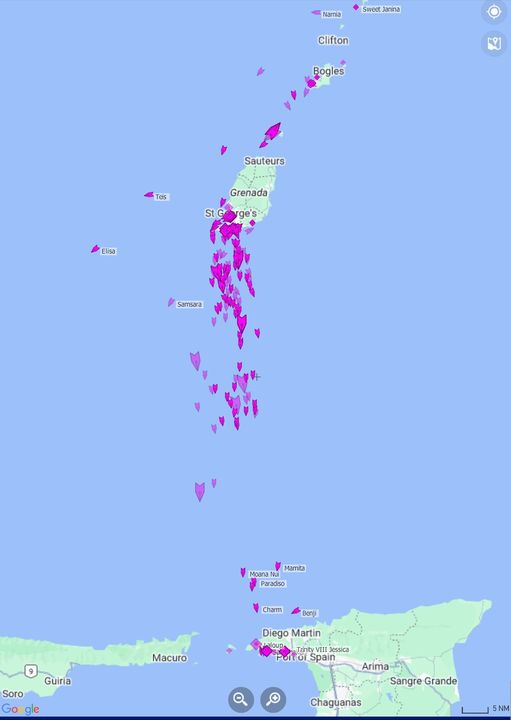
A few things the don’t-even-think-about-it crowd tends to miss:
- For any one boat, a season is mostly all-or-nothing. A storm either finds you or it doesn’t — and most seasons, in most places, it doesn’t.
- You usually see the big stuff a week or two out, not at the last minute. Watch the long-range outlooks and you get that much warning that something might be brewing, with the track sharpening as it gets closer.
- For most of us, “home” isn’t immune to hurricanes. So leaving the boat there doesn’t guarantee it (or you) will be safe.
- A few good routines, or SOP’s (standard operating procedures) as Dave calls them, make all the difference.
Dave and I spent 17 years cruising in the Sea of Cortez, in Central America and then through the Florida Keys and the Bahamas.
In those 17 years, we were hit directly twice, both times with plenty of advance notice so that we were fully prepared with the boat in excellent hurricane holes. Our total storm losses came to less than $1,000 — and most of that was a dinghy outboard we’d stored ashore in a poor spot, not the boat itself.
Start with insurance
These days, insurance is often the real limiting factor. Coverage is harder to get than it was even a decade ago, and your policy may tie your hands two ways: where you’re allowed to be during the season, and what plan you have to follow once a storm is named.
So the first step is finding out where your insurance will actually let you cruise. Check the policy for the exact language — don’t go by memory.
From there you have options: stay within the area you’re covered for, push your carrier to expand it, drop to liability-only, or self-insure.
Next, create a hurricane plan that reflects the fact that you expect to be on the move. Detail (and plan to follow) the system outlined here, and list the potential hurricane holes in the area you’ll be sailing in. We did exactly that, and our plan was accepted every year. Be sure to read what goes into a solid hurricane plan before you submit it to your insurer.
Watching the weather
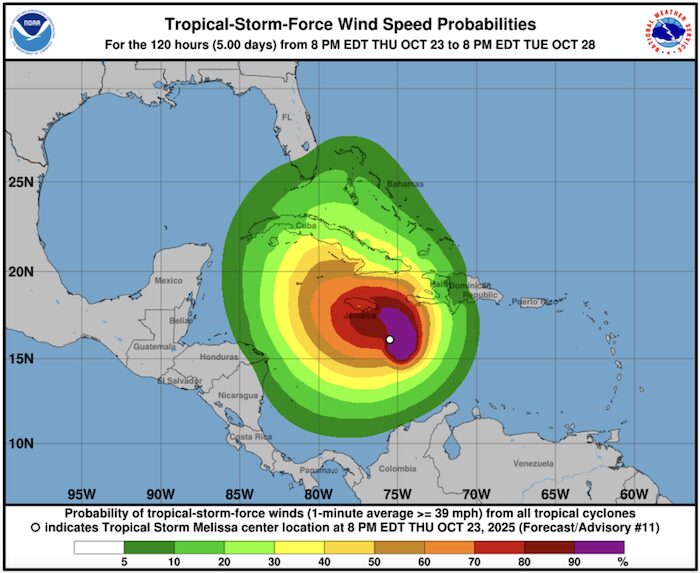
Good weather information is critical for safely sailing in hurricane season. It’s what gives you a week or two of lead time instead of a nasty surprise.
- Subscribe to the NHC Tropical Weather Outlook to get the earliest hint that something could be brewing.
- Have a plan for getting detailed forecasts and discussions once a low becomes an Invest (an area the NHC is actively watching), and then a storm.
- Learn to evaluate the forecasts and the uncertainty inherent in them. Knowing how much to trust a given forecast is what keeps you from moving in the wrong direction or at the wrong moment.
- If there is a good forecast service for your cruising grounds (such as Chris Parker’s Marine Weather Center for the US East Coast, Bahamas, and Caribbean), subscribe.
- Plan your connectivity to get the forecasts; it’s best to have one primary method and at least one, preferably two, backup methods. You don’t want to rely on wifi from a local bar; spend the money to have sufficient data. Test your sources before depending on them.
The actual cruising
The basic rule is simple: always stay within easy reach of a hurricane hole. That doesn’t mean sitting in one all summer or staying inside a 50-mile circle of one spot for months.
But it does beg the question — what is a hurricane hole, and how do you choose between the options? Some cruising guides list them, but don’t take their word that a spot has the protection, the depth for your draft, or a way ashore for your crew. Check it yourself before you need it.
If you’re not sure how to size up a location — and location really is the whole ballgame when it comes to riding out a storm — that’s one of the 8 modules I walk through in my course, Comprehensive Hurricane Prep for Boaters, right down to a checklist for comparing one hole against another.
Once you know where the holes are, you let the weather set the pace. When the long-range picture is clear, you roam. When something might be developing, you stay within a day of a hole until it passes or fizzles.
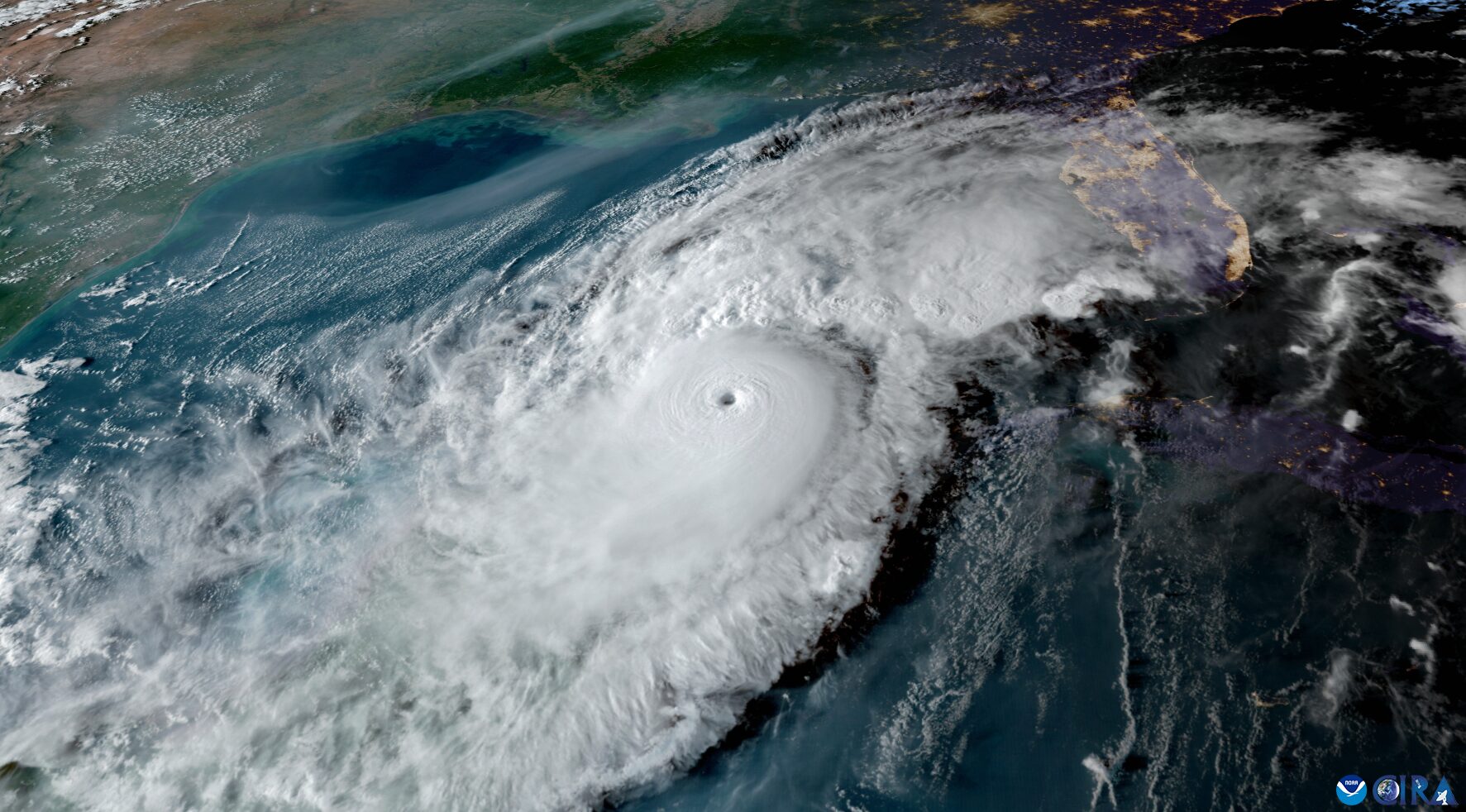
If a low gets declared an Invest, take three steps:
- Save a route into your chosen hurricane hole from an approach waypoint — much easier to do with no stress on the clock.
- Do any errands you’d need first: top off water, rent a car if you might evacuate.
- Re-read your hurricane plan, so you remember exactly what you promised the insurer you’d do.
Save the long jumps between hurricane-hole areas for stretches when nothing is even possibly brewing. It sounds overly cautious — why not make a two-day hop when the nearest possible system is ten days out? Because boats have engine trouble, days turn squally, and sometimes you arrive and don’t like the hole. If you’re sitting next to a good one right now, don’t give that up.
We also gave ourselves extra room in a couple of situations:
- In a new cruising ground, before we knew the anchorages, the weather patterns, and the local forecasters. Our last year in the Sea of Cortez, after six years there, we were far more relaxed than our first.
- With a new-to-us boat, before we had her hurricane prep dialed in — how the sails came off, where every line went. On our previous boat we could do it in one long day; with a new one we wanted two.
And during hurricane season, we were perhaps a bit quicker to keep the boat topped up with fuel, water, and fresh food so that we never had to “run errands” before heading to a hurricane hole.
The bottom line
Everyone has to decide what’s right for them, and “not for me” is a perfectly reasonable answer.
What I want you to walk away with is that cruising during hurricane season is possible if you plan it out: know how to get early warnings, know where the hurricane holes are, and allow plenty of time to get to one. And then, of course, have a solid plan for prepping your boat and evacuating should it come to that.
Here’s hoping for a mild hurricane season this year!
Carolyn Shearlock
The Boat Galley
…………………………………
About the Author
Carolyn Shearlock has spent over 17 years and 13,000 miles living aboard and cruising—first on a Tayana 37 monohull, then on a 34′ Gemini catamaran. Along the way, she’s learned what really works for life afloat. Through The Boat Galley, she now helps others flatten the learning curve with practical, real-world cruising courses and smarter cruising guides that make planning and everyday life aboard easier.

…………………………………
* Tropical Storm Arthur was short-lived tropical cyclone that brought flash flooding to portions of the Southern United States.
………………………………
Other Articles by Carolyn
………………………………
Related News:
- Tropical Storm Arthur Kicks Off 2026 Atlantic Hurricane Season (University of Maryland)
- 2026 Atlantic Hurricane Season: NOAA Predicting an Average Season.
………………………………
Related Links:
- The Boat Galley
- A Boat Hurricane Plan that Actually Protects Your Boat
- National Hurricane Center and Central Pacific Hurricane Center
………………………………
The opinions expressed in this article are the author’s own and do not reflect the view of Noonsite.com or World Cruising Club.
If you have found this information useful, become a paid member to enjoy unlimited use of Noonsite plus many other perks. Your membership fees really help our small, dedicated team keep country information up-to-date in support of cruisers worldwide. Find out more about Noonsite Membership levels and benefits here.
Subscribe to our FREE monthly newsletter: https://www.noonsite.com/newsletter/
Leave a comment
You must Login or Register to submit comments.