
Following a warning issued in January by The Dutch Safety Board against the use of a specific type of parachute flare after a Dutch sailor, en-route from Panama to French Polynesia, was killed when the flare mis-fired, the RYA is urging the Maritime and Coastguard Agency (MCA) to recognise that modern technology (EPIRB, PLB,VHF DSC, AIS, EVDS and SART) is safer and now able to provide reliable, accurate and timely rescue alerts and location information.
Current MCA regulations require all yachts over 13.7 metres (45ft) in length, and all commercially operated recreational yachts of any size, to carry flares.
‘The main problem is the MCA continues to rely on a firework as the main distress alert tool,’ says RYA Cruising Manager Stuart Carruthers.
‘There are two functions to signalling distress: firstly telling someone you are in trouble and secondly telling them where you are. The problem with flares is that they work backwards – giving the location first. There is no confirmation that someone has seen the flare and is raising the alarm,’ adds Carruthers.
‘The flare was fired according to instructions, but exploded immediately with fatal consequences,’ the Dutch Safety Board announced. ‘It is unclear why the flare exploded immediately. There is a risk that it is not a one-off incident.’
Manufacturer LECEA issued a recall for the batch: Red Rocket Parachute Flare L-35 / L-35A (Pirolec), batch 0525/2021 – 113.
Read the full article in Yachting Monthly here.
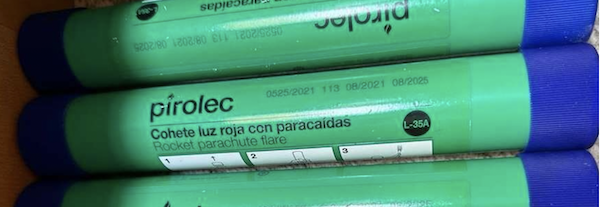
- The type of flare involved in the fatal incident.
………………………………………………………………………………………………………………………………………….
Related News:
- Dutch Safety Board Issues Recall on Parachute Flares (Noonsite)
- Dutch Sailor Dies from “New Year’s Flare” (in Dutch)
- Dutch Safety Board Warns of Parachute Signal (In Dutch)
- Dutch Safety Board Recall Notice (In Dutch)
………………………………………………………………………………………………………………………………………….
Related Links:
………………………………………………………………………………………………………………………………………….
Noonsite has not independently verified this information.
Leave a comment
You must Login or Register to submit comments.
Yes
“The main problem is the MCA continues to rely on a firework as the main distress alert tool”
Like so many things the rules are out of step with the times…there are plenty of non-pyrotechnic alternatives to flares yet the “rules” state that we must carry them – wouldn’t have done this chap much good if he really was in distress before he set the flare off. The fact that he was setting it off to celebrate NYD, also says something, about the perception of their usefulness – like burgalar alarms on buildings…has anyone ever stopped to investigate when one is going off? No….
This “rules” bound approach to things, dictating specific devices, really has to go….the rule should cover what you’re trying to achieve, not dictating how you achieve it.