
A new research paper proposes using underwater acoustic monitoring and artificial intelligence to provide vessels with real-time information about the presence of Iberian orcas in the Strait of Gibraltar.
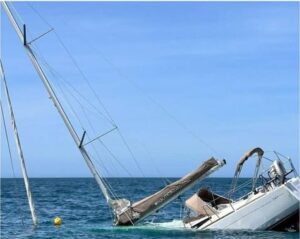
The proposal comes as interactions between Iberian orcas and sailing yachts and other vessels continue to be a concern for mariners navigating the Atlantic coast of the Iberian Peninsula. Rather than relying on reports from vessels after an encounter has occurred, the paper explores whether underwater acoustic stations could provide an earlier indication of orca presence.
Closing the information gap
The paper, Passive Acoustic Monitoring for Iberian Orca Conservation and Maritime Safety: Managed Coexistence in the Strait of Gibraltar, was written by Hans J. Scholl of the University of Washington’s Information School. Scholl proposes a network of fixed hydrophone stations capable of continuously listening for orca vocalisations.
The system would use edge-AI technology to analyse underwater sounds locally and identify acoustic signatures associated with Iberian orcas. When a detection was made, the information could potentially be combined with AIS vessel positions to provide targeted, near-real-time alerts to vessels in the vicinity.
The proposal is intended to address what the author describes as a limitation of current information systems: official orca distribution maps can be delayed, while crowdsourced reports depend on vessels already having encountered or observed the animals.
The proposed approach would therefore aim to move from reporting where orcas have been observed to providing information about where they may be now.
Is acoustic detection feasible?
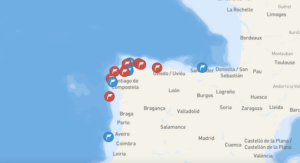
There is already some recent research indicating that passive acoustic monitoring may be capable of detecting Iberian orcas in the Strait.
A peer-reviewed study published in the Journal of Marine Science and Engineering in December 2025 reported the first preliminary recordings of Iberian orca vocalisations obtained during a short passive-acoustic monitoring experiment near Barbate. Researchers deployed a drifting buoy equipped with an underwater acoustic recorder and detected several distinct orca call types during the approximately three-hour deployment.
The researchers concluded that passive acoustic monitoring has potential for continuous, non-intrusive monitoring of cetaceans in the Strait, although their experiment was an exploratory pilot rather than an operational warning system.
The new Scholl paper builds on this general concept, proposing a more permanent network of monitoring stations and the use of automated detection and vessel-position information.
From research to reality
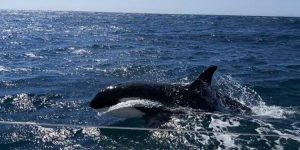
The proposed system is not currently an operational warning service for cruising yachts. It is a policy and technology proposal examining how passive acoustic monitoring could potentially be developed and incorporated into maritime safety and conservation efforts.
Questions remain around the practical deployment of hydrophones, the accuracy and reliability of automated acoustic identification, coverage of the monitoring area, communications infrastructure, and how detections would be translated into useful information for vessels.
For sailors, however, the concept is potentially significant. A reliable system capable of detecting orcas underwater and communicating their presence to nearby vessels could provide a very different type of situational awareness from the delayed maps and reports currently available.
- Read the paper: Passive Acoustic Monitoring for Iberian Orca Conservation and Maritime Safety: Managed Coexistence in the Strait of Gibraltar
- Watch an English-language discussion of the research on YouTube.
Current orca reporting and information sources
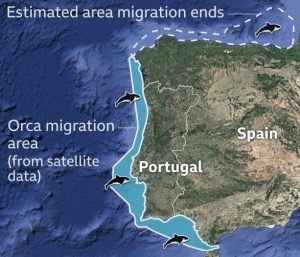
Sailors planning a passage through the affected waters should check the latest information from the organisations monitoring Iberian orca activity.
- Grupo de Trabajo Orca Atlántica (GTOA) maintains the GT Orcas database and app, with current interaction and sighting information.
- The Cruising Association (CA) maintains a long-running database of yacht interactions as well as reports of uneventful passages, and encourages skippers to submit reports after completing a passage.
- Spanish maritime authorities also ask navigators to report orca sightings and interactions to the nearest Salvamento Marítimo coordination centre. Orcas.pt provides additional community-based information and reporting channels.
- Orca Sightings – Portuguese Navy – official Portuguese channel for reporting orca sightings and interactions.
- Orcas.pt – Report an Interaction or Sighting – Portugal/Spain reporting, maps, chat groups and other sailor resources.
- For a broader collection of articles, reporting resources, guidance and useful links, see Noonsite’s Orcas and Yachts – Cruising Resources.
Noonsite does not maintain a comprehensive database of individual orca interactions; this article reports on the research and points sailors towards the organisations currently collecting and analysing interaction data.
………………………………………………
© 2026 Noonsite. This content was edited by Noonsite. Do not reproduce without permission. All rights reserved.
The opinions expressed in this article are the author’s own and do not reflect the view of Noonsite.com or World Cruising Club.
If you have found this information useful, become a paid member to enjoy unlimited use of Noonsite plus many other perks. Your membership fees really help our small, dedicated team keep country information up-to-date in support of cruisers worldwide. Find out more about Noonsite Membership levels and benefits here.
Subscribe to our FREE monthly newsletter: https://www.noonsite.com/newsletter/
Leave a comment
You must Login or Register to submit comments.