
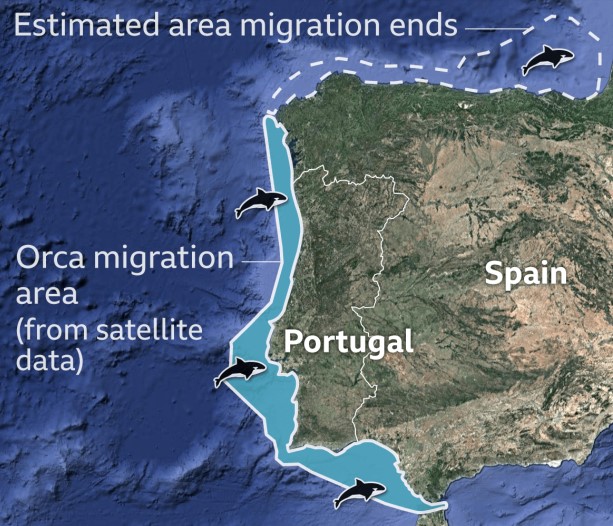
- Plan of the likely route and areas for attack risk.
In 2020, several groups of Orca whales were encountered between 2 and 8NM from the coast off the Iberian Peninsula, that interacted with yachts both sailing and motor-sailing, in some instances in a “threatening” manner.
This is an endangered subpopulation of killer whales that migrate around the Iberian peninsula. The map adjacent shows the likely migration route and areas where the likelyhood of encountering Orcas is high.
If Orca are sighted and begin to interact with your boat:
- STOP the boat (take down the sails), leave the wheel loose if sea conditions and pilotage allow it.
- Contact the authorities (by phone on 112 or by radio on VHF channel 16).
- Take hands off the steering wheel and secure the boat for possible collision effects.
- Do not shout at the animals, do not touch them with anything or throw things at them, do not let yourself be seen unnecessarily. But if you have a camera phone, or other device, record the animals especially their dorsal fins, to help identify them. All information of this sort should be sent by email to: gt.orcas.ibericas@gmail.com
- After a while check operation of the rudder, and if necessary request assistance from the authorities through VHF channel 16 or phone on 112.
- Make notes of the interaction, record the date/time and your position.
Medium-sized yachts, equal to or less than 15m, were most affected with structural damage to the rudder in some.
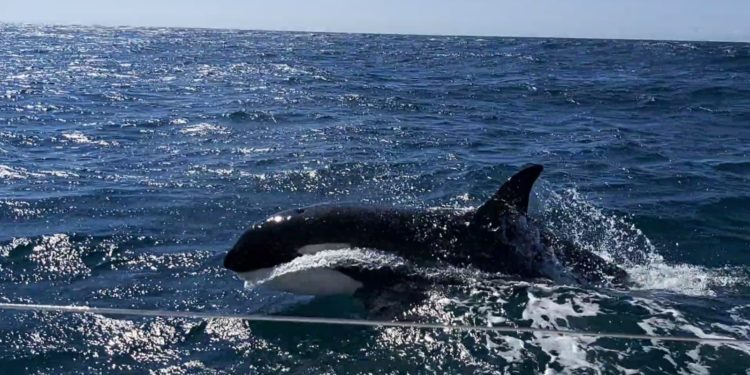
- One of the Orcas photographed by the Spanish Naval yacht “Mirfak”
Ruth explains that the Orca chase the Tuna until the fish gets totally exhausted, even paralysed, and the parts that the whales prefer is the belly of the Tuna which is the meatiest. It is still not known why the Orca whales go for the rudder, but it could be totally unrelated to the fact that they prey on Tuna.
In 2020 a call was made cautioning the media to focus information “on knowledge and conservation” instead of creating “animosity” towards Orcas.
Biologists reminded everyone that “this species is classified as vulnerable in the catalogue of threatened species and that Spain has specific protection standards for them.”
This brand new webpage, by the Atlantic Orca Working Group (of which Madeira Whale Museum is a part) is an excellent resource for sailors with lots of great information about Orcas and boats, safety protocols, regulations in Spain, maps of interactions, ID photos and much more.
Our thanks to Henry Buchanan for sharing these details with Noonsite and to Ruth Esteban, PhD, of the Madeira Whale Museum, who supplied much of this information.
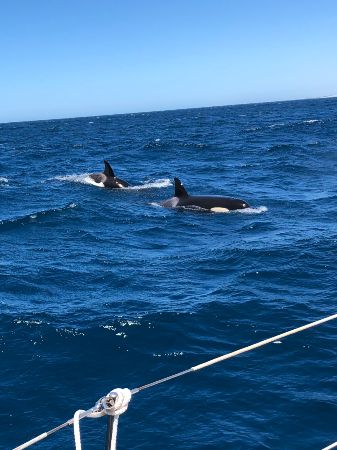
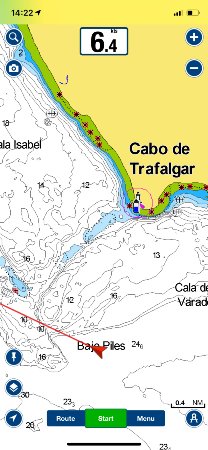
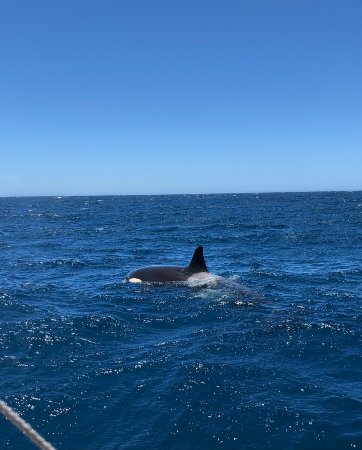
Marcos Cesar Garcia Ferreira who encountered Orcas off Barbate in May 2021 when sailing from Gibraltar to Cádiz sent us the following images:
………………………………………………………………………………………………………………………………………
Related News:
- Noonsite: Atlantic Spain and Portugal: Orcas Ramming Yachts (September 2020)
- Noonsite: NW Spain Government Introduces a No-Sailing-Zone following 29 Incidents Between Sailboats and Killer Whales (September 2020)
- Solovela.net: Orca attacks in Galicia
Related Links:
-
Atlantic Orca Working Group: https://www.orcaiberica.org/
-
Atlantic Orca Working Group Facebook page: https://www.facebook.com/OrcaIberica
- About the RCCPF
- Atlantic Spain and Portugal
Further Reading:
- Have rogue orcas really been attacking boats in the Atlantic? (BBC – November 2020)
- Ataque de orca a un barco de vela (YouTube – 31 October, 2020)
- Scientists baffled by orcas ramming sailing boats near Spain and Portugal (The Guardian – 13 September, 2020)
- Tres orcas atacan y rompen el timón a un barco de vela que se dirigía a Baiona: «Vinieron a por nosotros» (vigoe.es – 31 August, 2020 – in Spanish)
- Why Are Orcas Ramming Boats in Spain? (EcoWatch – 14 September, 2020)
Leave a comment
You must Login or Register to submit comments.
The UK Royal Yachting Association (RYA) has been contacted by the Government of Spain. They have stated that: using an engine and propeller, to reverse a boat towards an orca, the use of “noise makers”, “pingers” Acoustic Deterrent Devices (ADD) attached to boats, and throwing of pyrotechnics, flares, etc at approaching whales are forbidden by Spanish law.
The RYA has written to the UK Government and Government of Spain to clarify the legal situation and penalties that could be incurred if a crew take such action.
Richard Hill
Planning & Environment Officer
Royal Yachting Association.
Does anyone know: at what time of the year are the Orcas in the south of Spain?
Is it no problem to sail there in March as we have to do?
On http://www.orcaiberica.org I find only few occasions in winter.
Thank you
Harald
Has anyone experience with (Porpoise-PAL) http://www.f3mt.net/harbour-porpoise—pal.html?
Hi Harald, I just read this on the Med Cruisers Facebook page – dated 21st January:
Orca Encounter Cascais, Portugal
https://www.facebook.com/groups/588408531341472/
From the Med Sailing FB page 21st January, 2022:
We have just taken an Orca attack about 3 miles west of Cascais. Be aware they are currently here.
We have rudder damage and are heading back to Cascais port. The attack lasted around 30 minutes. We shut off the engine and electronics but were advised my the MRCC to put the engine on and use reverse. It seemed to have worked. I counted 4 orcas and we are a Dufour 56 on engine at the time of the attack.
an advise about creating a convoy in Cadiz and Gibraltar?
We would like to sail to Cadiz starting from Gibaltar next week (10->15 aug, 2021)
My contact is: pius.hr53@gmail.com
Hello Alberto, I recommend you post this on the Med Sailing Facebook page. There are a great many cruisers on there planning this passage and discussing forming convoys. Go to https://www.facebook.com/groups/MedSailing/?multi_permalinks=1841525849363061
We are moored since 4 days in Alcaidesa Marina (Gibraltar) and around us at least 2 boats arrived with rudders completely broken and the quadrant too.
Attacks can arrive Inshore or off shore, daytime or night time.
I think could be a good thing to organize a convoy of at least 8, 10 boats in order to advise the Guardia Civil or Salvamiento boats to escort the convoy from Tarifa till Cadice and viceversa.
Can NOONSITE publish a
Did anybody ever try to empty their black water tanks in order to oust them?
And what about switching off the depth sonar of the boat while sailing offshore?
Maybe the sonar is attracting and/or annoying them?
I wonder does the colour of your anti fouling have any bearing on likelihood of been attached
16 May a race yacht off Lisbon encountered Orcas – https://www.facebook.com/OrcaIberica
Hi there! Yesterday we had same scary experience west to Barbate approximately 10 miles of the coast
We were sailing from Gibraltar to Cádiz and they came to “visit” us
From the left, from behind and from the right
Touching the rudder as they used to do
We lowered the sails and shutdown the engine leaving rudder free
But they continued hitting the boat
Fortunately spanish coast guard approached and I contacted them with channel 16
When they approached the whales left maybe because of noise of the engine
Some orcas briefly bumped a sailboat’s rudders for about 10 minutes on 30/4/21.
We were sailing closer inshore, they were approx 2 miles due west of Tarifa. No damage reported once they arrived in La Linea.