
BIOT (Chagos): An Update for Visiting Yachts
12 April 2026
Following the recent announcement from BIOT Administration regarding the pause in new yacht permit applications, Noonsite was invited to discuss the current situation directly with BIOT officials. This included clarification on the permitting process, anticipated developments, and guidance for yachts considering a visit this season.
We would like to extend our sincere thanks to the BIOT Administrator and Senior Environmental Officer for their time and openness in explaining what is, at present, a complex and evolving situation.
Permit Applications Currently Paused
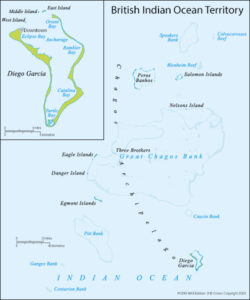
Due to the ongoing transition of sovereignty over the Chagos Archipelago, combined with continuing legal proceedings affecting access to the Peros Banhos Islands*, visiting yacht capacity is now significantly restricted. At present, only limited mooring is available within the Salomon Islands.
Permits have already been issued to yachts with confirmed dates through April to June 2026. These vessels will be accommodated at one of the two designated mooring sites in the Salomon Islands for the duration of their stay.
Permit conditions remain as outlined in the latest news item [BIOT (Chagos): Current Yacht Permit Process – Noonsite]
As of 31 March 2026, BIOT Administration has paused the acceptance and processing of new applications. This is not a permanent closure, but a temporary measure while the broader administrative and legal situation evolves. Authorities have indicated that applications are expected to resume, although no confirmed timeline is currently available.
Important:
Yachts without a valid permit should not attempt to enter into, or stop in BIOT under any circumstances. Unauthorized anchoring or entry is subject to strict penalties. Only genuine cases of force majeure (emergency situations) will be considered on a case-by-case basis.
Marine Protected Area – Respect the Rules
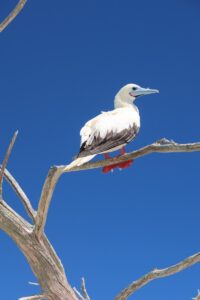
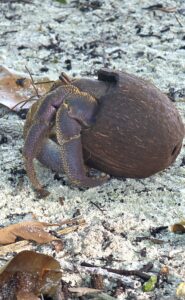
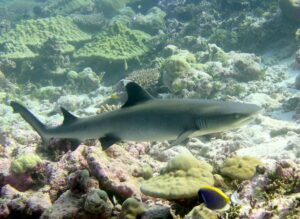
The Chagos Archipelago is one of the world’s largest and most pristine marine protected areas. For decades, visiting yachts have played an important role in demonstrating that low-impact, responsible cruising can coexist with environmental protection.
However, the BIOT Administration expressed concern that recent non-compliance by a small number of visiting yachts – including openly documented rule-breaking on social media – has undermined this trust.
Such actions not only damage the fragile ecosystem but also harm the reputation of the cruising community and increase the likelihood of stricter regulations in the future.
This is a critical moment. The behaviour of a few can directly impact access for many.
All visiting yachts are strongly advised to:
- Familiarise themselves with BIOT Law – particularly concerning the prohibition of importing items like drones, spearguns, drugs etc. and equally the prohibition on exporting shells (without valid authority from the Administration).
The Prohibited Imports and Exports Control Order - Thoroughly review BIOT regulations before arrival.
BIOT Visitors Information Sheet - Brief all crew members on permitted and prohibited activities.
- Respect no-take zones, wildlife protections, and anchoring restrictions.
- Avoid any activity that could be perceived as exploitative or disrespectful.
Remote places like BIOT, accessible only by sea, are increasingly rare. Continued access depends on demonstrating responsibility, restraint, and respect.
Permit Holders – Anchoring Information
Movement between anchorages
While yachts are currently assigned a primary anchorage within the Salomon Islands, safety remains paramount. Vessels will be permitted to relocate between designated anchorages where weather conditions significantly deteriorate or where remaining in the assigned anchorage may otherwise pose a safety concern. BIOT Admin do ask that any such movement is communicated via email to BIOTA.Environment@fcdo.gov.uk and sfpo@mrag.co.uk as soon as practicable, in advance where possible or immediately following the relocation if circumstances require prompt action.
Anchorage assignments
Anchorage assignments are made with a view to managing numbers, minimising environmental impact, and ensuring safe spacing between vessels. Where possible, assignments are granted on a preference of individual and accompanying visiting yachts at the time permits are issued. However, given the dynamic nature of conditions in the area, skippers should continue to exercise their own judgement and are encouraged to again raise any concerns with BIOT Admin directly if they feel an assigned anchorage may not be suitable in a particular forecast.
Mooring arrangements
At present, visiting yachts should expect to anchor rather than rely on any fixed mooring buoys, as there are currently no BIOT approved permanent moorings in place at either site. Skippers should be prepared to anchor with care due to flourishing coral reef habitat and variable seabed sediment holding. Techniques such as floating or buoying anchor chains to avoid coral contact are encouraged, and crews should arrive equipped with this in mind.
Fees & Access
BIOT Administration noted a growing perception that some visiting yachts are treating the territory less as a vital passage refuge and more as a leisure destination. When combined with instances of non-compliance, this perception increases the likelihood of possible fee increases, stricter entry requirements and reduced overall access.
Maintaining reasonable fees and continued access will depend heavily on how responsibly the cruising community conducts itself.
Practical Advice for Yachts Planning Ahead
For yachts considering future applications:
- Do not rely on BIOT as a guaranteed stopover this season
- Monitor updates closely through official BIOT and Noonsite channels
- Stay flexible as the situation may change
- Prepare alternative routing plans across the Indian Ocean
Future Considerations
The importance of BIOT as a mid-Indian Ocean stopover is undeniable. For many sailors it offers a safe haven for rest and repairs and a staging point for weather routing, plus it’s a unique opportunity to experience one of the world’s last untouched marine environments.
Its equatorial position also makes BIOT less prone to cyclones, adding to its strategic value for ocean passages.
BIOT Administration has made clear that they wish to continue working with the cruising community and to keep access open for as long as circumstances allow. However, with sovereignty changes on the horizon, the long-term future remains uncertain.
Now more than ever, access to BIOT depends on mutual trust.
Leave a clean wake.
Respect the rules.
Treat these islands as you would your own home.
………………………….
Useful Links
Visiting | British Indian Ocean Territory
BIOT – Visitors Information Sheet
BIOT – The Prohibited Imports and Exports Control Order
BIOT – The Wildlife Protection – Lighting of Fires in the Outer Islands Regulations
BIOT- The Visitors and Visiting Vessels Ordinance
BIOT – Laws and Guidance for Visitors
BIOT – Permit Applications and Clearance Formalities – Noonsite
BIOT (Chagos) – News on Noonsite
*Chagossians trying to resettle on islands defy removal order [BBC News 19 Feb, 2026]
Leave a comment
You must Login or Register to submit comments.