
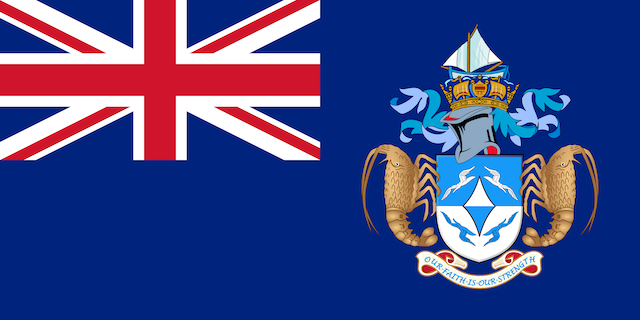
YachtFlags.com provides high quality courtesy flags that are manufactured in durable Knitted Polyester fabric. Knitted so that the fabric itself does not deteriorate in the constant movement that marine flags are usually exposed to, and polyester so that the flag does not weaken in the strong UV-light usually found in the main sailing areas of the world.
YachtFlags.com offers a discount to Noonsite members.
Use the coupon code NOONSITE-5A2B when checking out to get 10% off today.
YachtFlags.com provides high quality courtesy flags that are manufactured in durable Knitted Polyester fabric. Knitted so that the fabric itself does not deteriorate in the constant movement that marine flags are usually exposed to, and polyester so that the flag does not weaken in the strong UV-light usually found in the main sailing areas of the world.
YachtFlags.com offers a discount to Noonsite members.
Use the coupon code NOONSITE-5A2B when checking out to get 10% off today.
YachtFlags.com provides high quality courtesy flags that are manufactured in durable Knitted Polyester fabric. Knitted so that the fabric itself does not deteriorate in the constant movement that marine flags are usually exposed to, and polyester so that the flag does not weaken in the strong UV-light usually found in the main sailing areas of the world.
YachtFlags.com offers a discount to Noonsite members.
Use the coupon code NOONSITE-5A2B when checking out to get 10% off today.
Pre-Arrival Boat: The island requires as much advance notice as possible and ask that yachts do not arrive at the weekend. See Clearance for details.
Pre-Arrival Crew: No visas are required for yacht crew, however all crew must complete a biosecurity declaration prior to going ashore. See Biosecurity for details. Travel Health Insurance is mandatory.
Where can I enter? Edinburgh, on the north coast, is the only settlement on the island and the port of entry.
Are fees high to enter by yacht? There is just a crew landing fee of $15 per person. See Fees for details.
What security concerns should I know about? Security is not an issue in Tristan.
If you have information for this section, or feedback on businesses used, please let us know at editor@noonsite.com. We also welcome new information about businesses you have used (see Related Businesses).
As a free user of Noonsite you are restricted to viewing 3 country formalities per month. You have viewed 0 formalities this month – but can view the countries you have accessed to date as many times as you want.
Become a Noonsite Member and you can view unlimited formalities each month and enjoy additional member benefits. Membership fees help our team keep country formalities information up-to-date in support of cruisers worldwide.
Find out more about membership levels and Become a Noonsite Member.
Leave a comment
You must Login or Register to submit comments.
I had a great experience at Tristan da Cunha, when in passage from Uruguay to Cape Town (February, 2019). True, is’s a hard place to anchor (a buoy would be very welcomed,) but very rewarding. I was sailing solo, already 2,000 miles on my back, and needed some supplies. Bad weather one day (I slept at the lee shore, anchored close to a penguin colony,) and a holiday the other (declared at the last minute after the death of a member of the community,) prevented me from disembarking. A tender service “for all the crew” (just myself..) was offered to me at the impossible price of £150, but at the end (probably due to the delays and the fact that I really, really needed a battery,) they took me for free to shore. Fuses, a battery, clothes, fresh fruit and bacon, eggs, medicines… I’ve got everything I needed and also had the opportunity to take a glance at the settlement before getting back to the boat. Rare, beautiful, unique, extreme… what other adjectives does Tristan da Cunha demonstrate, other than remote?