
Source: Seven Seas Cruising Association
Having Fun and Making a Difference to a Bahaman Community 2023
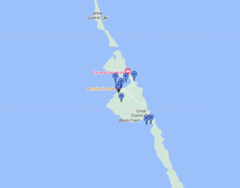
Seven Seas Cruising Association (SSCA) together with Lorraine’s Café and Bakery sponsored this year’s Bahamas Gathering, held from March 16 to 18, 2023. This Sailing/Cruising event was hosted by SSCA Cruising Station Host, Lorraine Rolle, owner of Lorraine’s Café and Bakery located in the small community of Black Point Settlement, Exumas, Bahamas. Black Point Settlement is located on Great Guana Cay in the northern Exuma chain of islands and has a large, protected anchorage capable of hosting over 100 boats.
This year marked the second Annual SSCA Bahamas Gathering. The event was established by Neil Davies, Commodore member of SSCA, in 2022 when he came up with the idea of holding an “informal gathering” of sailors and cruisers in the Bahamas.
Neil contacted SSCA and Lorraine Rolle with the hope that maybe a dozen or so boats would show up. Being an inclusive organization, SSCA invited all sailors and cruisers to attend and to everyone’s surprise, over 65 boats came to the venue.
“I was astonished by the number of boats and Lorraine and her family put on a truly remarkable event with parties, dinners, live band and DJ,” Neil said.
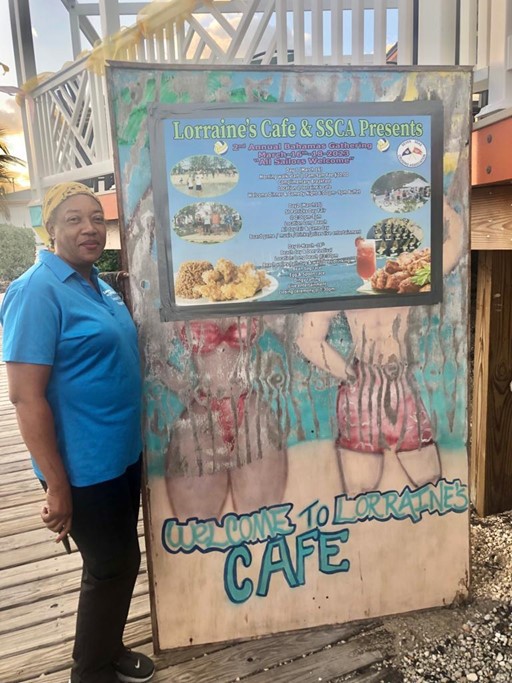
This year, Lorraine and her family once again went above and beyond, surpassing all expectations with three days of fun events which included parties, beach activities and live performers. Once again, the cruisers showed up filling the anchorage to near capacity.
This year’s SSCA coordinators were Joni Thomas and Norbert Johanssen on SV It’s Time. Joni and Norbert took the “Bull by the Horns” to promote the event within the Cruising Community, on cruiser’s nets and social media. Once again, the turnout was phenomenal with more than 85 boats attending, despite a stormy spell prior to the event!
Making a Difference in the Community
In addition to making the event a success, Joni and Norbert were committed to making a difference to the Black Point Community that would continue on beyond the Gathering.
During planning for the event, Addison Chan of SV Threepenny Opera – long-time cruiser and retired software company executive, promoted the idea of SSCA presenting a Starlink Internet system to Lorraine and the Black Point Settlement in appreciation of their efforts.
“The Starlink system could make a real impact to the community and be a great help to school-aged children as many of them do not have internet access,” Addison said. “SSCA could really make a difference if we could get this set up.”
Moving into high gear, Addison established a “Go Fund Me” and together with other donations from SSCA members, funds were quickly raised to purchase a Starlink System. Once again, Joni jumped into action and arranged for her sister to transport the new Starlink System to the Bahamas.
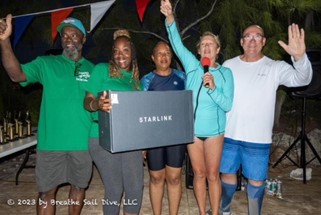
“I was beyond thrilled when I saw “Starlink” in bold letters on three sides of the carton that my sister brought with her”, stated Joni. Joni then worked with Lorraine and her daughter, Lauri to set up an account, set up the Starlink system and get things operational. “This will have a profound and long-lasting impact on the Black Point Community”, said Lorraine Rolle as she saw the Starlink system come to life.
In addition to Starlink, another SSCA member, Maureen Gappof of SV Akaroa II presented the Black Point School with Laptop Computers that were donated by their local Rotary Club (Hilo Hawaii). So, a special thank you to the Hilo Rotary Club for this donation.
“It is just fantastic to see our members making such a difference to the communities that we come into contact with”, stated SSCA President, Joan Conover. “Unfortunately I couldn’t be there, but I asked Jason Spitz to present Joni Thomas and Lorraine Roll with the SSCA President’s Award for their amazing Service to SSCA and the community of Black Point”.
Lorraine plans to make the Bahamas Gathering an annual event, so look out for information on next year’s event in mid-March 2024!
R. Neil Davies,
SSCA Commodore Member
Special Thanks to:
- Joni Thomas and Norbert Johanssen (SSCA Coordinators for 2023 Black Point Gathering)
- Lorraine Rolle and Family of Lorraine’s Café and Bakery
- Addison Chan (Lead Fundraiser)
- Maureen Gapp and the Rotary Club of Hilo Hawaii
- Jason Spitz
- SSCA Members that donated to the project and attended this year’s Bahamas Gathering
Related Links:
Seven Seas Cruising Association
………………………………
The opinions expressed in this article are the author’s own and do not reflect the view of Noonsite.com or World Cruising Club.
………………………………
Find out all news, reports, links and comments posted on Noonsite, plus cruising information from around the world, by subscribing to our FREE monthly newsletter. Go to https://www.noonsite.com/newsletter/.
Leave a comment
You must Login or Register to submit comments.
The Seven Seas Cruising Association (SSCA) in partnership with Lorraine’s Café Black Point Exumas will once again host the 4th Annual Bahamas Cruisers Gathering March 13-16, 2025. The gathering is a “NO FEE” Event, open to all Cruisers as well as the local community with a goal of making long lasting friendships. The numerous events will show case Bahamian talents (music, bands, Junkanoo, local skills and Sloop Racing). Cruisers are encouraged to meet and join the Black Point Community as these special Bahamian events are showcased. Be ready to enjoy the party!
Register at https://ssca.org/2025Bahamas