
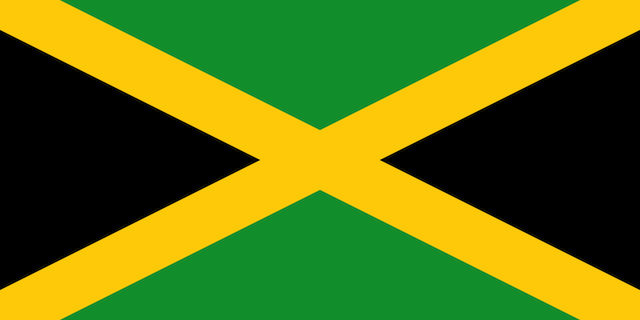
YachtFlags.com provides high quality courtesy flags that are manufactured in durable Knitted Polyester fabric. Knitted so that the fabric itself does not deteriorate in the constant movement that marine flags are usually exposed to, and polyester so that the flag does not weaken in the strong UV-light usually found in the main sailing areas of the world.
YachtFlags.com offers a discount to Noonsite members.
Use the coupon code NOONSITE-5A2B when checking out to get 10% off today.
YachtFlags.com provides high quality courtesy flags that are manufactured in durable Knitted Polyester fabric. Knitted so that the fabric itself does not deteriorate in the constant movement that marine flags are usually exposed to, and polyester so that the flag does not weaken in the strong UV-light usually found in the main sailing areas of the world.
YachtFlags.com offers a discount to Noonsite members.
Use the coupon code NOONSITE-5A2B when checking out to get 10% off today.
YachtFlags.com provides high quality courtesy flags that are manufactured in durable Knitted Polyester fabric. Knitted so that the fabric itself does not deteriorate in the constant movement that marine flags are usually exposed to, and polyester so that the flag does not weaken in the strong UV-light usually found in the main sailing areas of the world.
YachtFlags.com offers a discount to Noonsite members.
Use the coupon code NOONSITE-5A2B when checking out to get 10% off today.
Pre-Arrival Boat: Upon entry report your arrival and raise your Q flag. Yachts clearing in from foreign ports may not be allowed to dock until given permission. See Clearance for full details.
Pre-Arrival Crew: Visas are not required by nationals from a number of countries. Stays of up to 90 days (or more) can be issued on arrival. See Immigration for full details.
Where can I enter? There are multiple ports of entry for Jamaica. Click on Main Ports in the blue “Explore Country” drop down above, to see ports of entry clearly marked. See Clearance for additional details.
Are fees high to enter by yacht? There are no fees if clearing in between 09:00-16:00 Monday through Friday. Outside of these hours an overtime fee will be charged. See Fees for more details.
What security concerns should I know about? Jamaica has a reputation for being dangerous, however most crime is in the city centers. Jamaica is generally a safe country for cruisers with the normal Caribbean precautions. See Security for more information.
If you have information for this section, or feedback on businesses used, please let us know at editor@noonsite.com. We also welcome new information about businesses you have used (see Related Businesses).
As a free user of Noonsite you are restricted to viewing 3 country formalities per month. You have viewed 0 formalities this month – but can view the countries you have accessed to date as many times as you want.
Become a Noonsite Member and you can view unlimited formalities each month and enjoy additional member benefits. Membership fees help our team keep country formalities information up-to-date in support of cruisers worldwide.
Find out more about membership levels and Become a Noonsite Member.
Leave a comment
You must Login or Register to submit comments.
I visited Jamaica with my boat Begonia in Jan 2025. I am a USA registered vessel and used the online system to pre-pay for my cruising permit. I requested 6 months (expecting to pay $150), however the system charged me $300. I paid and raised the issue immediately. It seems that since USA vessels are permitted to stay for a year (rather than the 6 months for other vessels), that the system automatically charges for a full year 2 x $150, despite selecting the 6 month permit.
I needed to follow up a few times. But after 2 weeks of cruising we departed Jamaica (so definitely didn’t need a 1 year cruising permit) – and after departing I reminded the powers that be that I was mis-charged and was requesting a refund.
The refund was duly granted and paid to my credit card – whew.
So just a reminder if anyone else has this issue, to follow up and request the refund.
Oops – that should say Jan 2025 (i’m obviously still getting used to the change in the year!).
Thank you Maryanne for this useful feedback. We’d love to hear how your 2 weeks cruising Jamaica went, please do share more details.
Feedback from SV Kookaburra:
We checked into Errol Flynn Marina (EFM) on Feb 15, 2023, and had a wonderful stay in Port Antonio. Marina is very laid back with good facilities. We didn’t pay any fees to check in to Jamaica as we decided to not get the cruising permit ($150 US) and just do land travel from EFM. Short term dockage was $0.95 US/day, or you can anchor out at $25 US/day.
Fruits & veggies abound at the street market a short walk out of the marina.
A car was $70-90 US/day with weekly rates available, but an overnight in Kingston (orchid cottage +++++) with provisioning at the Price smart and some mountain touring was excellent. We rented a car on another day and went to Ocho Rios to do Dunn’s river falls, big cruise ship spot, and the next morning did Nanny Falls in Mooretown – the polar opposite of a tourist site.
Customs & Immigration was easy and straight forward.
Keith Pomeroy
We are currently in Jamaica. Though not technically open, there has been a trickle of boats allowed to enter and cruise. We have wonderful freedom here, and few restrictions. Contact the Montego Bay Yacht Club before coming.
Although Jamaica reopened airports to foreign visitors on June 15, I was informed July 1 by Errol Flynn Marina in Port Antonio that seaports are NOT open to foreign yachts and that any arriving will NOT be allowed to enter the country.
Thank you for posting this information – I am very glad you got a response from Errol Flynn Marina. We will amend Noonsite’s information.
Port Antonio – Just had my boat hauled for its annual anti-foul application along with other work. George and Flower did a fantastic job and looked after everything yet again. Nice people.
The PAJ have appointed another manager for the facility. George has done a wonderful job standing in as manager for the past 6 to 8 months (yet again) after the last manager’s resignation. He will now be expected to train up a third manager. The gentlemen and his team are so thorough, helpful and pleasant I have no idea why the PAJ have overlooked him again and not appointed him manager.
Posted on behalf of Miki Barzam on “Two Oceans”
Negril Bay – technical support could be available at the water-sport center of the resort on the beach. Ask for the hourly rate beforehand and haggle if necessary. An electrician named Santos did a good job making one good alternator out of two bad ones.
Let me recommend u on a very good and friendly lady – Ingrid- that took us to an amazing day trip in Jamaica. She has a safe and comfortable car and she took us with our kids to the most Amazing spots around Kingston but she can come to other location.
I really recommend. You will enjoy for sure as we did 876-788-5655 or 876-425-2582 and email is imevans5@hotmail.com
Yes it’s misleading, having looked at Frank Virgintino’s guide it clearly states in one place that Port Kaiser should be avoided except in an emergency (as it’s a commercial port), and then in another section on approaches to Jamaica does indicate that clearance can be made at Port Kaiser.
This is a mis-print and the new edition of the guide currently being worked on will be amended accordingly. So – in short – Port Kaiser is not a clearance port and not a port for cruising yachts. Frank Virgintino apologises for any confusion that might have been caused.
Posted on behalf of Brian Anderson (S/V Red Shoes):
Any advice please: my cruising guide to Jamaica indicates one can “clear in” at Port Kaiser if arriving from the south. But the Port does not seem to offer any welcome to yachts, and no Customs services. Is the cruising guide mistaken? Thank you for any information.
Posted on behalf of Andreas and Cordula Raimund of SY Aphrodite (Germany):
After three years we visited Jamaica for the second time. We enjoyed the Montego Bay Yacht Club and also especially Port Antonio. Anchorages are never crowded, people are extremely friendly and we felt never unsafe.
But the best is the countryside and the Blue Mountains. We drove with our guide (David Rhoden tel. +1 876 385-1305) to the Blue Mountains for several days. David showed us the country, nature and the mountains.
We will surely come back. Thanks, David.
We really know nearly all about diesel engines. But we had a problem with the pomp. We could not find out. In Montego Bay there is Rohan, he is very special about that. In 5 minutes he knew the solution to our problem. Phone (876)428-4025 and (876)952-8958.
Additional information provided by Elessar
We cleared in Bowden Harbour, no problem. There we have said, next harbour is Jamaican Royal Yacht Club in Kingston. We arrived in normal time, they had got the paper “Bowden Harbour – JRYC” also in normal time.
But on Saturday morning they came, give us the paper for next harbour and took the money. It was about 7.30a.m., but we asked not for coming so early. All of us had been still sleeping!
We paid on Saturday at 8 a.m. to the customs in Kingston 65 USD!
Posted on behalf of Steve Gould, who writes:
I have a report on the danger of sailing along the Jamaican coast at night time. I filed an “Official Complaint” with the Jamaican Coast Guard after their attempted boarding of my vessel. Their vessel was an “open fisherman” which was sitting and waiting with no lights until within 200 yards of us.
The only light they displayed throughout the episode was a bow light they turned on after charging at our vessel. They had no radio, no visible markings, barked for me to “stop your vessel” and then barked “we are boarding your vessel” repeatedly.
They made many attempts to board over the period of one hour and were only held back by my clear intention to repulse them with a machete. It is clear the Coast Guard is a danger to cruisers. The manager of the Errol Flynn Marina told me he had a similar encounter.