
Update for Senegal and Casamance River
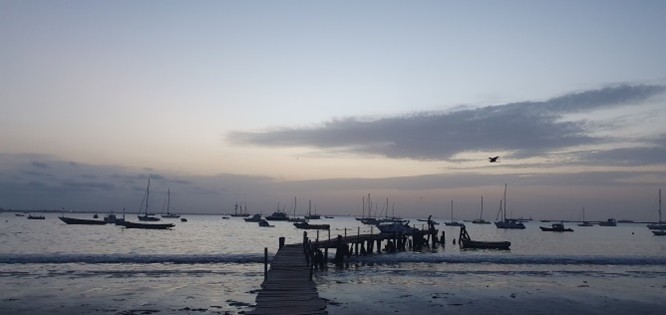
In August 2024 we sailed from the Cape Verde Islands to the Hann Bay in Dakar/Senegal. The Hann Bay is part of the huge Goree Bay and is situated in the northwestern part of the Goree Bay, sheltered from the SW to the NE, but is very open to the SE.
We were a bit early, because the rainy season in the north last from July to October and in the southern part of Senegal until November. The rainy season brings strong squalls, which blow in the Hann Bay from Southeast to East, directly towards the beach, where the Circle de Voile Dakar with a jetty is located.
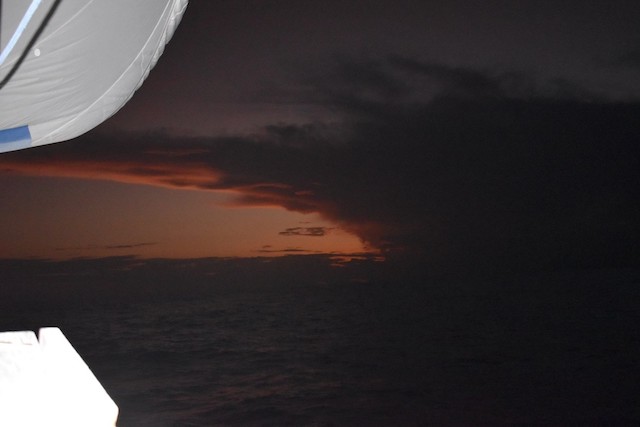
The anchor ground does not hold the anchor very well. After a few calm days we experienced a squall of about 40 to 50 knots, where about three yachts where blown onto the beach.
In a short distance to the northeast is a fishing village with lots of fishing boats and fish processing plants. Together with the amounts of garbage at the beach this creates a distinct strong smell.
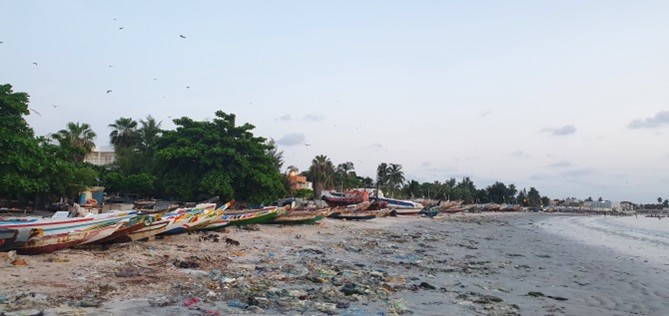
The (garbage) beach. Image (c) Knut Kaelher and Dr Bianka Martens, SV Habiby.
The Circle de Voile
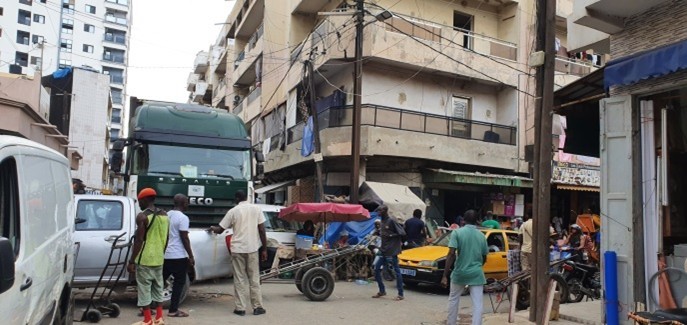
The Circle de Voile has a nice bar and restaurant in the huge garden, where you always find some helpful sailors, mostly French, who can explain the way to immigration and customs. For a small fee you can get tap water to fill your tanks and opposite the entrance is a ship chandler with limited supply. The busy city provides all you need for your Atlantic crossing or explorations further south. After half a day we even found a little oil seal for the drive shaft of our electric toilet.
Otherwise Dakar is not the city, where we would like to spend more time.
So we checked out of Senegal and headed for Banjul and the Gambia River. But Gambia is another story, maybe to be told later.
The Casamance River
After exploring the Gambia River we sailed down to the Casamance River. (The Casamance is the principal river of the Kolda, Sédhiou, and Ziguinchor Regions in the southern portion of Senegal). I did this trip several years ago and checked into Senegal in Ziguinchor (about 40 nm up the river). The same advice can be found in the “Cruising Guide to West Africa” from the Royal Cruising Club Pilotage Foundation (free download).
Last time we planned the 85 nm trip so that we were able to arrive at the first buoy of the Casamance River in the morning, because it was written, that the bar is not easy to cross and we wanted to have light with our three metre draft (78 ft staysail schooner). The disadvantage we experienced was, that a lot of unlit fishing pirogues where out there. We saw the first one only when we past with 7 knots in a few yards distance. All the crew at the pirogue was fast asleep. After that we switched on the radar and had one lookout at the bow.
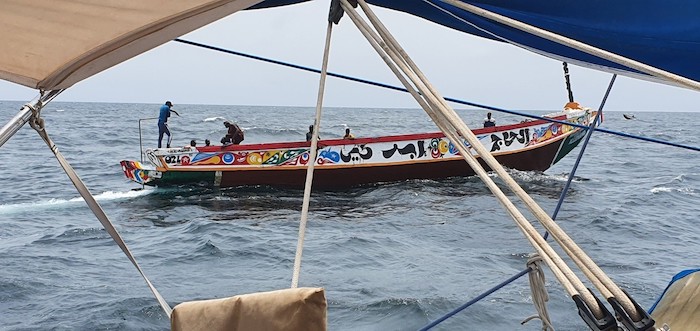
To avoid this as much as possible this time, we left at 4 AM from the anchorage in Half Die/Banjul. The electronic navionics charts showed a very well buoyed channel across the bar. And now with only 2,1 m draft of SV Habiby we did not fear an arrival in darkness. And if the entrance would have proven to be difficult, we could still have heaved to outside the channel. During the day we met plenty of fishing pirogues, but with daylight there was no problem.
We arrived at the first buoy at around 8 PM and found all buoys very well-lit and it was easy to follow the long meandering way into the river. As we were quite slow, because the ebb tide was against us, we decided to anchor in front of the beach of the first village Dioque on the northern side of the river to get some sleep.
About half an hour later an inflatable dinghy manned with armed military people came alongside and stepped, without asking for permission, on deck, pointing the rifles at us. It was quite frightening, because we had no clue whether they were really army or not. Communication was difficult, as we spoke little French and they almost no English. After studying our documents for some time and talking to the supervisor via mobile phone, they said that we are illegal in Senegal, because we cleared out in Dakar. (Note: Senegal surrounds the small west African nation of The Gambia, which has a narrow Atlantic coastline).
They explained it is no longer possible to check into Senegal in Ziguinchor. We should have sailed from Banjul back to Dakar and then come straight to the Casamance. We were not allowed to leave the anchorage. They would come back in the morning at 8 AM and tell us more.
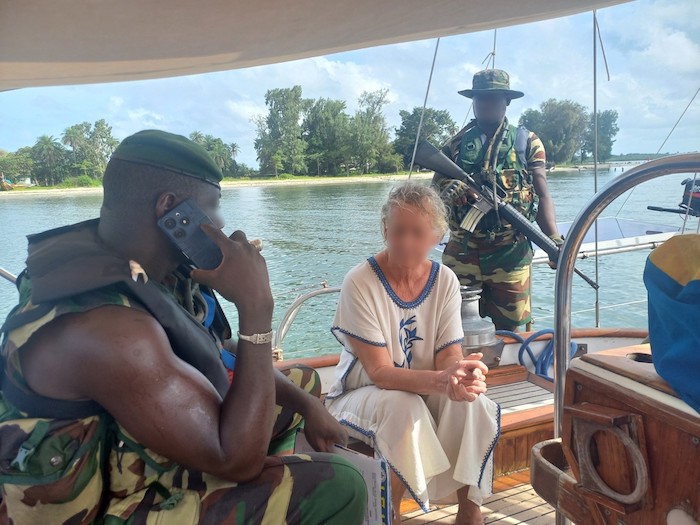
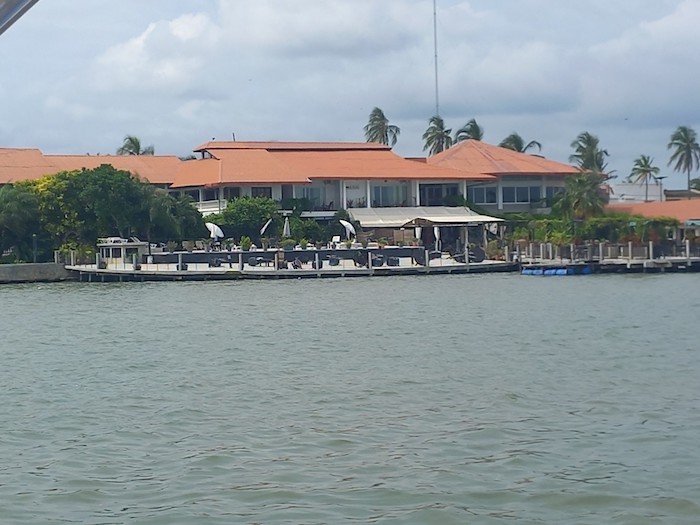
We tried our best to establish a friendly atmosphere on board the next day, while one officer performed another search and studied our documents again and one was holding his rifle, one finger always on the trigger. We had to follow their inflatable to the military headquarter at Elinquine, about two hours away with an armed guard on board. After long discussions there, they agreed to let us go to Ziguinchor and report to the police, but we should not go ashore anywhere and also not leave the Casamance River, otherwise they would put us in jail. Of course we did as we were told and anchored in front of the hotel Kadiandoumagne. They had a jetty, which we were permitted to use (see picture below).
The police officer was already informed and told us again, that we entered into Senegal illegally and would need to pay a fine and also the cruising permit for the Casamance River of 150 US$. He explained that the South Senegal has now its own administration and there is no official point of entry.
If someone will cruise on the Casamance River he must check in at Dakar, sail to Ziguinchor to pay for the cruising permit and for checking out to another country, sail back to Dakar for checking out. We managed again to persuade him to be less strict with us. He told us that he was in Dusseldorf at the police school and found the Germans very nice. Slowly the ice began to break. We explained to him, that under these circumstances we are not anymore interested to cruise the Casamance.
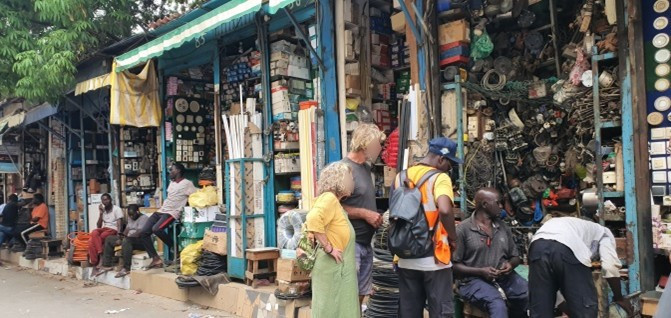
Instead we would just want to leave the Casamance as soon as possible. He waived the cruising permit and checked us into Senegal. He found an old immigration stamp and stamped our passports. Also he informed the military not to stop us and wrote us a “carte blanche”, in case someone would stop us. But he insisted that we buy him “lunch”.
All this took us a week of talking, persuading and actually acting, but in the end we were happy to get out of the situation without being incarcerated or broke. Then we left the Casamance River without any incident and sailed to the beautiful Bijagos Archipel in Guinea Bissau.
Knut Kaehler and Dr Bianka Martens
SV Habiby
…………………………………
Related Reports:
- Guinea Bissau, Bijaos Archipelago: An Unknown Paradise (2025)
- West Africa, Guinea Bisseau: An Unexplored Paradise [2021]
…………………………………
© 2025 Noonsite. This content was edited by Noonsite. Do not reproduce without permission. All rights reserved.
The opinions expressed in this article are the author’s own and do not reflect the view of Noonsite.com or World Cruising Club.
If you have found this information useful, become a paid member to enjoy unlimited use of Noonsite plus many other perks. Your membership fees really help our small, dedicated team keep country information up-to-date in support of cruisers worldwide. Find out more about Noonsite Membership levels and benefits here.
Subscribe to our FREE monthly newsletter.
Leave a comment
You must Login or Register to submit comments.