
Don’t Fight Maritime Law – Learn It And Respect It
by Elena Levon
Co-Captain
SV Rebels
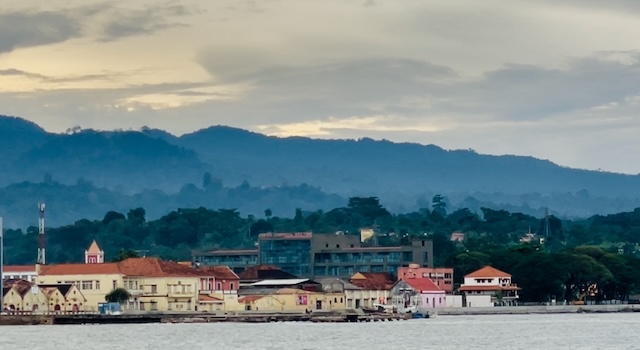
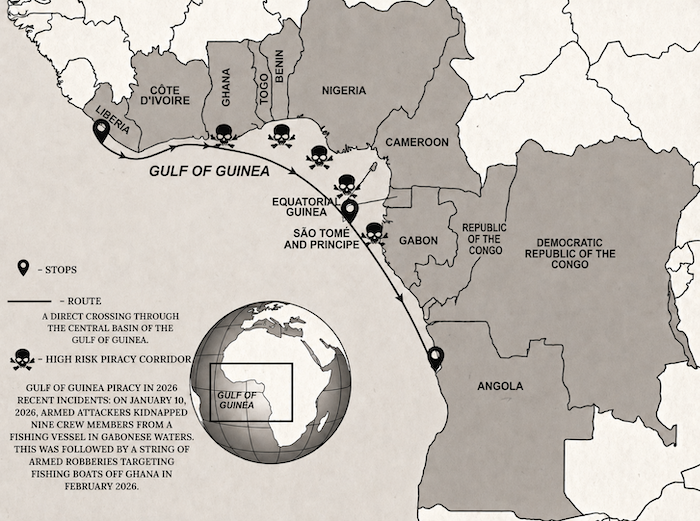
After crossing from Liberia—where our sailing yacht Rebels became the first yacht to anchor in its waters in recent maritime history—through the central Gulf of Guinea to São Tomé and Príncipe, we transited in one of the most dangerous maritime regions on earth.
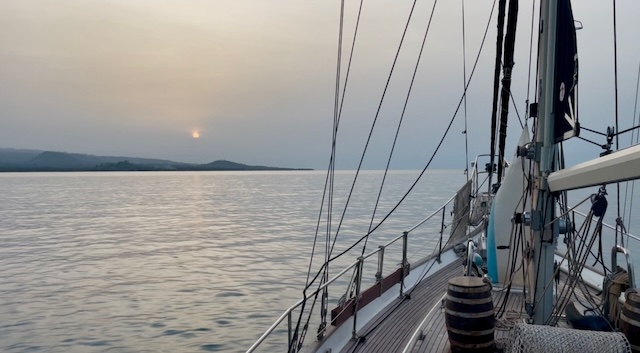
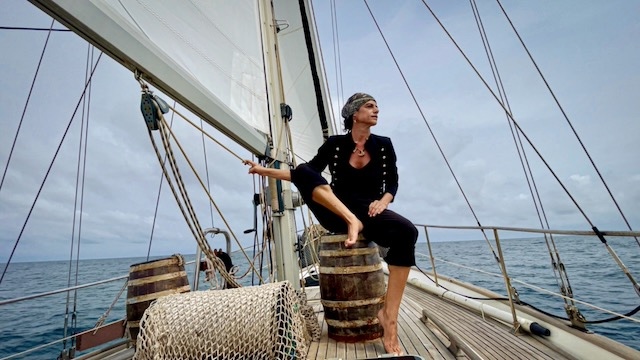
As a double-handed crew with no escort or security, navigating between squalls, lightning, and piracy waters, Rebels, a Vagabond ketch born in 1989 and adorned with Moroccan fishing nets and wooden barrels, somehow finally waltzed into Angola.
This marked the culmination of a grueling, six-month sailing expedition sailing Africa wrong way – North to South from the Canaries, navigating through Cape Verde, Senegal, the Bijagós archipelago of Guinea-Bissau during a coup d’état, Sierra Leone, Liberia, and São Tomé and Príncipe.
But what is the actual cost of such an adventure, and most importantly, why Angola? “Sailing to Angola?” a cruiser will ask, “I thought it all ended in Namibia!”
A Place to be Avoided?
Yes, Angola—a place avoided by most sailing boats. Cruising in Angola and São Tomé and Príncipe requires an adventurous sailor to be more than just a navigator and logistics manager; you must become a full-time maritime lawyer for your vessel.
Many remote ports deal exclusively with commercial cargo ships and oil tankers. Officials often rely on outdated 1980s regulation books meant for commercial giants, where massive tonnage is the baseline. Presenting a private, non-commercial pleasure craft to a shipping agent and a decades-old system that doesn’t recognize you is a game of chess. It is not a game every sailor has the stomach for.
You will often hear that clearing into São Tomé and Príncipe will cost $3,000 USD, and an Angolan agent with full clearance for several months will cost $7,000 USD. For our Vagabond 47 Rebels, that easily could have been true… But it wasn’t. Was it easy?
You can sail there and find out for yourself. But is it doable with the right amount of knowledge, patience, and will?
Absolutely.
While the full story could fill a book, here is the essential, up-to-date information and local costs for these remote locations.
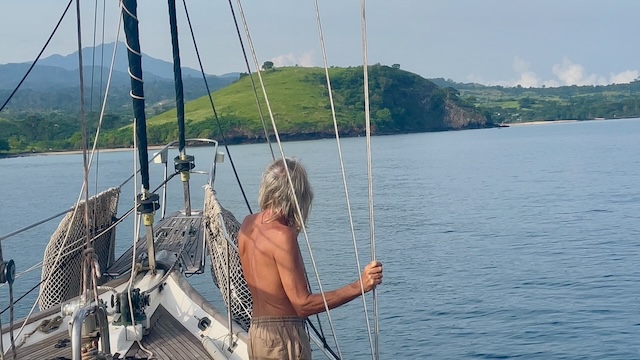
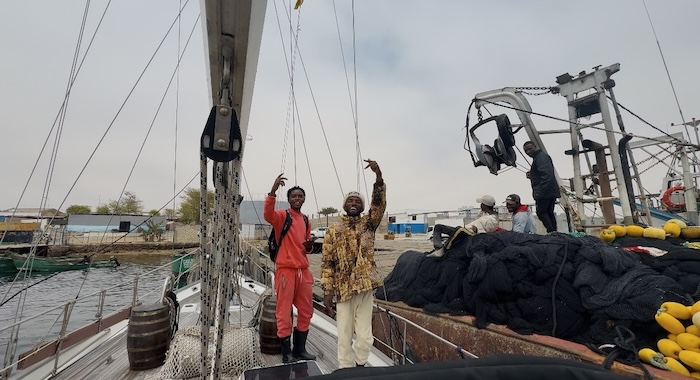
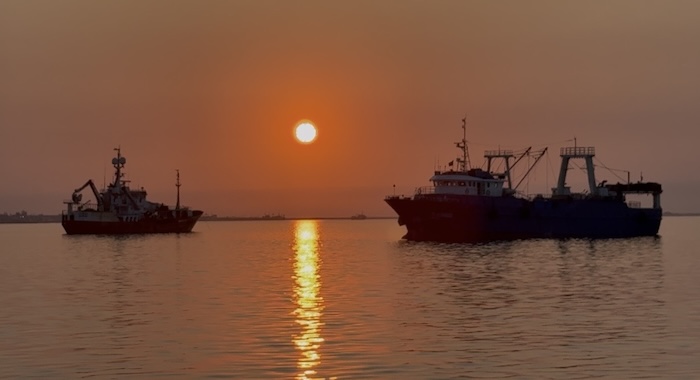
Tombwa Fishing Port and Town – Namibe Province — Moçâmedes Desert
Tombwa (officially spelled Tômbua or Tômbwa) is a coastal city and municipality located in the Namibe Province of Angola. During the Portuguese colonial period, the city was known as Porto Alexandre.
Geography: It is situated on the South Atlantic coast where the Namib Desert meets the ocean. It borders the republic of Namibia to the south.
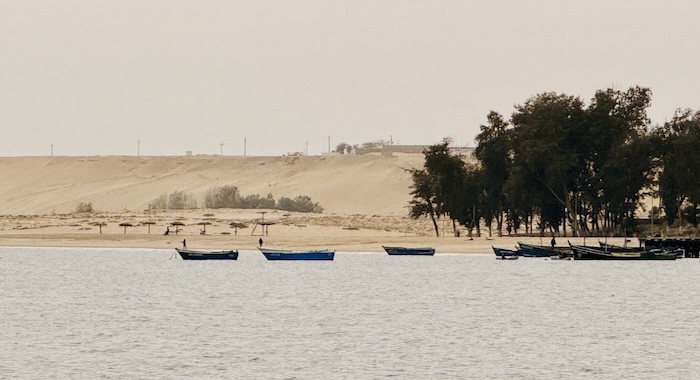
Economy: It is historically famous for being one of the largest and most important fishing ports in West Africa, as well as an area for oil production.
Tourism & Nature: The municipality is home to Iona National Park (Angola’s largest national park) and is famous for the giant Welwitschia mirabilis desert plants. A Welwitschia mirabilis plant typically lives between 500 and 1,500 years, with the oldest exceptional specimens reaching nearly 2,000 years old.
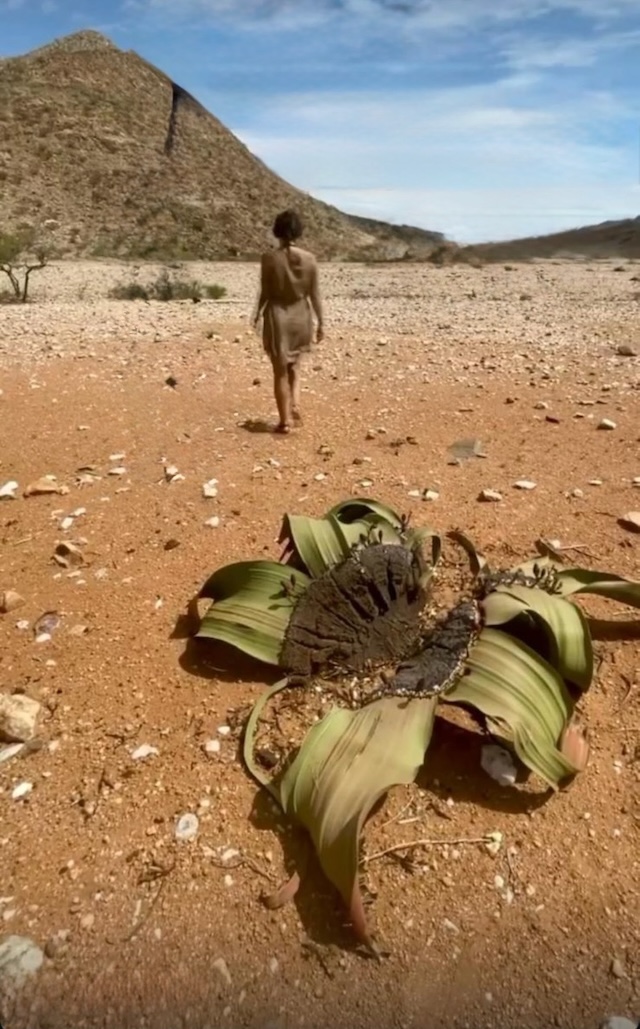
Let’s say you have never been to Angola but want to explore some beautiful desert landscapes or visit Iona National Park. Or maybe you simply need to fill your fuel tanks after leaving Namibia before crossing toward St. Helena or Cape Verde. Tombwa can also be a useful place to shelter when extreme weather is forecast.
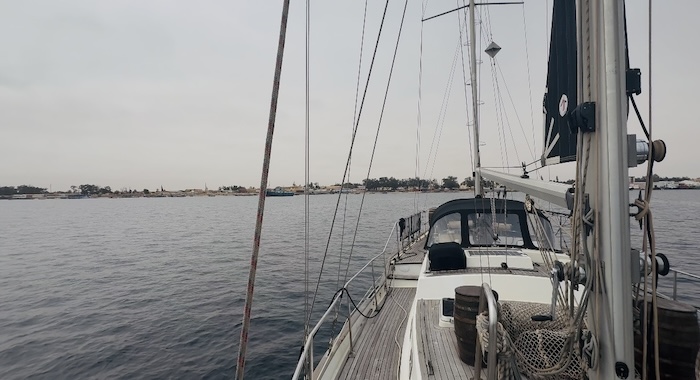
To anchor in this bay, where the desert meets the ocean, you need plenty of chain. We have 100 meters of chain and anchored in approximately 29 meters of depth. More shallow water is very close to shore. The bay is very protected from wind and swell, although there is current. More detailed anchoring information will be published on the Navily app.
Agent Contact in Tombwa
Mr. Robson Katimba
IMPERIO ROBPAZ (Su) Lda
Contact: +244 934 225 470
Agent fee: $150 USD
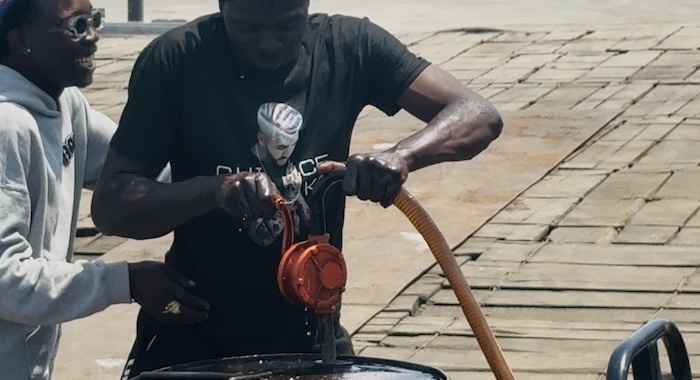
He is an incredible professional. He was on time, and everything was handled swiftly despite receiving less than a day’s notice. He managed the arrangements with the officials coming aboard and also arranged for 400 liters of diesel to be delivered directly to the port. Transportation of the fuel cost approximately $30 USD.
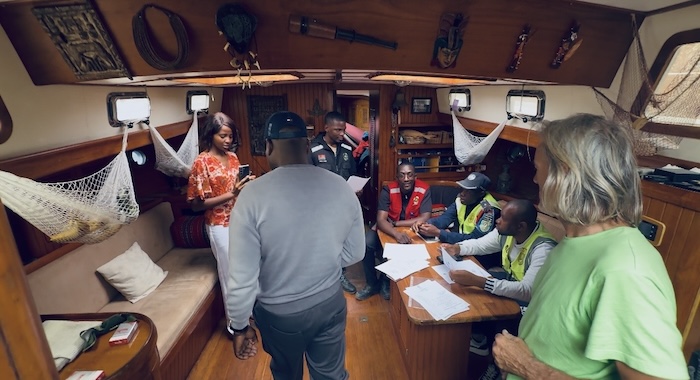
Have your yellow fever certificate (yellow card) and your skipper’s documents ready to present while cruising in Angola.
Our total cost—including officials, agent, transportation around town and 400 liters of diesel, was approximately $450–500 USD.
As a private, non-commercial pleasure craft, negotiate directly with Mr. Robson. He will try to help you, and make it clear that you are a pleasure craft, not a commercial vessel. Clearance and health officials should be around $30 USD, plus approximately $15 USD for other officials, based on our experience.
If someone tries to impose additional fees for “port use,” ask questions and negotiate. Ask for an explanation of what the charge covers and, where appropriate, the tariff or legal basis for it.
What exactly is the port providing to you while you are there?
- Assistance with berthing?
- Water?
- Electricity?
- Security?
If the answers are all no, then question and negotiate those fees – clearly, calmly, and respectfully. “Money for nothing” sounds great only in a famous song.
Food Prices in Tombwa
Tombwa is much cheaper than Luanda. A big, delicious lunch for five people, including drinks, at a beautiful beach restaurant can cost around $50 USD. Luanda is considerably more expensive for both restaurants and supermarkets. The same applies to food bought in local markets—in our experience, Tombwa was much cheaper than Luanda.
Side Note on Maritime Law
Private, non-commercial sailboats in the pleasure-craft category should not be confused with commercial shipping / fishing vessels. Tonnage and displacement are two different things. Pleasure craft is not charged based on weight, but length — that is a very different system.
If a port or official tries to impose “tonnage charges” or “port usage” charges on your pleasure craft, don’t simply accept them without question. Show them your vessel documentation, including the documents from when you purchased the boat and its registration. Ask them to show you exactly where those documents state the vessel’s “tonnage.” Then ask them to identify the legal basis, tariff, and specific provision under which they are charging your private, non-commercial pleasure craft.
If they are relying on a law or tariff, ask them to show you exactly where and how your vessel falls within it. If they are attempting to put your small private pleasure craft through a system intended for commercial shipping, challenge that classification. Ask to speak with the port captain, harbourmaster, or other responsible authority. Present your documents, present your case clearly, ask for the applicable regulations in writing, and stand your ground. Same with agents. You should negotiate agent and port fees as a private non-commercial sailing vessel, who carries no goods for sale, has no passengers other than crew and does not operate commercially within country’s waters.
Until a functioning system is developed for non-commercial pleasure craft category in a lot of remote areas, all you can do is negotiate. Kind, but firm. Every single agent and every single port. A system which tries to impose same charges on a boat that does not operate commercially as other vessels do, should be challenged, in my opinion.
São Tomé and Príncipe (Clearing Without an Agent)
For our 14.2-metre private, non-commercial sailing vessel “Rebels”, we spent three weeks in São Tomé and paid the following:
- Visas & Clearance: $270 USD total for two 1-month visas, including clearance, paid on arrival at the port. (Note: We originally had a 14-day visa-free stay).
- Capitania Fees: $45 USD. This must be paid directly to the Capitania through the local bank, located across the street from the Capitania building (a 7-to-10-minute walk from the port in São Tomé).
Clearance Advice & Protocol:
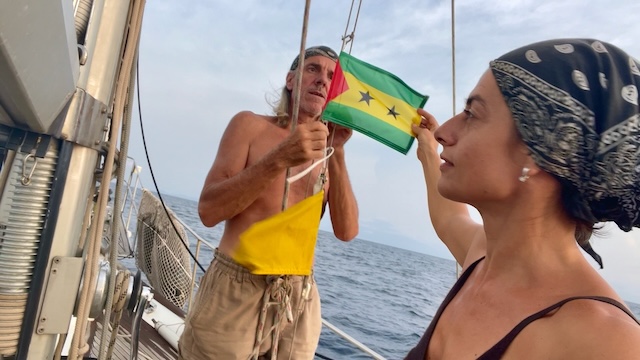
- Respect the Law: Always ask permission before entering the port. Have your flags ready, including the Q flag. Officials here will check and they will explicitly tell you when you can take the Q flag down after formal clearance.
- Be Patient: Clearance can take anywhere from several hours to several days. Island time flows at its own pace, and very few private sailboats ever stop here.
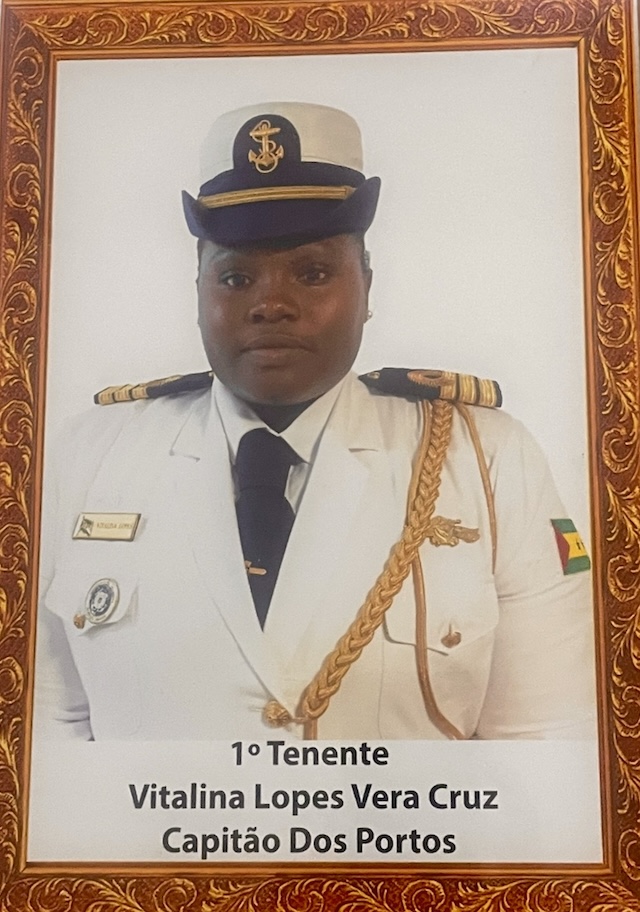
- Contact the Capitania: São Tomé is a young destination for cruisers. The wonderful Port Captain, Miss Vitalina Lopes Vera Cruz, is the first woman to achieve this high rank in the nation’s maritime sector. She is doing her absolute best to help intrepid sailors navigate a system that is slow to adapt to the international cruising community. Note: Since this report was written, Captain Vitalina Lopes Vera Cruz has completed her assignment at the Capitania dos Portos and has taken up a new position as Deputy Commander. I am deeply grateful to Miss Vitalina Vera Cruz for ensuring that everything was handled with absolute fairness and dignity towards our non-commercial sailing vessel during our time in São Tomé. I wish her every success in her new position and thank her for her kindness and assistance to us. Any sailors who wish to follow in our wake and visit this tiny nation are welcome to contact Miss Vitalina Vera Cruz as she has allowed her email to be shared in this report so other sailors may contact her for guidance. She can be contacted at:
- Daily Reporting & Piracy Rules: We were informed by the Capitania that all vessels at anchor around São Tomé and Príncipe must report their location daily to the Coast Guard. However, I was never actually able to reach them via VHF radio. Instead, I had daily contact with both the Capitania and the São Tomé Coast Guard directly via WhatsApp. Keep in mind that these strict tracking rules are likely a response to ongoing piracy in the Gulf of Guinea.
Port Logistics & Anchoring:
- Weather & Shelter: Research your cruising season and weather windows wisely. The commercial port offers no real shelter; many boats are forced to head back out to open sea if conditions become dangerous.
- Moorings: There are no moorings available for visiting yachts anywhere. (I discussed the possibility of adding a few visitor mooring buoys with the Capitania, Miss Vitalina Lopes Vera Cruz and she seemed very open to the idea).
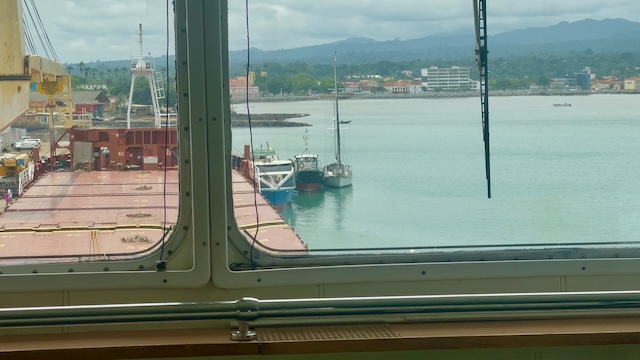
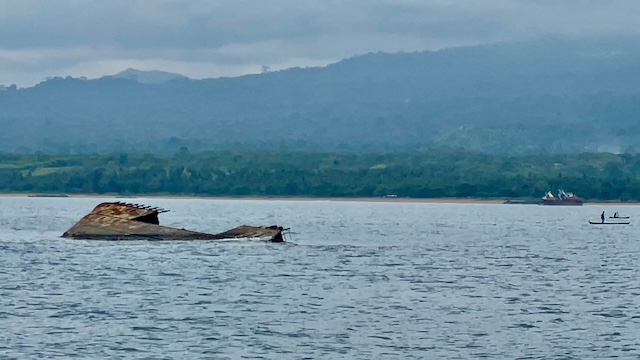
- Dropping Hook: You can anchor clear of the obvious shipwrecks, or tie up near a fishing/industrial boat. If you have a strong outboard engine for your dinghy and strong anchor set up, anchoring out is the better option. The Portuguese Navy occupies the inner port mooring.
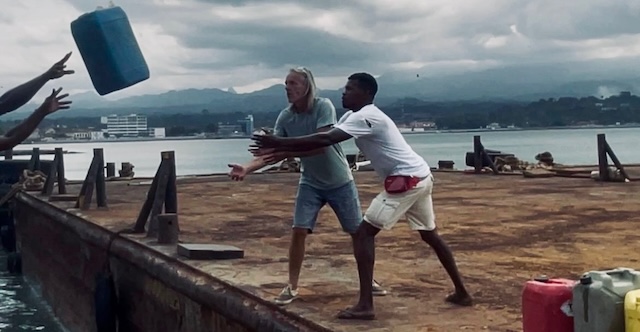
- Fuel: To get a diesel truck to come down to the port, you must order a minimum of 1,000 litres. For anything less, prepare your jerry cans and make several “diesel runs” to the gas station in town and back.
The Verdict
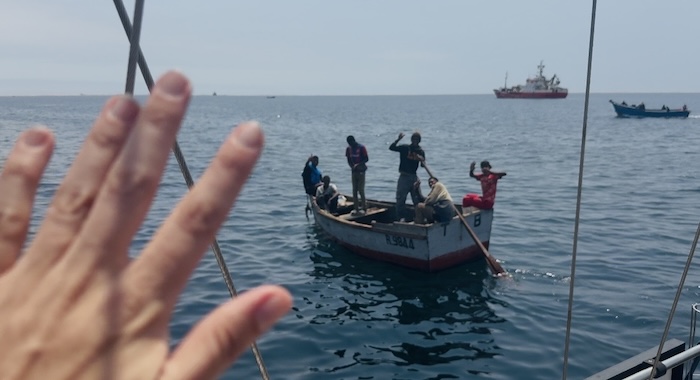
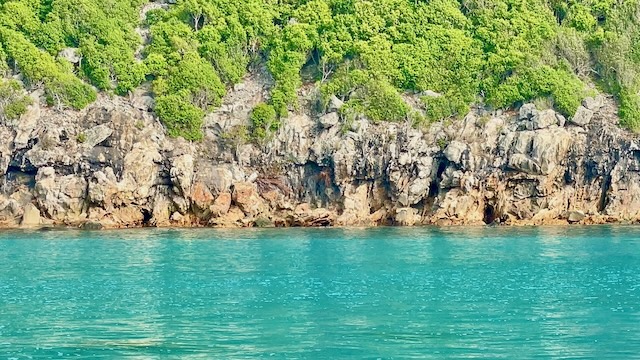
The food is great, the people are fantastic, the nature is beautiful, and the fishermen are highly skilled and friendly. The paperwork is slow and complicated, but manageable if you know the law and packed a lot of patience. Plus, as a private cruiser, you get to sail and anchor in waters where high-end West African cruise liners only stop for a few hours—at a price tag of $10,000 or more per passenger. Those cruise guests never even get the chance to swim freely in the pristine, turquoise waters of the nearby islands, but you do.
Luanda, Angola: (Clearing In with an Agent)
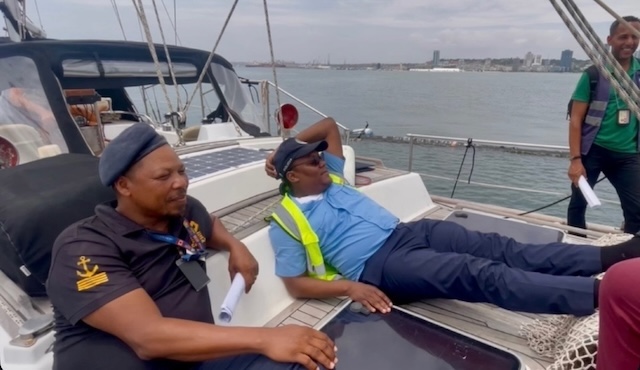
I think a few grey hairs were added to my mostly dark, 42-year-wild mane during our time in São Tomé and Angola definitely added a few more. That being said, Angola was a true and magnificent surprise—even though I had already overlanded through the country during the COVID-19 pandemic.
Choosing an Agent & Pre-Arrival Preparation
Angola strictly requires an agent for vessel clearance. I highly recommend Tomas Francisco (+244 925 482 347). After our numerous intense conversations, he now completely understands that a private 14.2-metre sailboat is not a commercial shipping monster and cannot be charged commercial rates. He will be able to explain this to the authorities on your behalf much better this time around.
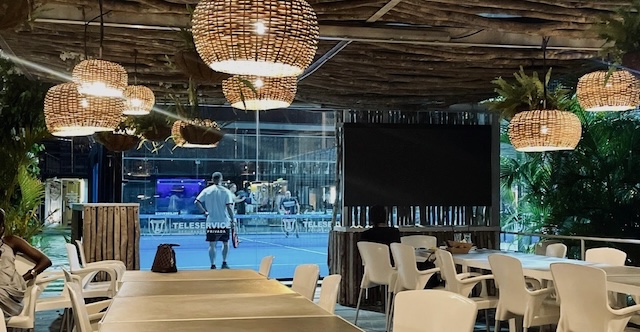
Your first step before even contacting an agent is to secure a berth at Club Naval de Luanda, one of the oldest yacht clubs in all of Africa. It was our biggest surprise: it features 24-hour gated security, padel courts, excellent restaurants, ATMs, several shops, a parking lot, and even a beauty salon. Email the club first to see if they have space for your boat.
Once you book with them, you can contact your agent. You can also ask the club management to recommend other trusted agents if needed.
Club Naval Marina Management Contacts:
- Joao Pedro Fernandes (Executive Director of Operations):joao.fernandes@cnl.co.ao
- Silvia Vidigal (Administrator): silvia.vidigal@cnl.co.ao
Arrival Protocol & The Starlink Blackout
- VHF Permission: You must request permission from the port authorities to enter via VHF radio. Taking a berth in the marina before completing official clearance is strictly forbidden.
- The Arrival Routine: On the day you arrive, your agent will orchestrate a very smooth, quick meet-and-greet. Officials from all necessary departments will be brought directly out to your vessel while you wait at anchor just outside the marina entrance.
- Grounding Hazard: Be extremely careful outside the marina entrance. Some parts are incredibly shallow, and you can easily run aground. (That part of the Rebels story is being saved for my actual memoir!) Call or phone the staff at Club Naval de Luanda to guide you to a safe anchoring spot while you wait for the agent and officials to arrive. Follow the yellow buoys near the marina, so you stay away from shallow water.
- Communications Warning: Starlink does not work close tothe port or inside the marina. Make sure to download and send all critical correspondence before you reach the port.
- Once you arrive: You will have to rely strictly on VHF or international roaming. Affordable local SIM cards with data can be bought easily once you are legally allowed into town.

Visa, Costs & Marina Logistics
- Visas: Entry was visa-free for 30 days for both of us. If you plan to stay long-term on the boat, you can fly out and apply online for an extended visa, but be prepared to visit the local police office every 30 days for a renewal stamp—a process that is guaranteed to take a few hours of your day.
- Marina Costs: For our 14.2-metre sailboat (1.70-metre draft), we paid roughly $180 USD per month, including taxes. This included 24-hour security, water, and electricity hookups.
- Water & Comforts: The marina manager advises that you must buy drinkable water separately; do not drink from the dock hose. You can collect the keys for the showers and toilets directly from the Club Naval administrator.
- Fuel: Diesel here is incredibly cheap—likely some of the cheapest fuel you will ever find on your travels. You can fill up at the station right next to Club Naval de Luanda, directly into your tanks. Pumangol is the best diesel. Price when we were there was 420 Angolan Kwanza per liter – about $0.45 USD per liter.

The Future of Club Naval De Luanda – the second oldest yacht club in Africa
In 2027–2028, Club Naval de Luanda is expected to undergo a major renovation. The plans include a gym, swimming pool, new bathrooms and toilets, and new office spaces.
Clearance out of Angola
Mr. Tomas, our agent, definitely earned the money we paid him. Our clearance out was smooth and was even completed on a Sunday during a local holiday, something that would be almost impossible to accomplish on your own.
One thing to understand about Angola: if someone tells you they will be at the boat at 9:00 in the morning to clear you out, they might arrive at noon. That’s just how things can work here. Be patient.
Tomas managed to get to us right after clearing out a cargo vessel and arranged for the officials to come and stamp our passports.
Do negotiate with Mr. Tomas based on the fact that you are a private, non-commercial pleasure craft. You should not necessarily be paying what we paid after staying for seven months. If you are coming for only a few months – or just making a short stop – the fee should reflect the length and circumstances of your stay.
A Crucial Warning
Please learn from the mistakes of others: One independent sailor arrived here, decided to just hop off his catamaran, walk into town and take a taxi to the police station.
He essentially walked in and said, “Here I am, stamp my passport, my boat is in the marina.” That man—who was in the area conducting whale research—could write an entire book about how he was swiftly thrown into jail. The team at Club Naval de Luanda had to stage a massive rescue operation to get him out. Because of his actions, the port absolutely will not let any sailboat enter the marina without pre-clearance now.
The Golden Rule: Don’t be like that guy. Respect the local law. Fly your Q flag and your courtesy flag. Call the port authorities to ask for permission to enter and leave. Do not simply walk onto the land of one of the most complicated maritime regions on Earth behaving like a casual Canaries boat-hitchhiker with a beer in one hand and a drone in the other.
Masterclass in Port Bureaucracy:
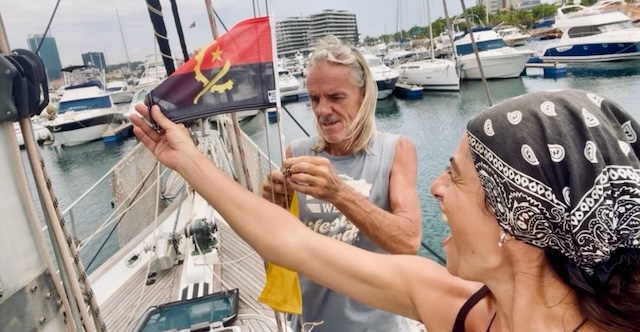
Dropping an Inbound/ Outbound Quote from $7,000 to $780 USD. We cleared in with Tomas Francisco to leave Rebels safely parked in this secure marina from March to September 2026 while my co- captain was away working. Our initial commercial-tier quote from other sources was a staggering $7,000 USD. By using my maritime law knowledge with a local agent and presenting my paperwork in a hyper-official folder with an IMO (International Maritime Organization) emblem on the cover (highly recommend this for mild intimidation), I negotiated the total down to $780 USD.
This covered inbound clearance, outbound clearance, and all formal authority and agent fees for the entire 7 months. I am certain the price could be pushed even cheaper, but since our initial commercial-tier quote was a staggering $7,000 USD, I didn’t push my luck. Dropping the fee to under $800 USD was already a massive win. Sometimes, looking and sounding like a strict commercial entity rather than a casual tourist is all it takes to make the “tourist tax” evaporate.
Or, in my case—you can take the actress out of the theatre, but you can never take the theatre out of the actress…
Club Naval de Luanda has been our boat’s secure, affordable and beautiful base from March to September. Approach it with respect, and it will be yours too.
Fair winds to you mateys, and a bottle of rum!
Elena Levon
SY Rebels
West Africa Sailing Expedition
February – March 2026
(Note: Detailed anchorage info has been updated on the Navily app).
……………………………………
Piracy Realities and Cruising Advisories
The Gulf of Guinea remains the world’s most dangerous region for maritime piracy. We did not hide. We crossed with our AIS “ON”. With lights at night. Without constant radar scans. There were no warships. No rescue services. No shipping lanes nearby. Just us, a single private sailing yacht moving silently across waters where commercial vessels require armed guards. Fear here is quiet. It sits in the background. It sharpens your senses. It is in places like these you grow not only as a sailor, but as a human.
Piracy is severely under-reported in the Gulf of Guinea. The everyday reality for vessels in these waters involves extreme measures: cargo ships wrapped in razor wire, forced re-routing, locked citadel rooms and cruise ships executing strict Gulf of Guinea security protocols. If something goes wrong out here, it will not be a Hollywood movie moment.
Crucial Advisory Note for Sailors Moving Past the Bijagos Islands
Carefully research and verify local weather conditions, security advisories and the absolute best and worst times to be in each destination before committing to your journey. Many of these coastal zones are entirely untenable or legally forbidden to approach close to shore during certain months of the year. Every skipper moving past the established cruising grounds of the Bijagos Islands must take full personal responsibility for their vessel and crew.
Final Word
When you push through your personal fear, that is how courage and resilience are built. The Gulf of Guinea baptized us in electricity, thunder, rain, exhaustion, piracy possibilities, and awe. It broke us open and made us stronger. Our beautiful yacht “Rebels” carried us through.
Throughout the journey, I spoke to her kindly during my night watches. I told her she was the best boat in the world. I think she liked that, because our final miles were among the most peaceful we have ever sailed. “Go easy, Rebels, you are doing great! Thank you, my dear girl.” I spoke to my parents too – who are no longer alive. Before my mother passed away in May 2023, I promised her that we would go sailing together. And so we did. Together. I believe both my parents would be proud of their co-captain Lena…
My deepest gratitude goes to Mr. Karl D. Huber for his unwavering support, love, and care throughout this entire expedition. You are my forever compass – of truth, humility, true love, kindness, and compassion.
No matter how wild the ocean, how fierce the storms, how strong the captain, none of us crosses life alone…
……………………………………
About the Author
Elena Levon is a Russian-American explorer, artist, and author whose work spans six continents and more than 100 countries. She is the creator of Naked Poetry, a multifaceted body of work shaped over two decades that blends original poetry and prose with fine art photography and paintings, including collaborations with internationally renowned artists.
From 2023 to the present, the Polish-registered sailing vessel “Rebels” — Vagabond 47 born in 1989, with co-captains Elena Levon (Russian and American citizen) and Robert D. “Kamikaze” (Austrian citizen) has been undertaking an uncharted West African sailing expedition — north to south, “the wrong way” — continuing toward South Africa and the Indian Ocean.
The journey began with extensive cruising around the Canary Islands, Madeira, and Morocco. In 2024, they sailed to Cape Verde and completed a rare eastward return against winds and currents, stopping in Mauritania and Western Sahara. In 2025, they headed south again via Senegal, Guinea-Bissau (during political unrest), Sierra Leone, Liberia, and São Tomé & Príncipe.
Visit her website at: www.elena-levon.com
……………………………………
© 2026 Noonsite. This content was edited by Noonsite. Do not reproduce without permission. All rights reserved.
The opinions expressed in this article and are the author’s own and do not reflect the view of Noonsite or World Cruising Club.
If you have found this information useful, become a paid member to enjoy unlimited use of Noonsite plus many other perks. Your membership fees really help our small, dedicated team keep country information up-to-date in support of cruisers worldwide. Find out more about Noonsite Membership levels and benefits here.
Subscribe to our FREE monthly newsletter: https://www.noonsite.com/newsletter/
Leave a comment
You must Login or Register to submit comments.