Fiji - Facts

Fiji's Favourite Yacht Haven: Vuda Marina is the official Noonsite marina partner for Fiji. Vuda Marina is the largest marina facility in Fiji and provides 150 inwater berths and over 150 hardstand spaces. It is now serviced by a 63 Tonne Wise Travel Hoist and a 40 Tonne Roodberg Multihull Trailer.
The Marina is also home to The Boatshed Restaurant - a restaurant popular with both the locals and visiting yachties from around the world.
Contact Vuda Marina on Ph: +679 666 8214 M: +679 776 8214 or [email protected]. Visit us at https://www.vudamarina.com.fj
Close- Important pre-arrival information: Fiji Authorities require an Advance Notice of Arrival. See Formalities for all the details.
- Fiji is an archipelago of over 300 islands, from coral atolls to large volcanic islands. About 100 are inhabited, while many of the rest are used as fishing bases and planting grounds. The International Dateline runs through Fiji, although most of the islands are just west of 180°.
- The population of Fiji is just under 1 million. Fiji has three official languages; English, Fijian, and Hindi.
- All of Fiji is in Fiji time (FJT) which is UTC +12. Except for a brief period of daylight savings for about 6 weeks from November each year at which time Fiji is in FJST (Fiji Summer Time), UTC +13.
- Fiji has a tropical climate with hot humid weather in the summer from November to April and lower temperatures and drier air the rest of the year. The eastern part of Fiji sees more rain overall than the western division. See Weather for more details.
- Fiji has all the ingredients of a perfect cruising destination – beautiful islands, secluded anchorages and welcoming people. This picture of perfection is somewhat marred by a menacing array of coral reefs that almost encircle the entire archipelago. The majority of visiting yachts arrive from the east, which is where the reefs have claimed most victims. Part of the problem is that it is forbidden to stop at any of the eastern islands before clearing in and a careful watch is kept on yacht movement by the Fijian authorities. The location of the few ports of entry complicates the task of cruise planning, especially for those hoping to visit the eastern Lau group to windward of all ports of entry. The most convenient ports for those intending to cruise eastern Fiji are Levuka on the island of Ovalau, or Savusavu on Vanua Levu.
- The traditional way of life is still thriving in the islands and the unthinking attitude in the past of a few visiting sailors has caused offense and animosity, which led to a strict control of cruising permits. Local etiquette should be observed and it is expected that a courtesy visit to the chief or headman of the island or village bearing a gift of yagona (kava) is made. See Local Customs for more details.
- Traditions are not so strong in the western islands, some of which have been developed as tourist resorts, such as the charming Mamanuca islands, which are a short hop from Nadi airport, convenient for crew changes.
- Further west is the Yasawa Group, one of the most popular cruising grounds due to scenic anchorages and clear waters. Pickmere’s Yasawa chartlets are essential for cruising the Yasawa group and are available in Lautoka.
- Two marinas on Viti Levu are now Ports of Entry: Vuda Point and Port Denarau. Both form convenient ports of call as well as being close to Nadi international airport.
- The opening of three marinas in Savusavu, Copra Shed Marina, Waitui and Nawi Island Resort and Marina, have made it a popular base from which to explore the eastern part of the archipelago.
- Rotuma and several smaller islands lying approximately 200 miles NNW of Fiji, form a distinctive group and although administratively linked to Fiji, ethnologically they are very different as Rotumans are Polynesians. Rotuma is now an official port of entry with a dock at Oinafa for clearance and the administrative center at Ahau, at the other end of the island.
- Fiji now has excellent repair facilities for cruising yachts at both Vuda and Denarau Marinas and the new Nawi Island Resort and Marina in Savusavu. Good value for money and good quality, but be sure to monitor work at all times.
- For information on provisioning and other supplies, see Yachting Essentials.
Read and Post Related Comments
If you have information for this section, or feedback on businesses used, please let us know at [email protected]. We also welcome new information about businesses you have used (see Related Businesses).
Next Section: Profile: Security
Related to following destinations: Fiji
Country Navigation
Courtesy Flag Discounts

YachtFlags.com provides high quality courtesy flags that are manufactured in durable Knitted Polyester fabric. Knitted so that the fabric itself does not deteriorate in the constant movement that marine flags are usually exposed to, and polyester so that the flag does not weaken in the strong UV-light usually found in the main sailing areas of the world.
YachtFlags.com offers a discount to Noonsite members.
Use the coupon code NOONSITE_5A2B when checking out to get 10% off today.
Buy Now On YachtFlags.comMain Ports - Fiji
Courtesy Flag Discounts
YachtFlags.com provides high quality courtesy flags that are manufactured in durable Knitted Polyester fabric. Knitted so that the fabric itself does not deteriorate in the constant movement that marine flags are usually exposed to, and polyester so that the flag does not weaken in the strong UV-light usually found in the main sailing areas of the world.
YachtFlags.com offers a discount to Noonsite members.
Use the coupon code NOONSITE_5A2B when checking out to get 10% off today.
Buy Now On YachtFlags.comFormalities
Courtesy Flag Discounts
YachtFlags.com provides high quality courtesy flags that are manufactured in durable Knitted Polyester fabric. Knitted so that the fabric itself does not deteriorate in the constant movement that marine flags are usually exposed to, and polyester so that the flag does not weaken in the strong UV-light usually found in the main sailing areas of the world.
YachtFlags.com offers a discount to Noonsite members.
Use the coupon code NOONSITE_5A2B when checking out to get 10% off today.
Buy Now On YachtFlags.com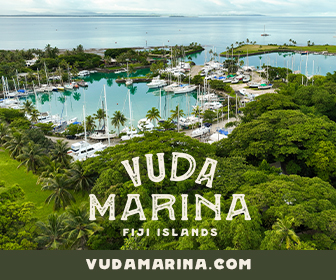

The Water Authority of Fiji (WAF) has issued a notice that due to dry spells experienced, this has resulted in low water levels in their reservoir. In effect, this means the whole of Nadi, including Denarau Island, is experiencing – or will experience – low water supply.
The Maritime Safety Authority of Fiji (MSAF) has advised that several islands in the Mamanuca Group will be off limits from 15 April to 30 June 2023 due to filming for the US Survivor series 2023.
The islands are Monu Riki, Monu and Yanuya Islands, Tavua & Nautanivono Islands and Mana Island including Nuku Is.
A 24 hour exclusion zone applies to these islands and all vessels are required to give a wide berth of at least 1.5 nautical miles from the shores of the respective beaches and islands.
More information is available from the MSAF website – http://www.msaf.com.fj
FYI: Seal Superyachts is no longer offering their services as an agent for entry to Fiji via the Blue Lanes.
Looking through the updated notes on entry into Fiji I notice that there is a charge noted for dock garbage removal. Please know that Denarau Marina does not charge for this. Biosecurity does. Thanks
It is with sadness that I report the passing of Curly Carswell of Savusavu on April 11,2021 after a long illness. Curly was a stalwart of the cruising community in Fiji and Savusavu and he will be missed.
As of April 1, 2021, Savusavu is now open for Blue Lane arrivals in Fiji.
https://www.fijitimes.com/savusavu-approved-as-port-of-entry-for-foreign-luxury-yachts/
And it’s not just for luxury yachts. Any yacht can use the procedure.
After being stuck in the rather chilly New Zealand autumn and winter during the lockdown there from March till July 2020, I was finally allowed to clear out on July 23 after being Covid tested.
Fiji bound!
Arrived at the designated quarantine anchorage outside Port Denarau Marina on July 29. Nine other yachts were anchored there with their Q flags up. I had used almost exactly six days from Whangarei in NZ and was therefore required to wait another eight days in quarantine at anchor. Dinghy had to stay onboard and no swimming to any other boat – so no socializing except on the VHF. Friendly Fiji Navy personell in a RIB came by twice a day. They even accepted some NZ cash I had and bought me a bottle of local rum to help me pass the time. Change came back in Fiji Dollars.
As the yachts that had fulfilled their quarantine time disappeared into Denarau Marina and were cleared in they were steadily replaced with new arrivals, nearly all coming directly from either French Polynesia or New Zealand.
One requirement for entry to Fiji in these covid times is to work through an agent. I chose Yacht Partners Fiji and have NOT regretted that decision. Jo (Josephine) and her staff have been exceptional! All clearance procedures were taken care of, cruising permit included. I wasn’t even visited by any authorities during the process. Technicians I needed for some issues on the boat were quickly provided. Anything can be arranged with a smile.
Carol, their Auckland representative has skippered yachts in Fiji for 44 years and gladly provided firsthand knowledge when I asked. She is the author of all the “Cruising The Fiji Group” articles in the free annual booklet “A Mariners Guide To Fiji”, also online at http://www.fijimarinas.com.
I have been told that I was among the first 100 boats to arrive. As a result the cruising situation here is truly amazing right now. Fiji is huge. A circle around the 322 islands has a more than 300 nautical mile diameter. About the same distance as Antigua to Grenada. Hardly another yacht to be seen. This is probably as close to cruising the islands of the South Pacific forty years ago as it will ever be again.
I went straight to the southern Lau group which is the most remote region. In every island village the people are very welcoming. I am anchored off my fifth island now and have been the very first yacht that has visited each of those five islands this season.
At the same time it’s a tragic situation for many. Most tourism related business is closed. No customers. Many people are out of work and having trouble making ends meet.
Nature is good here though.
The very big question remains however:
Where to go in November for hurricane season?????
Coral Trekker left French Polynesia together with Bona Dea as buddy boat on the 1. July 2020 and sailed directly to Fiji. The entire A.C. ( after corona) process if in flow and changes weekly. As we did not get a “certificate” from the laboratory doing the Covid-19 test we did not do one on the departure side. This was not really a problem and resulted in a 14 days quarantine in Port Denarau. Well supported by the Navy for food and a SIM card that is much cheaper than spending 250USD p.p. for the Covid-19 test in French Polynesia. If you want your travel time to count towards the quarantine get a statement IN ENGLISH with letter head date and placed signed and stamped by the laboratory. Then leave latest 48 hrs after that test and make no stop anywhere else the test will be compromised.
Just one day before arrival and after 18 days at sea we ran south of Viti Levu in a storm with 42 kts. Westwind and 8 m waves. Our 3rd reef unfurled and the genoa sheet broke. Our buddy boat had not engine as the pre-filter got blocked. We cruised N-S-N offshore from 03:00 to daybreak to find a bay with calm water to do repairs. Passing the Lakeba Passage boats are followed by satellite and AIS. We resolved the problems ourselves. After a while we got a visit from the water police asking for papers and documents. In a weeks process we had to explain the emergency stop. The authorities could see the evidence and we also pre-filed the C2-C form which was also B.C. mandatory. Anyway we got fined 1000FJD because at 03:00 in the morning we did not inform the gov. officer of our intention to change the initial course and planed to take a shelter for repair.
So be warned the customs and immigration people in Port Denarau are very welcoming and friendly. The border enforcement agents watching you as you enter Fiji territory are Rottweiler and will take any paragraph in their books to issue you with a fine.
Also my recommendation is to file the C2-C form and appoint an agent. The agent will send you a bundle other additional forms to be filled in. DO NOT leave for Fiji before you get a clear written statement from frcs approving you and inviting you to Fiji and confirming you case has been approved. Some clerks write messages like : ( C2-C form ) well received or we confirm receipt of your pre-arrival form. That ain’t enough!
Check the process frequently for changes. Once on the way you can not deal with updated forms and processes as the file sizes are too big for IridiumGo.
Our insurance is requiring a rigging inspection in Fiji by August, 2020. Can anyone recommend a qualified rigger for that purpose? I did see the mixed comments about Bruce of Westside Rigging & Wire Ltd, who operates out of Vuda Marina. Are there others? Thanks.
I have been here in Vava’U, Tonga since the middle of last August and I’m planning to move west all the way to Australia by early November. Aside from a visit to the US mid-August to early September, I have time to kill along the way. I’m planning on leaving my boat in Vanuatu for the trip to the US. That means I basically have April to early August to spend in Fiji. Several questions come to mind:
– Coming from Vava’U, is Savusavu the best port of entry?
– I understand that there are a lot of un/poorly charter reefs in Fiji. Is there a inbound route from Vava’U to Savusavu that is safe enough to single hand?
– Further re the preceding question, is it crazy to consider single-handing locally?
– Is April too soon to arrive in Fiji, …too hot/rainy and/or still a significant risk of cyclones?
– What would be your ideal itinerary for exploring Fiji starting from Savusavu and ending up in Nadi in mid- to late July? Assume I’ve found some crew. Tell me about your not-to-be-missed stops. (Note: I’m primarily a snorkeler, but do SCUBA, too. Hiking isn’t really my thing, but I’d do it if I had company. I’m not a surfer.)
– Which stops on your ideal itinerary are culturally traditional and what is the customary amount of Kava to offer the chief of the village?
Hi Roy, if you spend some time reading the Noonsite Fiji information, and in particular the reports from cruisers (https://www.noonsite.com/place/fiji/related-reports), you should be able to get most of your questions answered.
Been there, done that, but I don’t see such answers. Am I missing something obvious?
Hello Sailors! I will sail to FIJI this year. Hope to arrive in September 2020. Any comments about good MARINAS there. Storage during December 20 till April 2021. And even “Anti Osmosis Service” for the hull of my sailingboat ? thanks for your feedback. greetings Chris SY EL TORO
Hi Christian,
The two largest marinas on Fiji are Vuda Point and Port Denarau.
https://www.noonsite.com/place/fiji/viti-levu/lautoka-vuda-point-marina/
https://www.noonsite.com/place/fiji/viti-levu/port-denarau/
Both have boatyard services.
Hey Sue!
Tanks a lot for your feedback.
Greetings and FAIR WINDS !!!
Chris
SY EL TORO
I would like to pass along to our fellow yachties, cruising the waters of the South Pacific a true gem that we discovered in Fiji. His name is Sachin Prasad, the owner operator of Prasad General Marine Services. I came upon him by sheer luck, while at Vuda Marina which is located near the city Lauktoka on Viti Levu’s western side. I was in the Yacht Shop (chandlery) where we struck up a conversation. Sachin asked where I was from and what our plans were while we were in Fiji. I explained that we would only be in Fiji for a short time and we’re going to haul out and do some much needed maintenance. I ran down a list of things that we planned on doing and some things that we were going to farm out. Sachin told me that he had just recently received the paperwork required to work in the marina and was available if I needed his services. I asked about his experience and any referrals that he may have. I was told that he has been a marine tradesman for more than twenty years, much of it spent working on Super Yachts, all over the world. He took me to see a catamaran that he had recently refurbished. The fiberglass work and the painting were first rate. While discussing my needs I found that he had solutions to all my questions. He offered to write up a proposal for all the things that we wanted to accomplish and I could pick and choose the ones that I wanted to do myself and he and his crew would do the rest. The next day he came by the boat with a professionally composed proposal with each job itemized with the amount of time estimated to complete them.
We determined what jobs that he would do, and what we would do ourselves. We were very pleased with the quote.
From there, Sachin took over. He arranged with the yard manager for the haul out and made sure that we had a good spot in the yard, with access to water and electricity. As soon as “Little Wing “ was secured on the hard, he and his crew began working. They took to their task in a efficient and professional manner. Annie and I could tell right away that we made the right choice. Friends stopped by to chat and were very impressed with what they witnessed and two hired Sachin to look after their yachts and make repairs while they returned home.
One was so happy, that he offered us a fifty dollar finders fee, which we of course refused. I could go on forever about how fortunate we feel about finding Sachin and the great experience that we had. If you are going to Fiji, be sure to take advantage of Prasad General Marine Services.
I’m sure, like us you will be pleasantly surprised.
Sachin can be reached at +679 937 2478 or [email protected]
After being denied clearance into American Samoa and having to return to Tonga, because of the regional measles outbreak and rising death toll in Samoa, we have travelled from Tonga to Fiji.
I emailed the national health department in Fiji explaining that we would be arriving and asking for advice aboout entering from ‘measles port’. Perhaps predictably, there was no reply.
We arrived on Wednesday in Savusavu and were told that since we had come from Tonga and had no documentation of vaccnation, we would need to be vaccinated against measles before we could leave the boat. This was eventually done in the afternoon by friendly and efficient health department staff and we have now been granted clearance. They did say during the interview that we were the first people this had happened to.
I’m not entirely sure about the process of vaccinating us as a means of protecting the local population and then allowing us to leave the boat, but as a nurse I do know we have had no symptoms of measles, so I am easy in my own mind about being non-infective.
(As an aside, I had suggested to the health department staff in Pago Pago that we could be vaccinated there and then, but they refused)
We will arrive to Vuda soon and will store our sailboat in a cyclone pit for the season. Yard manager is telling us that using a dehumidifier is unnecessary.We loved the results of having one last year in Raiatea. Has anyone used one, or not used one, at the cyclone pits and has advice for us on this matter? Thank you!
Geoff s/v Un Mundo
Vuda Marina:
We fully support the positive comments about Ritesh. He is an exceptional mechanic, excellent value for money, helpful, and a great guy.
For electrical work, we strongly recommend “Summer Electronic Services”. The Director is Mohitesh. He has an office on-site. He was absolutely amazing. He was also excellent value for money. He saved us approximately $10000AUD by thinking a bit laterally and fixing our 115V aircon system whereas the previous guy from Rainbow Airconditioning advised us that the system was beyond repair and required new units ordered from the US. Mohit also took the time to explain everything he was doing to two ‘newbie’ yacht owners trying to learn the systems. Exceptional service and also a very nice guy.
Carpentry – we used the carpenters based at Vuda. Excellent work again.
We do not recommend: Rainbow Airconditioning, Oceania Water Group.
Our friend David Hoch comments regarding Ritesh Kumar were spot on. Excellent mechanic!
If you need repairs to your boat’s mechanical systems or someone dependable to look after your boat while you are away, I recommend Ritesh Kumar of Krishna Yacht Services. Others have left favorable comments and I echo them. He helped me repair our genset and watched our boat while we were away. I also watched him take apart and diagnose a transmission for a sailboat and I can say he is very skilled as a mechanic, responsive, responsible and reasonably priced. He’s a good guy too! 679 844 0860
Apr 18, 2019 02:17 AM
I would advice any yachts who need metal welding to be done to use the services of Sanjiv. He is based in Suva, but gladly comes over to Denarau or Vuda. A very friendly guy, with the right work ethics. Punctual and modest. See https://youtu.be/LKPcJxmKyI0
Mar 20, 2019 01:45 AM
Like many yachties before me, I would like to leave a critical note regarding the services of Baobab Marine. After asking a quotation for a job, we decided to work with another local contractor. Baobab does not like ‘open markets’ and refused to do any of our other jobs. This is pure monopoly-policy. The owner (who has been expelled from the marina) has shown his true face.
Vuda Marina, I am happy to give a very positive recommendation to Ritesh Kumar, an independent mechanic. For us, he did an excellent job servicing and repairing diesel engines and finding an issue with an outboard that the local authorized dealer had not been able to diagnose. He stays with the job until it is complete, working late and on weekends if necessary. His rates are very competitive and he is straightforward to deal with. His contact details are +679844 0860 and [email protected]
I am somewhat dismayed to read this thread about Bruce and Westside rigging…my experience with Bruce in 2011 when he managed to repair our Furlex furler was nothing other than good. He went out of his way to help us with parts and we worked together well to dismantle and reassemble the furler. The ONLY problem I had with him (and it wasn’t really an issue) was that it’s a bit difficult to wind him up the mast !… He’s a good guy, I find this story hard to believe.
Cheers
Alan
Mr Bruce is a very humble person and is a well-known person in Vuda Marina. He is an experienced guy in this field and I am pretty sure of whatever work has being assigned to him or his company will be taken good care of it. And regarding the mast wind instrument problem, if it would have been a genuine case then the owner of the boat would have fight for his right and wouldn’t have paid the bill. And just to let the owner of the boat know that nobody would send his lesser experienced employees to do such work. They are well trained and have successfully completed and handed over bigger projects in this field.
Thanks
Posted on behalf of Bruce from Westside Rigging & Wire Ltd.
I was asked to replace two sheaves when the owner had already replaced 2 of the 4 he had made. As soon as my work had done this, it was suspicious when the mast unit was brought down and the wires were obviously cut as we left the job with 3 wires and 3/4 of the cover intact. The pins in the unit were all fine. But when the owner gave me the masthead wand and the mounting bracket where they connect together, suddenly they were mangled. When I asked why they were mangled, he didn’t know. The unit was 35 years old and they obviously wanted us to buy a completely new unit. Why would you take a perfectly good wind wand and destroy it? We sure didn’t do that or anything else. He broke the other 2 wires when he changed the 2 sheaves himself.
Lastly, when we go on a boat, we don’t ask for the wind instruments to be turned on. We were there to change the other 2 sheaves after being too busy to get to the boat for 3 weeks. I believe that we were set up.
Be aware of a service being provided by a man named Bruce of Westside Rigging & Wire Ltd, who operates out of Vuda Marina.
Our experience with this person is far from satisfactory.
We wanted two sheaves replaced at the top of our mast.
In carrying out the installation, his worker who went up the mast managed to break the wire going to our wind instruments (data cable). Bruce (the owner of Westside Rigging & Wire Ltd) got us an electrician, but when he tried to remove the wind instruments he somehow managed to break off the wire completely and now the data cable was down the bottom of the mast somewhere.
Upon inspection, we noticed that Bruce’s worker who went up the mast used multi grips to undo the bottom of the wind instrument, so instead of loosening it, he tightened it instead. So now there was damage to the wind instruments themselves as well as the broken wire.
All our instruments were in perfect working order when we came into Vuda Marina, and we very much enjoyed the marina and the staff were wonderful, but this has put a bad taste in our mouth as far as outside services go.
To add to the saga we had a meeting with Bruce from Westside Rigging & Wire Ltd and advised him of our findings, but neither the rigging company nor the electrician took responsibility for the damage. Instead, Bruce asked for payment for the work completed, so we said we would not pay him until the damage his workers had done had been fixed. He then went to the police and they came back with him and made a threat of going to court to get the payment that was owed to him. Further, still, he proceeded to tell us he would get our boat impounded for up to 4-5 days until a court date.
We got his bill of 700 FJD and nothing was repaired or replaced. As well as the bill we got a letter from him denying any wrongdoing and accusing us of going up the mast earlier in the installation and vandalizing our own equipment to get old for new at his expense. This is not true! All we wanted him to do was fix the damage that was caused by his employees.
We advised the marina about this problem and they too aren’t happy, but it is not their problem as it is an outside service that is passed by verbal recommendations. We paid the bill with gritted teeth and got out of Vuda Marina still with broken wind instruments and wire down the mast. We will now have to source someone in New Caledonia to fix their damage.
Anchored in Wayasewa island west our boat was robbed (1 iPad, 2phones, dive lamp…) while we were having dinner with the chief of the village… Sad!
Adding my praise for Ritesh Kumar out of Vuda Point and Denerau. He’s an independent marine mechanic who also babysat our 44 ft cutter while stored in a trench for 9 months. Sent us videos of the engine exhaust running monthly while connected to shore water, kept her roach and pest-free and looked after her for a very reasonable cost. And he’s a lovely guy who took us home with him and to a Hindu Kirtan evening–a highlight of our adventures. [email protected]
A solid recommendation goes out to Robinson Caruso Island (Robinson Caruso Resort is on a small Island (Likuri Is.) of the main Fiji Island of Vetu Livu).
We went there to enjoy the Saturday evening Dinner and Show. Two thumbs up!!
The food was very good and more than enough on the buffet. The entertainment was very good and being one of the best shows we have seen outside of Las Vegas or Broadway. These folks really knock themselves out to give you very good value for your time and money.
I do not want to get into a, you said I said situation but would like to point out a few facts.
Robert Straghan cannot make a judgement regarding our electrician for that matter any off our services as he was not prepared to pay our rates for our services. He was told what had to be done to solve his electrical problems by our electrician. He then took his advice and imported a new 220volt Victron inverter- charger himself.
Regarding the hired transformer which was with the previous owner, this is a service we provide to our clients and are the only company doing so. With regards to our rates, we are the only marine repair company that have fully equipped workshops and professionally trained staff so you cannot compare our rates with other contractors local contractors. As the boat owner has the right to choose his contractor we have the right to choose who we work for. We choose not to work for you. This complaint is totally money driven and unfortunately, we get boat owners and operators like this from time to time.
If you are looking for full on yacht service with experienced, qualified workers as you would find in the West, you will be sadly disappointed. Be prepared to either do the work yourself or be knowledgeable enough and have the time to supervise very closely. On the other hand, this is one of the few places with a travel lift for a very long way…
Every Supplier, whether marine or not, knows how to charge yachties, and a surprising amount of things will need to be imported at high rates and long lead times. I found it best to order from the likes of Defender in the USA, and import myself directly for a ‘yacht in transit’.
Marshall Sails did great work for me and a very short walk from Vuda marina
I spent a total of 5 months over 2015-16 at Vuda Marina fitting out a newly purchased boat for a long passage to the Philippines. The staff at Vuda Marina were great, the Owner helpful, and the facilities decent.
My problem was with one of the service contractors. There are 3 contractors – Baobab Marine, Yacht Services and the newcomer Yuve Marine. Yacht Services went out of their way to help and even sent me to an electrical contractor in town when they were unable to do the work. Yuve has limited abilities, and some employees require more supervision than others. Do not expect them to be experts in electronics, but they go out of their way to help and work to the best of their abilities. Most common refit tasks are within their abilities.
The problem was Baobab Marine. The Owner is an arrogant South African who is banned from the Marina, which leaves supervision to his foreman who, while a decent chap, had no choice but to follow the Owner’s instructions.
The previous boat Owner had been renting a shower power 220-110 transformer and I inherited the rental agreement when purchasing the boat. I then tried to use Baobab, but was not impressed with their electrician capabilities nor workshop rates. The final straw was that after waiting 3 days for a welder and chasing every day as to when he could find the time to attend work, I resorted to hiring Yuve Marine’s welder. As soon as Baobab found out that I hired his competitor for a job that he could not do as agreed, he sent his electrician to my boat to take back his hired transformer as my punishment for being so presumptuous as to deal with someone else. He then engaged in a big shouting contest with me over my temerity and refused to deal with me in the future, thereby ensuring that all my future work went to Yuve Marine.
I flew in a new 220V Victron inverter/charger that week and switched the boat to 220V myself – Baobab problem solved. The Baobob Owner attitude problem however remains.
we also had an attempt made to steal our dinghy and outboard in sawing, they even boarded our boat in the nite! they couldn’t figure out how to cut the chain on the dinghy…lucky for us I chained it before turning in. Do you guys have that yellow trimaran?
From Women Who Sail Facebook Page:
An unexpected find in Fiji. Anchoring at Natuvalo Bay on the west side of Naviti Island we saw a resort but were not sure if we would be welcome ashore. Korovou Eco-Tour Resort opened their arms to us. From 1600-1900 they have happy hour (beer FJ $ 5) and offer a hot shower in the chalet and dinner with the guests for FJ $ 25pp.
http://www.korovouecotourresort.com/
we arrived in Fiji in November 2014 and first set up in Suva on a mooring near Mosquito Island. It was hard to find workers that could do a job on our vessel as we had to be there to supervise constantly. We also had a lot of gear stolen from the boat whilst there, all our galley equipment (they didn’t even leave a spoon). We had around AUS$5000 worth of our things stolen (from electrics to tools and engine supplies).
Most of the work done in Suva had to be ripped out and done again when we moved to Vuda marine in Lautoka, which is a beautiful place to stay. The staff at the marina are very helpful and friendly. The Boat Shed restaurant and bar is well priced and serves the best fish and chips anywhere in Fiji.
We continued the refit on our boat here but had nothing but trouble with the large contractor we used, who were constantly changing things to suit themselves without checking with us first and dragging jobs out to try and delay us in leaving for our next port. Some jobs were of good quality, others, in the end, we had to re-do as they were very unprofessionally finished.
Lessons learned:
– Never allow anyone to work on your vessel unsupervised;
– Always log the exact hours each worker does and what they did, as bills were constantly incorrect and we had to fight to have them corrected;
– In the end, we found the smaller contractors we used were much more helpful and professional and willing to do a good job.
All in all Vuda marina was a great place to take our vessel, but don’t get taken in by the larger professional-looking contractors, as the smaller ones can do just as good a job and for cheaper and better quality.
All the best to Adam and staff at the marina, we highly recommend to visit them and use their facility.
Posted on behalf of Karl on 31st October 2016
Several boats have reported that Camps, often used with OpenCPN, are unreliable for navigating passes in Fiji. Sometimes being out by 2 or 3 kilometres. Lots of people are now using the OvitalMap app on iPad which can download sat images from google, bing etc while on wifi, and which are then available off-line to use in navigating passes at very high resolution (you can see surfers on a wave) with boat plotted on the screen. So far appears to be very accurate and reliable for navigating coral shallows.
Posted on behalf of Yacht Help Owner-operator David Jamieson:
I am sorry to say that this complaint is absolutely outrageous. It is so full of blatant fabrications I can hardly believe anyone could write it.
It feels awful to put in this position when the reality is the yachting industry in Fiji is going from strength to strength with 750 foreign yacht clearances into Fiji last year. There has been a huge growth in yacht visits to Fiji and the increased length of stay. Statistics show that yachts are voting with their keels and completely rubbishes the statements made. The brilliant success of Fiji’s marine industry is built on constantly improving and upgrading of facilities (i.e. just look at facilities at Port Denarau they won the Marina Industries Association Marina of the year award 2016/16), training and up-skilling of the workforce and improving legislation (i.e. Vuda Marina becoming a clearance port).
Regarding service companies in Fiji. There are the 3 mentioned and a few others. There is healthy competition between these companies (a good thing) and consequently, like any business we have to strive for excellence in order to succeed. I have 25 employees; 14 have worked for at least 3 years, they are led by myself a professional captain of 20 years and my expatriate boat builder who I employed from Australia (up-skilling). All the service companies have been here for years and don’t just suddenly employ people each year, they are fully staffed all year round and hence trained. I am constantly up-skilling.
Regarding this particular job. Yes, we did remove the Propspeed from the shaft and the Prop. The captain claimed afterwards that he only wanted the Propspeed removed from the shaft, which made no sense as the Propspeed on both were dead. It was removed with an angle grinder using a plastic poly web abrasive disk 100 x 16 standard grit. There were some scratches that I believed were there before, but rather than argue we sanded them out with 240 grit just in case. We antifouled the yacht and re-launched it. The owner then claimed we had damaged his prop and he was experiencing vibration when running.
At this stage, I told him I will haul him out, send the prop to Henley’s Propellers in NZ at my cost. If Henley’s said the prop is damaged I would pay for everything and if not he would pay for everything. This agreed to, the yacht was hauled and the prop sent. The report from Henleys came back and we were completely absolved from the accusation that we had damaged the prop. We were asked to apply Propspeed at my cost. I could not see the logic in this as he had asked us to remove it in the first place.
I offered Capt Per an F$1000 as a goodwill gesture to try and placate him and the marina only charged F$200 for haul and launch (although the stated value was much more), also as a goodwill gesture, so I paid that too.
We also noticed when the yacht was out that the antifoul was damaged on one place on the side of the keel. It looked like a rope or similar had gone down the edge of the keel and there was no sign of any of the antifoul failing. Capt Per said the antifoul damage was also our fault, so rather than argue I said we would fix it as it was not a big deal.
I realised at this stage that perhaps giving a goodwill payment may not have been the best idea as it was being taken as an admission of guilt and not a gesture of “no hard feelings” as it was intended. I am perplexed as to why Capt Per wants to slander Yacht Help, Vuda Marina, the entire marine Fiji Marine industry, Fiji and Fijians.
We just had our inflatable dingy and outboard stolen from Saweni Bay, between Lautoka and Vunda point. Rope cut overnight. Just be aware.
Wanted to let other cruisers know about the excellent service we received from Krishna Yacht Services, run by Ritesh Kumar (Mob. 844 0860, email: [email protected]) for engine servicing and repairs. He was extremely knowledgeable and competent, turned up on time and stayed late til the job was done. Excellent service and our engines are running like new. Highly recommended. He works independently at Vuda Point Marina or at Denarau Marina via YachtHelp, who was also extremely helpful.
Having stayed in this amazing country with its amazingly friendly and resilient people more than a year now, and have used almost all facilities for repair and maintenance there is, I want to warn other cruisers that in my experience quality of work is really an issue in Fiji and something that needs to be addressed. Everything has to be micromanaged by the captain/owner, but even then big mistakes are made in most projects.
Currently, there are only three full-service contractors allowed to work in Vuda Marina and Denarau – Baobab Marine, Yacht Help and Juve Marine. This makes it hard as a customer to find any good quality labour. Most skilled labour has now moved to NZ or Australia instead of staying in Fiji with low wages. This results in companies picking people more or less from the street with no real education, handing over a company t-shirt and calling them experts.
Vuda Marina, the only yard in Fiji with a decently sized travel lift, makes 7% of all the money their contractors charge you, and their short term incentive to improve the quality of their contractor’s work is low, to say the least. Extra lay days at the yard and marina due to small jobs becoming big and long, caused by mistakes by their contractors, make more money for the yard than good quality work. Prices, in general, have also gone up this year.
The last job Yacht Help did for us was (we thought) an easy one) – antifouling painting. But…they used an angle grinder to remove the prop speed on the propeller and p-bracket when the instruction was not to remove the old prospered at all. The damaged propeller had to be sent to NZ for repairs. On haul out five days after the paint job, to remove the prop, we noticed that the antifouling had already come off on the hull due to bad preparation. The repairs kept us another 6 weeks in the marina, with extra cost for lay days of more than 2 300 FJD plus 5 000 FJD for the work, but Yacht Help didn’t even agree on paying for the repairs (prop plus paint) nor the reapplication of the prop speed, rejecting all responsibility for their mistakes..
After me threatening to go to court, Yacht Help paid part of the propeller repair (1000 of 2380 FJD), two haul outs plus the antifouling paint fix up. They did not pay for the hard stand during the repair and they did not pay for the prop speed though. The marina did not wave any marina costs for our six weeks stranded in the marina.
At the moment there are two other boats “stranded” on the hard, left there to extra charges due to contractors’ mistakes.
Problem is that we all are just passing through and can’t stay long enough usually to go through the long and weary legal processes. These guys are much aware of this, and in the end, we all pay just to get away from there.
There are plenty of stories like this I am afraid.
We are currently in Fiji for four months this season (2016) )and have found the Digicel is by far the best provider here for phone and internet over Vodafone (contrasted by earlier posts to this forum). We’ve spoken to a number of local people who guided us to Digicel and we’ve been really happy with the service and speed (and really low cost!).
For an in-depth review an article about the Internet in Fiji, see the article I’ve posted to our weblog at http://www.zero2sixty.ch/internet-access-in-fiji-is-great
S/Y Feelin’ Good
Cruising east of Kadavu – Kavala Bay
We stopped for some days, because of auf strong se wind, in Kavala Bay (northeast Kandavu).
In front of the small village solotoa vui (oposide Kavala) with a real good anchorage (18° 58,5S, 178° 25,6 E) on 22m. The bottom is flat and has a very good holding. Jo says, no stones.
Jo is a local and can supply fruit and vegetables grown on his farm. He and his wife are very friendly and like the sailors. Close to the anchorage he has a second small house in the mangroves on his farm. There he has a modern washing machine and his happy to do sailors washing if they need. Also, he likes to make lovo (food cooked under the ground in the earth oven) together with the sailors.
You can find his main-house (yellow) close to the church of solota vui.
Also nice is a visit to the school (prim and sec) with round about 250 children. Best after 12.30, then is dinner and the teachers have time.
Close to the village is a store, where you can get many things.
This chief here was very nice and they prefer for sevusevu rice or sugar. Cava, they have themselves enough and this chief does not drink Cava.
On top of a hill, they are building a Vodafone tower. So probably the best internet in the next weeks.
A free mapping application with 250 points of interest and 50 routes to sail around Fiji islands is available at http://cruisingfiji.blogspot.com/
Mapping use satellite images which are more reliable and precise than any chart in Fiji.
Cruisers have setup a map and directory of services for yachts which are available in Savusavu, Fiji.
http://cruisingsavusavu.blogspot.com/
We are new to this forum. I would like to log a warning regarding theft in Savusavu. Please be cautious if you deal with a local “artisan” who may lure you into his very small shop and invite you to his home for dinner. We accepted their offer to dine with them in their home. We laid our backpack on their dining room table and had our backs to the backpack as the shopkeeper’s wife told a story. The next morning I looked for my wallet in my backpack and it was gone. We went to his shop and confronted the shopkeeper and his wife and two of their houseguests and told them that we would like our wallet back, keep the cash $200 USD, we just want the credit cards and ID, etc.
They denied any knowledge of the whereabouts of the wallet. We gave them 2 hours to come up with the wallet and advised them to “search” for it in their home or vehicle as it may have “dropped” out of the backpack. (The shopkeeper was wearing brand new shoes) We further informed them that if they could not come up with the wallet and the contents of it in 2 hours that we would file a police report. We returned 2 hours later and naturally, they did not have the wallet so we filed a police report.
Luckily there had been no suspicious activity or fraudulent charges on the account and naturally, all credit card companies were notified. We cannot prove anything but I can say that these people were NOT ABLE to passionately deny that they could ever do such a thing. They are con artists and are very good at what they do. They work as a team. Police informed us that this shopkeeper and his wife have been on their radar for some time. From their shop, they have a direct vantage point of an ATM machine. Once they see that you have withdrawn cash, the shopkeeper runs across the street and informs you of his “50% off” sale and invites you into his shop.
He then may offer you a shot of beer and then invite you to his home to enjoy fish curry. As I told my children after the fact, if they did what we did, we would admonish them for foolish and impulsive behaviour. We should have known better, however in the spirit of adventure we trusted these people who told us “Our home is your home.” This translates to “your stuff is our stuff.”
We initially thought that these were kind and open-hearted locals who wanted to give us a taste of Fijian hospitality. In retrospect, they are low-class petty thieves who have no concept of the difference between right and wrong. We do not judge all of Fiji from this unfortunate experience. We love Fiji and all other experiences have been wonderful.
Just please beware of this shopkeeper. We will continue to enjoy your time here.
We have been sailing around the world for 19 years and went to Fiji in 2004, 2005 and 2015. Yachthelp has been our agent those three times and I must say that we have been very happy with their service. They are very helpful, very efficient, very friendly and overall very professional. I will have no hesitation recommending them to anybody intending to cruise Fiji Waters.
Cruisers in Fiji have setup a web site to help yachts sailing around Fiji islands and including anchorages, waypoints, … at:
http://cruisingfiji.blogspot.com/
Posted on behalf of Brent Grimbeek of SY Impi:
Chat with other sailors and search online before entering Fiji for waypoints, tracks and routes all over the island group.
We have obtained volumes of information from other cruisers who share with one another as well as by googling ‘Waypoints for sailing Fiji’ – there are great blogs with free waypoint information as well as ‘Soggypaws Compendium for Fiji’ and we too will post a detailed report of all the waypoints we used in Fiji on our blog http://cat-impi.blogspot.com for future sailors.
I support the positive comments on Baobab Marine who were helpful and on time. Nice people to work with; just do not expect them to be world experts on electronics and the like and you will be OK with them.
The staff at the marina were wonderful; the bar a great place to meet for sundowners.
All in all, I highly recommend Vudu as a place to call in, get work done or to clear.
Anthony sv Wild Fox
We were very happy with Baobab Marine in Vuda Point in Sep. 2014. Excellent work with hull sanding, antifouling, cutlass bearing replacement, shaft alignment. We were constantly in contact with the managers, and workers were cheerful and responsible.
Sara (above) cleared in at Savusavu. They did, in fact, complain to Customs about the fact that they obliged them to clear in on a Sunday and pay the additional fees. After few hours of argument they managed to get their money back from Customs, but no reimbursement from biosecurity or health.
Hello everyone, be careful about the 24 hours you have to clear when you arrived in Fiji’s waters. We arrived a Sunday and they obliged us to clear on Sunday and to pay the additional fees. As we were not able to provide the official source immigration obliged us to check in.
FYI; Biosecurity normal price 89 FJD, on WE 182 FJD – Health normal price 173 FJD, on WE 228 FJD – immigration we still trying to negotiate as they forced us to clear in a Sunday
Take care with yachting service providers. Yacht Help was unhelpful and incompetent over a range of jobs. Marshall Sails did poor work.