
Denmark - Facts
- Denmark juts up towards the Scandinavian peninsula from the north-west edge of Europe and is made up of the Jutland peninsula and many islands.
- Denmark is the most densely populated country in Northern Europe with a population of 5.8 million people.
- The national language of Denmark is Danish.
- The Danish krone is the official currency of Denmark.
- Denmark is within the Central European Time (CET) zone, thus, Denmark is 1 hour (UTC +1) ahead of Greenwich Mean Time (GMT).
- The Danish climate is moderated by the warm Gulf Stream and is therefore milder than surrounding Scandinavian countries with four distinct seasons. See Weather for more info.
- The Danish archipelago is made up of over 500 islands providing excellent cruising opportunities. The islands are scattered over a relatively small area and distances between harbors are never more than a few miles. The most popular cruising area is the archipelago south of the larger islands of Fyn and Sjaelland. In the northern part of Jutland are the perfectly sheltered waters of Limfjord, connecting the North Sea to the Kattegat.
- A more convenient point of access for yachts coming from the south is the Kiel Canal, which avoids a long detour around the north of Denmark and leads straight into the heart of the Danish archipelago. The waters between Denmark and Sweden link the North Sea to the Baltic and so are very busy with shipping of all types.
- Yachting facilities are good throughout the country with the best repair facilities concentrated in and around Copenhagen. Find out more at Yachting Essentials.
Read and Post Related Comments
If you have information for this section, or feedback on businesses used, please let us know at [email protected]. We also welcome new information about businesses you have used (see Related Businesses).
Next Section: Profile: Security
Related to following destinations: Denmark
Country Navigation
Courtesy Flag Discounts
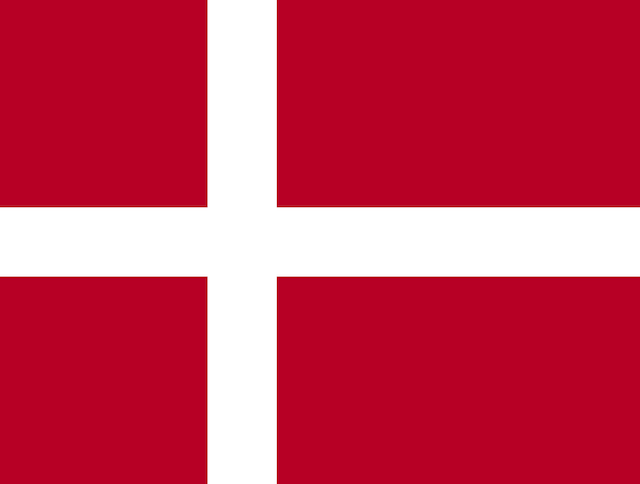
YachtFlags.com provides high quality courtesy flags that are manufactured in durable Knitted Polyester fabric. Knitted so that the fabric itself does not deteriorate in the constant movement that marine flags are usually exposed to, and polyester so that the flag does not weaken in the strong UV-light usually found in the main sailing areas of the world.
YachtFlags.com offers a discount to Noonsite members.
Use the coupon code NOONSITE_5A2B when checking out to get 10% off today.
Buy Now On YachtFlags.comMain Ports - Denmark
Courtesy Flag Discounts
YachtFlags.com provides high quality courtesy flags that are manufactured in durable Knitted Polyester fabric. Knitted so that the fabric itself does not deteriorate in the constant movement that marine flags are usually exposed to, and polyester so that the flag does not weaken in the strong UV-light usually found in the main sailing areas of the world.
YachtFlags.com offers a discount to Noonsite members.
Use the coupon code NOONSITE_5A2B when checking out to get 10% off today.
Buy Now On YachtFlags.comFormalities
Courtesy Flag Discounts
YachtFlags.com provides high quality courtesy flags that are manufactured in durable Knitted Polyester fabric. Knitted so that the fabric itself does not deteriorate in the constant movement that marine flags are usually exposed to, and polyester so that the flag does not weaken in the strong UV-light usually found in the main sailing areas of the world.
YachtFlags.com offers a discount to Noonsite members.
Use the coupon code NOONSITE_5A2B when checking out to get 10% off today.
Buy Now On YachtFlags.com


Nexo is a good port of call, on the west side of Bornholm: although mainly fishing, there are spaces for visiting yachts either in box berths or with a line to a stern buoy.
Visit the harbourmaster to pay (+45 56 49 22 50): walk north (right) along the frontage; take the first left; the office is 100m on the left. In the season, watch for the ferry arriving with around 100 cyclists + bikes getting off & the same number getting on: a sight to behold.
Don’t expect to be received by a harbourmaster in a Danish yacht harbor, just find a free berth – normally marked with a green sign (red means that the regular owner will return the same day) look for messages like “free until date so and so”. In many yacht harbor, you then have to report to a self-service machine to pay your harbor fee and get a key for the toilet and bath.
Just follow the instruction on the machine, they are normally at least written in Danish, German and English. You can stay for a long period in a Danish yacht harbor without ever seeing the harbourmaster. In fishing harbors, a harbourmaster can be present – but no guarantee.